
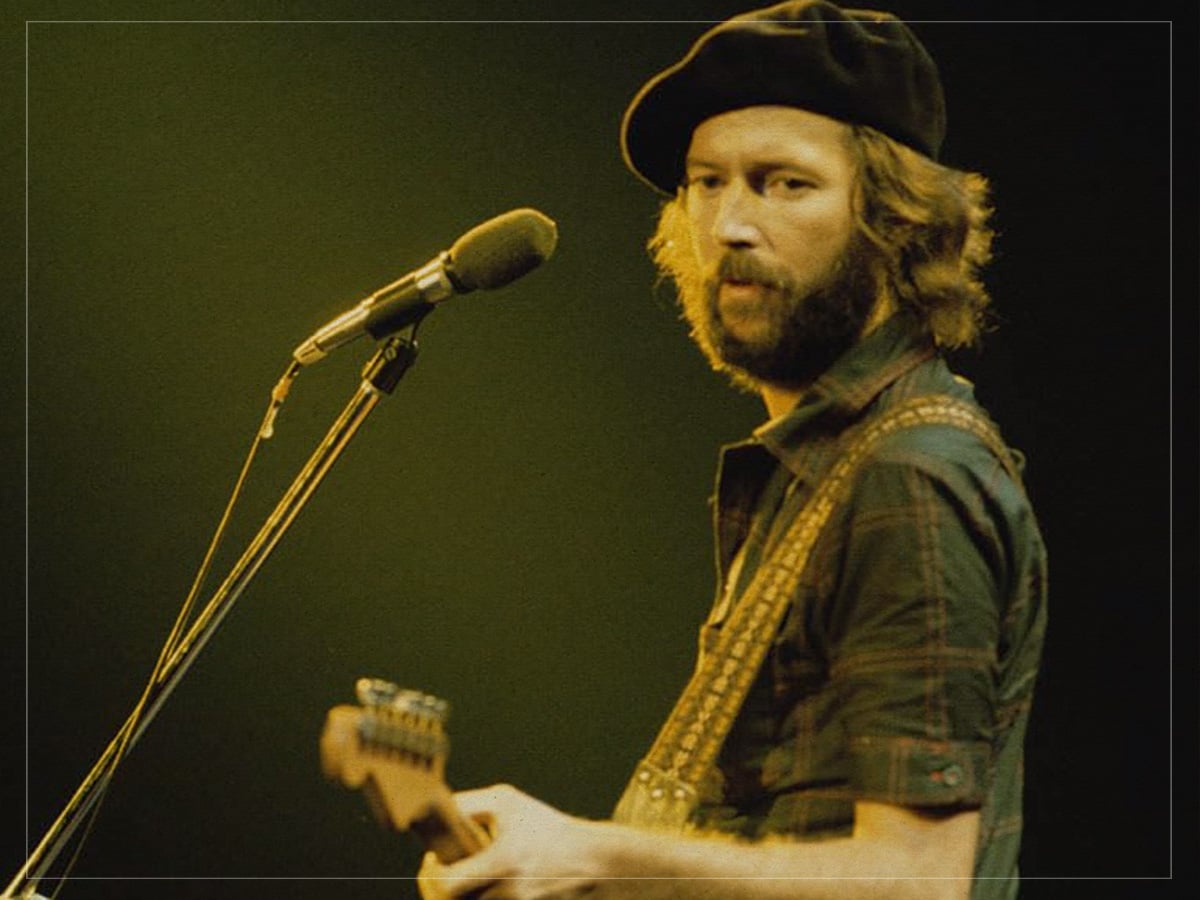
(Credits: Far Out / Showtime Documentary Films)
Wed 25 February 2026 15:15, UK
There is hardly any rock and roll guitarist who can claim to have seen it all the same way Eric Clapton has.
Every single one of the albums that he made throughout his career was another time capsule of what rock and roll looked like, and even when he was at his worst, when looking at his dependence on substances, he was still pumping out the occasional classic riff when he went into the studio. But after a while in the spotlight, Clapton started to realise that some of the praise that he was getting was a lot less warranted than most people made it out to be during his prime.
Then again, he probably wouldn’t have said that if you asked him back in the 1960s. ‘Clapton is God’ might have been one of the biggest claims that any British blues fan had ever made, but Clapton actually seemed to believe that kind of hype for a while. He was out there to save the world with blues rock, but when you listen to what the rest of the music scene was doing at the time, there was a lot more out there than the blues.
The Beatles had been changing the world for years with their tunes, and even though The Rolling Stones had a more bluesy edge to their songs, Clapton wasn’t really at the point where he could have written tunes like ‘Paint It Black’ or ‘Wild Horses’. And once Jimi Hendrix came over from the States, he wasn’t even the only person out there playing the most perfect blues that anyone had ever heard.
If he couldn’t beat everyone with his songwriting, though, he could at least melt their faces every single time he played with Cream. They were one of the heaviest bands at the time even after Hendrix had come to town, and once they started to stack their amplifiers like Pete Townshend was used to, Clapton gained a reputation for being one of the loudest rock and roll guitarists on the face of the Earth.
That might have been a problem for people like Ginger Baker trying to hear himself over top of everything, but that massive sound ended up paving the way for what heavy metal would be doing later. None of the band members associated themselves with that kind of genre, but after years of reflection, ‘Slowhand’ felt that a lot of what he had done with Cream was a lot more primitive than what music would eventually become.
The actual heavy metal bands were right around the corner, and Clapton figured that they were far better equipped to play long, extended solos than Cream ever were, saying, “In a realistic sense, it’s a myth. [If Cream came out today] it wouldn’t stand up. I mean, there’s at least 20 or 30 heavy bands that are far better than Cream in their day. We had our moments and good things on record that we did, but live, a lot of it was rough. We had a good time, but today it wouldn’t survive.”
That might sound apocryphal coming from one of the greatest guitarists of all time, but you have to remember what he was looking out for back in the day. He wanted to create different textures after hearing Hendrix, and while Disraeli Gears does have some fine moments, it was clear that albums like Layla that he made with Derek and the Dominos was a lot closer to the sound he heard in his head when he started making masterpieces.
Cream certainly deserves a place up in the rock and roll heavens regardless of what Clapton says, but you could always tell that he wanted to move on to something greater than looking at his later work. He was constantly searching for the next best thing, and while he did manage to capture the greatest playing of his career along the way, the whole point of his career was to keep searching for the rest of his life.