
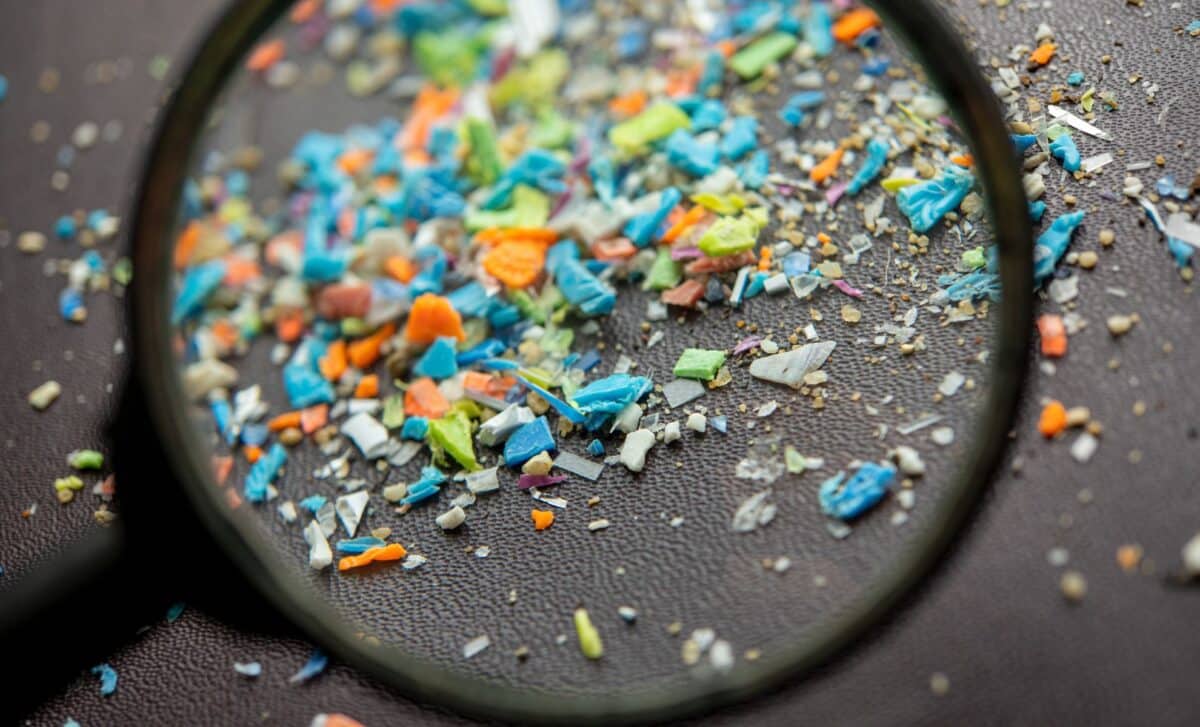
The process uses a special catalyst that harnesses sunlight to break down plastics, offering a potential solution to the global plastic pollution crisis without adding harmful emissions. This innovation could pave the way for more sustainable recycling and waste management systems.
Plastic waste, especially microplastics, has become a significant environmental concern, affecting ecosystems across the globe. Traditional methods of dealing with plastic waste, such as incineration or landfill disposal, either release harmful emissions or contribute to long-lasting pollution. Now, scientists have discovered a way to transform plastic waste into a valuable chemical product while addressing the environmental damage caused by plastic pollution.
A bio-inspired approach to recycling
The University of Waterloo’s research team has created a cascade photocatalysis system inspired by nature. This system uses a catalyst made of iron atoms embedded in carbon nitride to mimic how certain fungi break down complex organic matter.
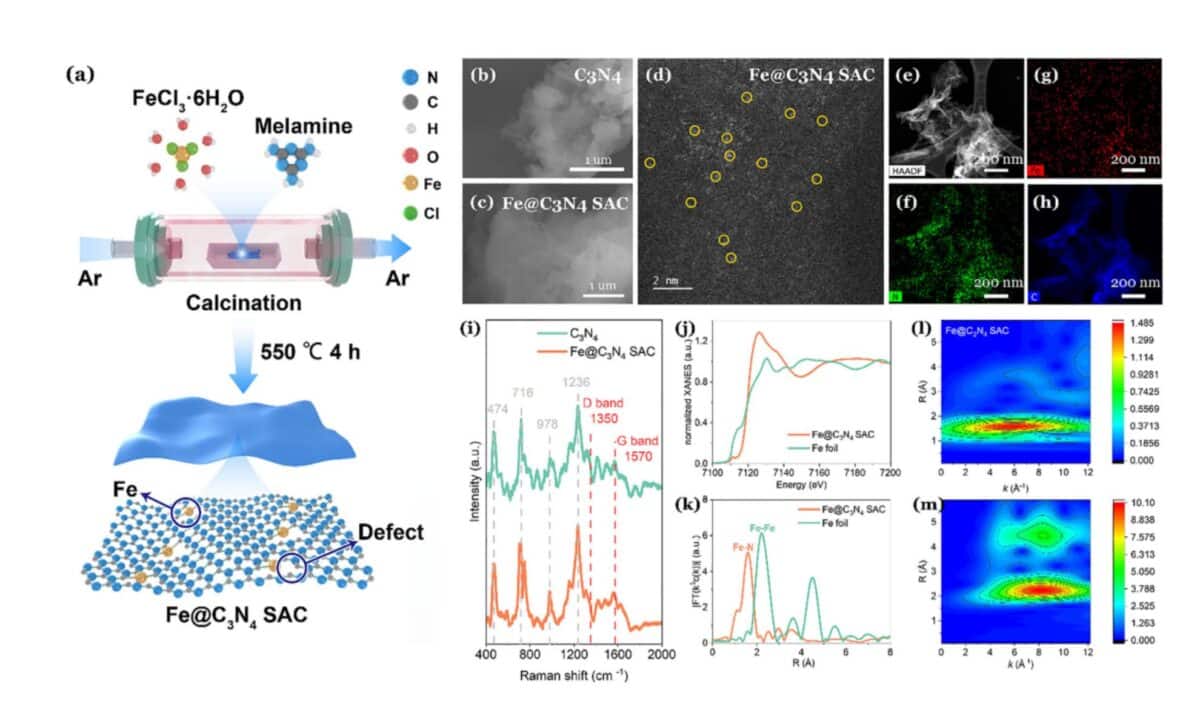 Characterization of Fe@C3N4 SAC: SEM, AC-STEM, X-ray Absorption, and Raman Spectroscopy. ©Advanced Energy Materials
When exposed to sunlight, the catalyst activates hydrogen peroxide, which in turn produces hydroxyl radicals that break down plastics into carbon dioxide intermediates. These intermediates are then reduced to acetic acid in a second stage. This process is efficient and operates at ambient temperatures, without the need for high heat or pressure.
According to Dr. Yimin Wu, a professor involved in the project, the team’s goal is to “solve the plastic pollution challenge by converting microplastic waste into high-value products using sunlight.” This method offers an eco-friendly alternative to incineration, which releases carbon dioxide into the atmosphere.
A solution for microplastics and mixed plastic streams
One of the main advantages of this new method is its ability to handle mixed plastic waste, which is typically a challenge in recycling efforts. The system can process commonly used plastics like PVC, PET, PP, and PE, as well as mixed plastic compositions, which are often discarded together in real-world waste streams. This versatility makes it a promising solution for tackling the diverse and complex nature of plastic waste that often ends up in landfills or the environment.
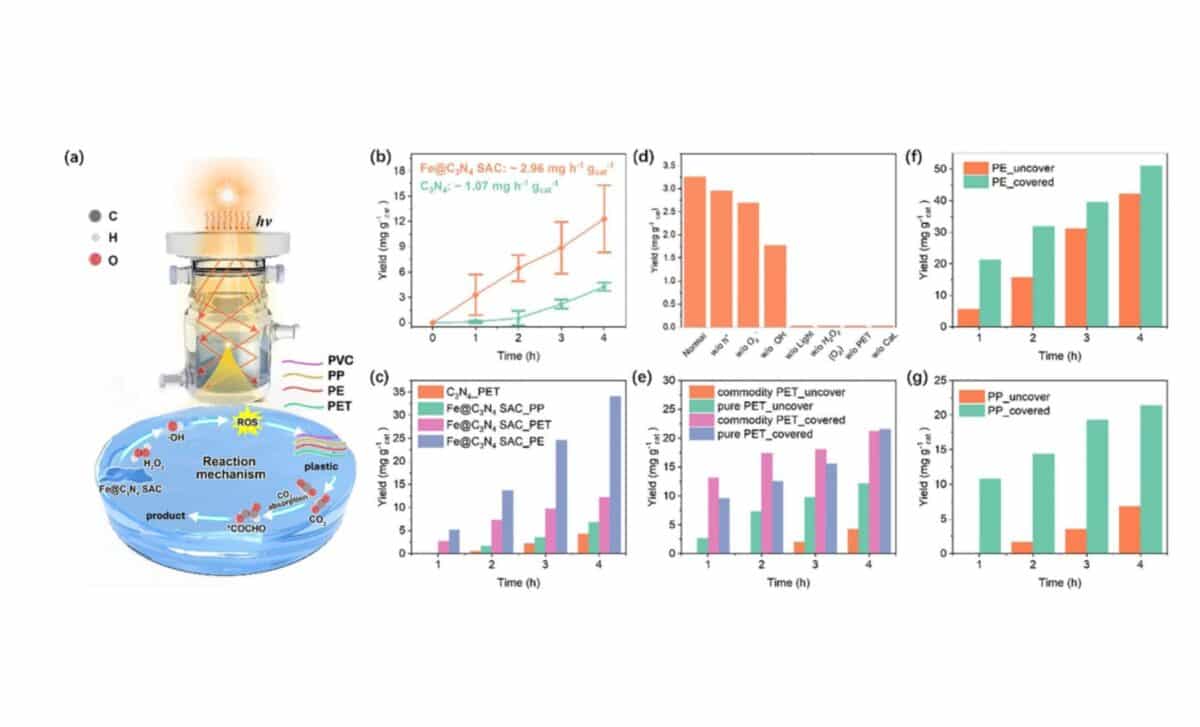 Plastic Upcycling Performance: Acetic Acid Yield and Reactor Efficiency with Fe@C3N4 SAC Catalyst. ©Advanced Energy Materials
The system has shown to be particularly effective with PVC, a type of plastic commonly used in pipes and construction materials. During the breakdown process, the release of chlorine from PVC appears to accelerate the reaction, producing acetic acid more efficiently. Furthermore, the catalyst remained stable through multiple cycles, suggesting that the system could be used over the long term in practical applications.
The potential for large-scale environmental impact
While the technology is still in its laboratory phase, the potential for large-scale application is significant. The system operates using solar power, making it a renewable and low-cost energy source for recycling plastic waste. As the technology evolves, it may even be possible to generate the hydrogen peroxide used in the reaction through renewable energy, further improving the system’s sustainability.
According to Roy Brouwer, executive director of the Water Institute, the financial and social benefits of this innovation are “promising.” Not only does the process reduce plastic pollution, but it also generates acetic acid, a valuable chemical with widespread use in food production, chemical manufacturing, and energy applications.
The team envisions this approach being scalable for real-world environmental cleanup, with the added benefit of directly addressing microplastic contamination in aquatic environments.
By converting plastic waste into a valuable product like acetic acid, this method offers a new approach to creating a circular economy that reduces waste and makes use of plastic waste in an environmentally friendly way. This research, published in Advanced Energy Materials, represents a critical step forward in solving the plastic waste problem through sustainable innovation, and it could provide a valuable tool in the fight against global plastic pollution.