
Feel the Darkness: The Story of Poison Idea
By
·
February 25, 2026
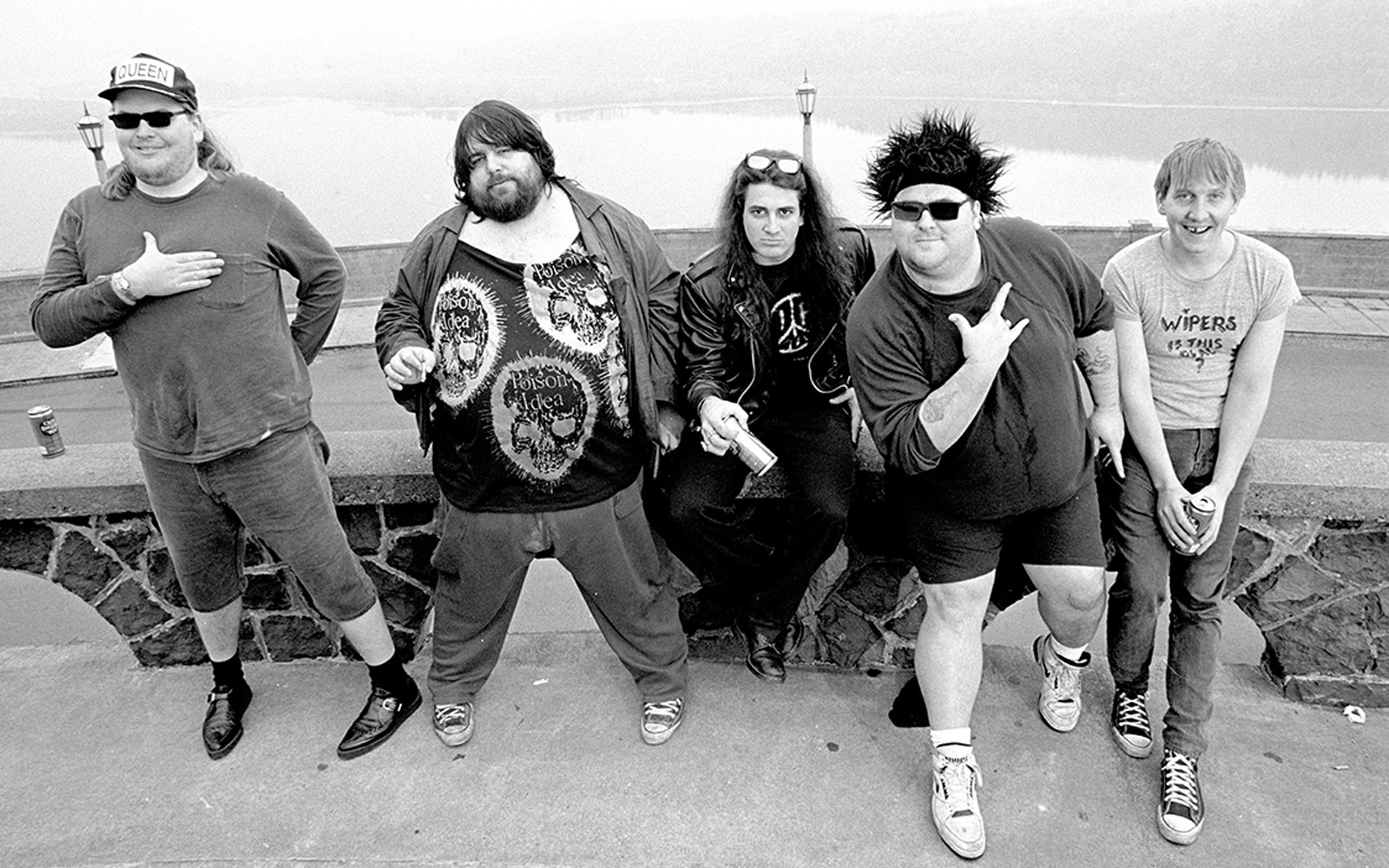
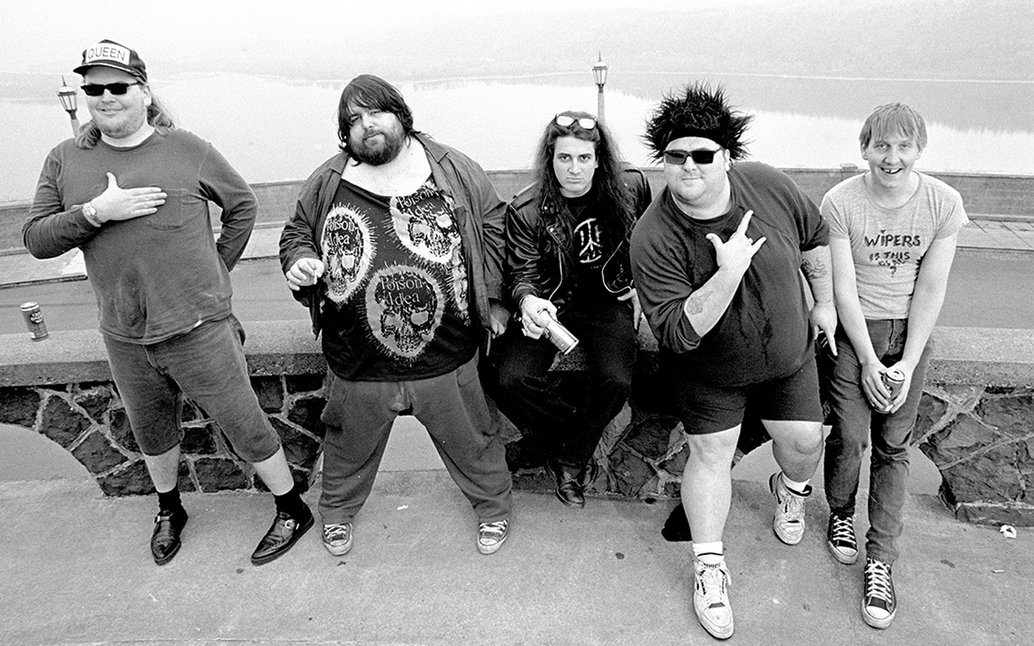
“Jerry A.” Lang survived Poison Idea. Many of the players didn’t. Guitarist Tom “Pig Champion” Roberts—Dead. Drummer Steve “Thee Slayer Hippy” Hanford—Dead. Bassist Chris Carey—Dead.
Throughout the band’s on-again-off-again 39-year run, Poison Idea, with its nihilistic worldview and relentless sonic smash, came to codify the essence of American hardcore. There are songs about hating everyone around you. There are songs about just how messed up the government is. There are a lot of songs about doing drugs.
But get this: Lang is supposed to be dead, too. In 2022, he published his three-part autobiography Black Heart Fades Blue, which was going to be his literal suicide note. “After finishing the book, I planned on disappearing,” Lang says.
But between the time Lang started Poison Idea, and the time he finished writing his book, something happened. He decided to live. To that end, we had Lang take us through the Poison Idea discography and tell us why he was able to crawl through the spikes, razor blades, and needles when so many others got trapped.
Pearls Before Swine (1980)
Lang did not come from a happy home. Both of his parents were addicts. His dad beat him. His step-parents were worse. He was molested multiple times. He was drinking before he was 10. He was doing drugs before he was 12. He was homeless before he was 16.
And so, in all of that misery, the one thing that really sparked was music. He says, “There were concerts every couple of weeks: BTO, Fleetwood Mac, the Guess Who. I first started going to concerts at nine. I was raising hell, and my mom said that if I didn’t burn down the barn, she would take me to see Three Dog Night. That was my first concert. As soon as I got in, I ran away and stood behind the drummer and watched the show from the top of the stage. I said, ‘I’m going to do this every day.’”
Not too long after, Lang would begin to devour the Stones and the Beatles, “I thought the scary hippies were kind of cool,” Lang says. “I grew up during Vietnam and Charles Manson, and I thought that was really cool stuff.” Not too long after, posters of Kiss adorned his walls…and then…
“The Ramones record came out,” Lang says. “That blew my mind. But, at that time, I was still into Kiss, and I was listening to the Ramones every day, but I was going to the store waiting for the new Kiss record. Finally, it came out! I think it was Love Gun, and I remember going home and listening to it and trying to like it and looking up at the Ramones, looking at Kiss, looking at Ramones, looking at Kiss, looking at Ramones, and finally I made the conscious decision—I am with these guys.”
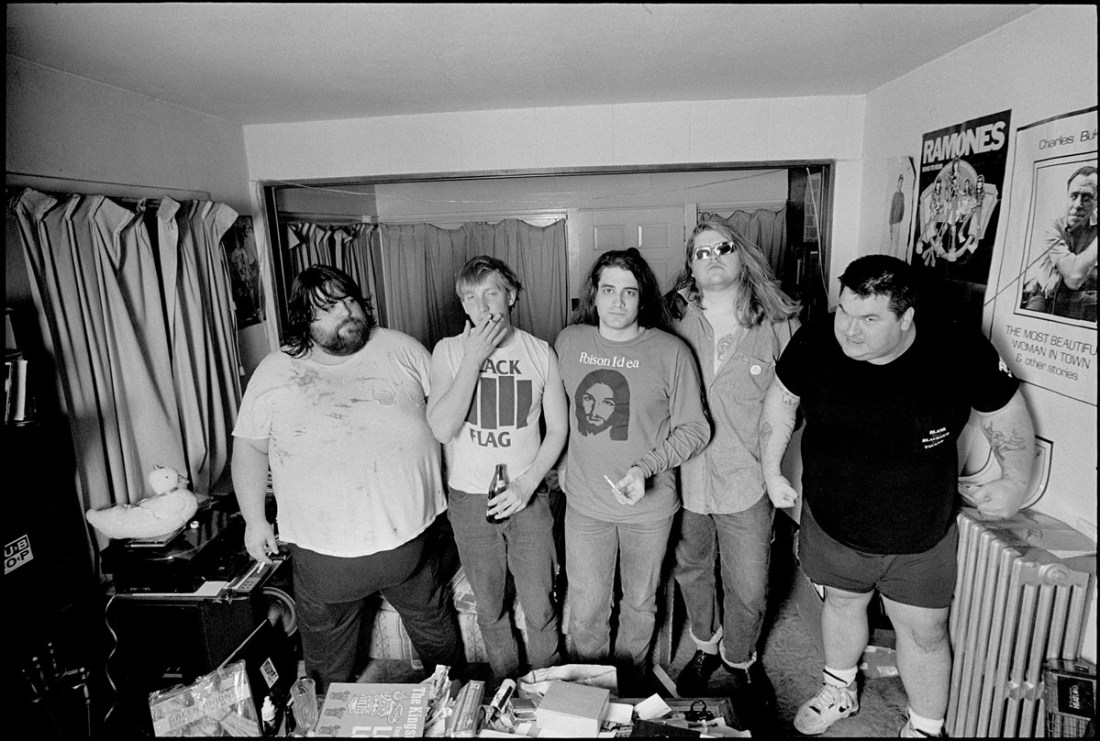
A few years later, after several other short-lived bands, Lang, living in a punk house, at the grand ol’ age of 16, formed the first incarnation of Poison Idea. He pulled together some musicians from the local scene and started a post-punk band. P.I. shifted through numerous styles before establishing with Lang on vox, Chris Tense on guitar, Glen Estes on bass, and Dean Johnson on drums. This early incarnation never recorded any studio material, but a live show was captured on New Year’s Eve 1980. That recording features the band losing the last elements of their art rock influence and leaning into full-on hardcore.
Still, Poison Idea didn’t truly solidify until Lang linked up with a big, bearded, “redneck” that sold cocaine and played guitar in local band Imperialist Pigs. “The first time I saw Tom Roberts, aka ‘Pig Champion,’ was about a year before he joined the band,” Lang says. “I was able to get into a 999 show, even though I was underage, because the band put glasses on me and gave me a case, and I walked in as a ‘roadie.’ When 999 played, I jumped down from the stage into the pit and started slamming around with some big guy. A year later, I went to see the Imperialist Pigs, and the guitar player said, ‘I know you! You’re that kid that was pogo pitting at 999!’ I went, ‘I know you! You’re that big redneck that I was pushing back and forth!’ And he said, ‘Yeah, I was ready to kick your ass!’ And I said, ‘shut your mouth, you’re a big, dumb hippy!’ And, the next day, we were best friends.”
Pick Your King (1983)
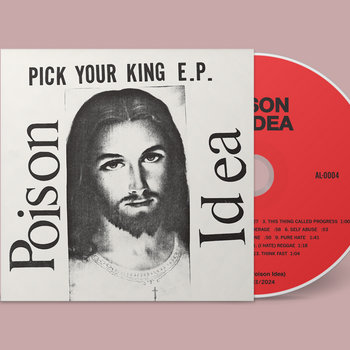
Soon, the first classic era of Poison idea began: Lang and Roberts as the backbone, with Chris Tense on bass and Dean Johnson on drums. They set to work on their first record in 1983.
Sardonically titled Pick Your King, Poison Idea’s first proper release was a double A-side that featured Jesus on one side…and Elvis Presley on the other. Lang says, “We were fans of Elvis…not so much in that we thought he was the end-all-be-all for rock ‘n’ roll. It was that he was just so obsessive and so crazy. With his drugs and his weight, he was nuts, and we thought that was funny.”
Clocking in at 13 tracks across 12 minutes and 59 seconds, the record is a series of sonic shotgun blasts. On it, Lang welcomes death, rants against the government, and attacks mainstream music. Equaling Lang’s vitriol, Roberts smashes out punchy riff after punchy riff, utilizing both the snappiness of early L.A. punk and the barrage approach of Discharge. Few records were as fast, as savage, and as negative.
“It wasn’t a conscious decision to anchor the music in such negativity,” Lang says. “That was just in us. We played fast. Some of that came from us trying to get through a set before getting thrown off stage, and some of that is because that’s how we were feeling. We were kids going 100 miles per hour, and that’s how we got off.”
Record Collectors Are Pretentious Assholes (1984)
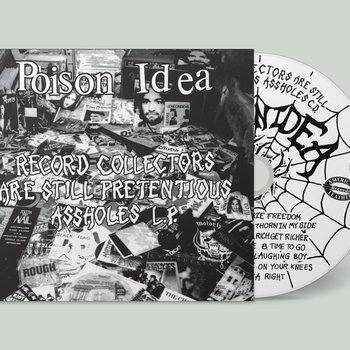
Released less than a year after their debut, Poison Idea’s first 12-inch, Record Collectors Are Pretentious Assholes, already found the band evolving. Shockingly, the songs crossed over the one-minute mark. The band retained their berserk charge throughout the release, but on tracks such as “Cold Comfort,” a metal/Motorhead coating entered into bashing—a style that would remain attached to the band for the remainder of their career. At the time, it was bold to mesh punk and metal, as each faction was seen as separate. Yet somehow, Poison Idea was able to exist in both worlds.
Lang comments on the evolution: “We started to learn how to play. We bought a stroke tuner. We learned how to tune our guitars. We watched other bands. At first, it’s kind of like a baby rattlesnake, which is more deadly than a grown rattlesnake. It will bite you and shoot in all of its venom at one time. We would go as fast as we could and shoot out all the venom at once. We slowed down here, which is funny to say, because we were still going 100 miles per hour.”
Kings of Punk (1986)
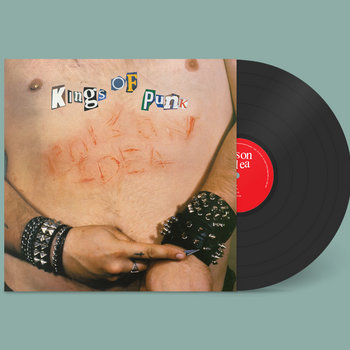
1986’s Kings of Punk was a turning point for the band. While the previous records flirted with nihilism, Kings is where Poison Idea started speeding into the black. Lang speaks on the faux-chest-beating album title, “You know, at the time, there were so many better bands than us. Discharge was around, Black Flag was around. We were far from the kings of punk.”
By this point, Roberts’s guitar licks had become a hybrid of punk charging and metal screeching. Some tracks, such as “Lifestyles,” even have melodic blues-metal interludes. Meanwhile, Lang dives full on into the bleakness that would come to define Poison Idea.
“You write what you see, what you are feeling, and what you are living,” Lang says. “’Death Wish Kids’ is about going to a show and seeing a 12-year-old kid, living by himself, who had it worse than I did when I was 12. The cycle continues. ‘Ugly Americans’ is about getting chased by guys in a pickup truck, getting your head bashed in by grown men when you are really just a kid just because you had a shaved head. We wrote about stuff we dealt with every day. We didn’t write like, ‘What if the Hobbit fell into a hole and Gollum was there or whatever…’
If you need further proof of the band’s mindset, just look at the cover, which features Lang cutting the band’s name into his own stomach, “The cover is real,” Lang says. “That was me. If you look at the pictures of us on the back, our eyes…all of us were pretty out of it. There was one part where it was getting painful. Chris Tense says, ‘I’ll help you,’ and he did the top of the E and I was like, ‘Aaaaaah!!! Jesus dude, you are going to spill my guts! I’ll do the rest!’ People were laughing and laughing. Blood was pouring down, so we’d take a wet towel and just wipe it because if you waited more than five seconds, your blood would just pour out. We suffered for our art, didn’t we? I still have a few of those scars.”
War All the Time (1987)
Despite this period of Poison Idea being one of the band’s most solid, they were internally a mess. Drummer Dean Johnson left the band to join Portland’s Mule (much to Lang’s annoyance) and was replaced by Steve “Thee Slayer Hippy” Hanford on drums. Lang comments on Hanford’s unique moniker: “It was a show we were playing. Someone pointed at Steve and then some skinhead says, ‘That’s not Poison Idea, that’s some Slayer hippie!”
Also, the band added Eric “Vegetable” Olson as a second guitarist, expanding to a five-piece. The effect is palpable. You can sum up 1987’s War All the Time in one word—vicious. With the new two-guitar attack, the band maintained their hardcore speed, while simultaneously nodding to thrash by way of Roberts and Olson’s interplay. On the production side of things, the band began to get a little arty: audio clips stitched between songs, a classical interlude, and even a bass solo.
“The title of the record was borrowed from [Charles] Bukowski,” Lang says, referring to the legendary beat poet. “Bukowski was pretty hopeless—that destitute feeling of the streets, but still romantic, and we were all into that. There is a lot of growth for the band on this record. You can honestly look at the records, and you can watch us discover girls, discover hard drugs, watch us discover heartache, watch us discover growth. It’s a life right there in music. There is even a time where we say ‘I’m sorry.’”
Feel the Darkness (1990)
Despite the band’s previous productivity, it took them three years to put out a follow-up LP. This was due in part to a frequently changing lineup, internal dysfunction…and drugs. Yet interestingly, despite the band’s internal combustion, to many, 1990’s Feel the Darkness is the band’s landmark record. Just as the band was using drugs and dealing with depression, almost every track here focuses on addiction, being depressed, and being really, really angry.
“The message is this is a day in our life, and this is what we do,” Lang says. “The drugs got worse and worse and ramped up. We were still musicians…that used drugs…but we were headed towards becoming drug addicts that played music.”
This statement carries through to the album’s striking cover, which stands as one of the band’s most iconic images in a discography full of them: a handgun is pointed directly at poor ol’ Tiny Tim’s face! “We did hear from Tiny Tim,” Lang says. “So, we told Tiny that it was a yin-yang symbolism. He was from the age of peace and love, and we said Tiny’s face represented peace, and our gun represented evil, so it was like a two-sided coin. Tiny dug it and said, ‘Run with it.’ I have a big poster signed by him, actually.”
Blank Blackout Vacant (1992)
“This is when the drugs started to overtake us, and we started doing them every day,” Lang says. “There’s a definition of nihilism on the back of the record: Total destruction of the world at large and oneself. That’s kind of what some of the guys were trying to do. They were so nihilistic and depressed with the anger and depression that they weren’t fooling around. They weren’t kids or posers. They were the real thing. If you stare into the darkness long enough, it will stare back at you—and when it does, it is a scary thing.”
Indeed, Blank Blackout Vacant marks the beginning of the band’s darkest era. Before the record was finished, the band’s roadie hung himself. “That stuff was happening all around us, all the time,” Lang says. “So, at the time, it didn’t feel like a big thing. You find yourself in some kind of possession. It is spiritual. It is physical. You see people on the street, and you can tell they are possessed. During Blank Blackout, we were all in a fog—a black fog.”
We Must Burn (1993)
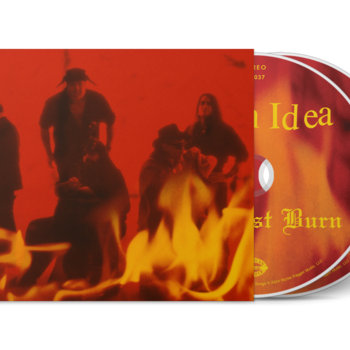
“Here, we were in the depths of our drug usage…and the record still rocked,” Lang says. If anything, 1993’s We Must Burn suffers from being “just” a Poison Idea record. Previous releases either found the band evolving or throwing curveballs. But Burn, perhaps in Motörhead or AC/DC fashion, finds the band “just” doing what they do, with 11 tracks of ripping metallic punk; Roberts’s leads could fit on a Metallica or Exodus record. Lang, meanwhile, skewers politics, religion, and society with equal parts humor and disgust.
As drug usage and health issues worsened, We Must Burn presaged the first total collapse of Poison Idea. While the band was on tour in Europe, Roberts decided to quit. Lang says, “Tom couldn’t tour. He was really big, and his health was horrible. At times, he could reach 500 pounds. He said to me, ‘I can’t tour anymore.’ It wasn’t a fight. It was purely emotional. He was falling apart. We were like, ‘Get home safely.’ He said he was on the train in London, trying to get to the airport, and he saw Poly Styrene of X-Ray Spex doing her Hare Krishna stuff. He recognized her, and she said ‘Take care of yourself. You need to get your health in order.’”
The band soldiered on as a four-piece for a short while. Lang says, “We got back to America, and Wurzel had just gotten thrown out of Motörhead, and he kept calling us. I was like, ‘You know what? Motörhead is Tom’s favorite band. To have you replace him would kind of be a slap in the face of Tom. Wurzel kept calling and calling and calling, and eventually I had to be like, ‘Dude, it’s not going to happen.’”
Simultaneously, the various losses were weighing heavily on the band. “By this time, we were drug addicts playing around with music,” Lang says. “Because when you wake up in the morning, that’s who you are. When you are a musician, you wake up and say, ‘let’s rock and party and drink and maybe do some drugs!’ That’s one thing, but when you are a drug addict, you wake up and say, ‘I need to do my drugs first and then let’s play some rock ‘n’ roll down the line…’ That is not good. That does not work. That’s why we broke up.”
Latest Will and Testament (2006)
“Even when Tom wasn’t in the band, I would go over and see him all the time,” Lang says. “And then, we just started playing again. We did some shows with the Kings of Punk lineup, which were great. But Tom was like, ‘I still can’t play shows, I can barely get on stage.’ So he quit again, but it just kind of morphed. It was like, ‘Tom, do you want to get together and just do a record. Do you want to play with these kids?’”
With a new lineup—Lang on vocals; Roberts and Jim Taylor on guitar; Chris Carey on bass; and Chris Cuthbert on drums—Poison Idea laid down demos in 2005. Those recordings would be Roberts’s last ever contributions to the band.
Lang says, “I was picking Tom up in the morning, taking him to the doctor, and I went over and found him…dead. Tom had a really, really bad childhood. People didn’t have the ways to cope with it back then. You needed to ‘buck up and just bite the bullet and get on with it!’ After Tom passed away, I found some notebooks that he wrote. He was writing all this really, really heavy stuff about how sad he was. There honestly isn’t a day that goes by that I don’t think about him. It was really hard, and I was really upset. But someday, we will all wind up there.”
With only the demo completed, the recordings were released as a proper album with the sadly portentous name Latest Will and Testament. Despite its “demo” status, Latest Will recalls the sonic savagery of early Poison Idea but maintains Roberts’s skillful, seasoned guitar slashing, making it a powerful final statement by the guitarist. “There are some people who say it’s their favorite record,” Lang adds. With so much wreckage surrounding the band, Lang decided to make some changes in his own life.
Last Show in France (2024)
“I got on methadone,” Lang says. “I knew I had to stop using because I wanted to experience more things in life. I knew that if I kept doing what I was doing, there was no way that was going to happen. So, I wasn’t shooting drugs anymore, but I found out methadone was just like being on drugs. I couldn’t tour because you had to see someone every day. That was like a drug deal as far as I could see. So, I got on this thing called Suboxone, and you don’t feel any of the effects of opioids. I was taking them and then cutting them down into smaller and smaller doses myself, and then I weaned myself off of that.”
With a clear head, Lang decided to do one last Poison Idea record using a lineup of previous members, including Olsen. The end result was Confuse & Conquer, a callback to the band’s prime punk-meets-metal heyday. Several tours followed; they recorded their sendoff show in France on July 10, 2019, and released it as a live album Last Show in France, five years later.
Poison Idea-style problems continued to plague the band after the tour. Steve Hanford had been released from prison after holding up a string of pharmacies. Lang says, “He had just gotten out, and I went to meet him at a bar—good place just after prison, right? He was like, ‘We need to do Poison Idea again!’ I was like, ‘Steve, you just got out of prison. You need to take it easy. We will do it.’ And he was like, ‘We need to do it now!’ I was like, it will come.’ And he said, ‘I’m sober now!’ I said, ‘Steve, we are in a bar!’ And he said, ‘Well, I’m not holding up pharmacies anymore.’ So, then, he went out and did what he did and then he died from a heart attack.”
“Chris Carey’s passing away not too long after was the same thing,” Lang continues. “You see it coming. You see him, and you say, ‘You don’t need to do this. You’re an adult.’ He was like, ‘I’m an adult. I can do whatever I want.’ I was like, ‘You know you don’t have the best intentions.’ Steve passed away after that, and I kind of saw it coming.”
Lang reflects, “I know that perspective. When I was writing the books to tell my story after that, I planned on disappearing. Kind of like Tom did. I figured I did everything I can do in life, it’s over. I want to tell my story the way it is. At that time, I was walking my dogs, and the neighborhood was destroyed. There were syringes all over the park, and I was getting pissed off. I met this woman who was a neighborhood advocate. And she said, ‘Well, you need to call the city,’ and she started helping me, and I was talking to her, and she turned out to be a mental health therapist. She—her name is Jennifer—had never heard of Poison Idea. I had just met this person, and it was like, ‘Wow!’ All of a sudden, this door opened up, and it was this world I had never seen, and everything changed. I thought, well, I’m going to keep going, and every day I’ll try to do something new, even if it is crazy.”
“Later, we did a Christmas party, and Jennifer was asking questions from a card game. One question was, ‘What was the favorite memory from the favorite time of my life?’ and I said, ‘Right now.’ When my head hits the pillow at night, I’m so happy I’m here. When I wake up, I say, ‘I’m so happy that I am here.’ That’s how I live 24 hours a day. I’m so happy to be alive.”
“The story is not over. It might not even be over for Poison Idea. I’ve learned that even if it’s never, it’s never say never. We’ve always told the truth. We’ve always been honest, and I think you’d be able to see it if we weren’t. If we were just going through the motions, that’s when it starts to suck. We were always doing what comes from our hearts. Playing hard is what comes from our heart. People know it is honest.”