
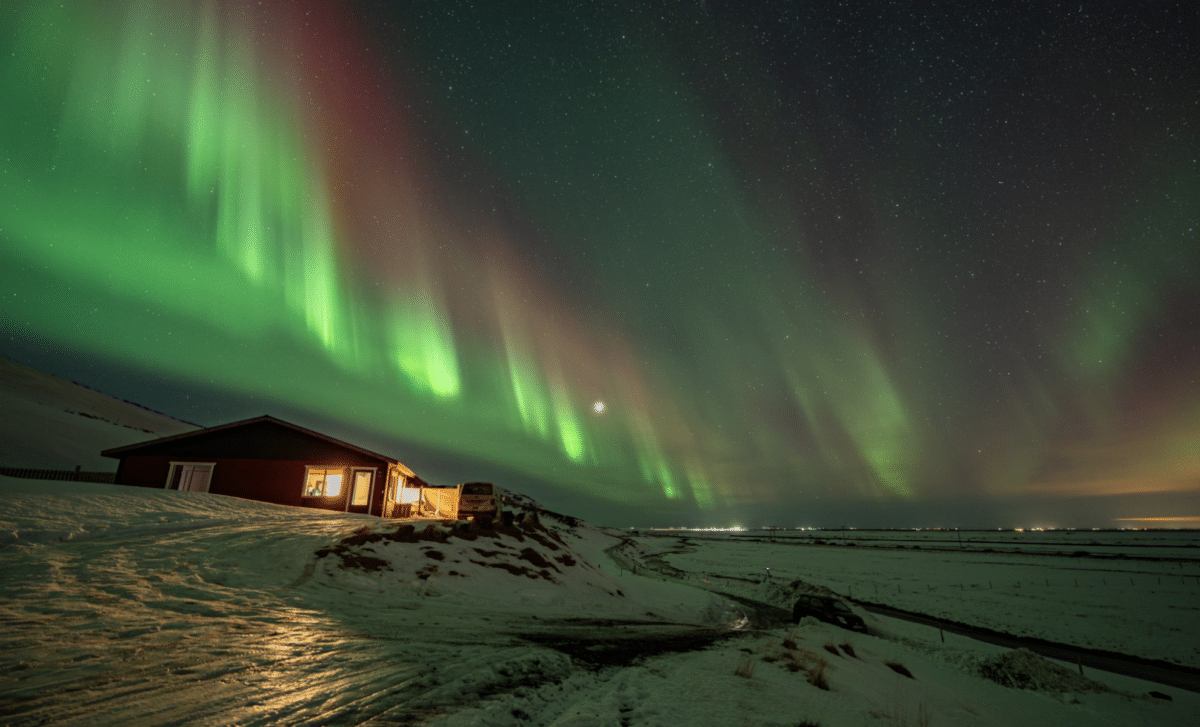
In an ambitious new project led by the University of California – Berkeley, the CINEMA mission is set to offer a fresh perspective on the auroras that light up our skies and the mysterious phenomena of Earth’s magnetotail. This new mission will explore how space weather, driven by the interaction between the solar wind and Earth’s magnetosphere, impacts both our planet and technological systems. CINEMA promises to provide the most detailed measurements to date, offering valuable insights into the behavior of auroras and their broader implications on space weather prediction.
Understanding the Magnetotail and Its Impact on Earth
The magnetotail, a vast and elusive region of Earth’s magnetosphere, has long been a topic of scientific intrigue. It extends far beyond the planet, stretching millions of miles into space, and plays a pivotal role in how solar wind interacts with Earth’s magnetic field. According to Robyn Millan, a professor of physics and astronomy at Dartmouth College and principal investigator on CINEMA, “Explosive magnetospheric phenomena can have major impacts on our technological systems.” Despite extensive studies, much of the magnetotail’s behavior remains a mystery, particularly in predicting when it will release magnetic energy and the severity of its impact on Earth’s systems. This research is part of the CINEMA mission, led by the University of California – Berkeley, which aims to provide deeper insights into these phenomena and their implications on space weather.
The CINEMA mission aims to bring clarity to these unknowns by observing the magnetotail from a distance. By focusing on how the magnetosphere reacts to solar wind and the subsequent energy releases, researchers hope to improve forecasting of space weather events that can disrupt satellites, communications, and power grids. Understanding these releases could ultimately lead to better protection against the hazards of space weather, which is becoming more important as society becomes increasingly dependent on space-based technologies.
The Puzzle of Auroral Shapes and Their Formation
Auroras have fascinated observers for centuries, with their shimmering colors and dynamic patterns lighting up polar skies. However, their precise formation remains an enigma. “Sometimes people ask what causes different shapes in the aurora, and all I can say is, ‘who knows?’” says Ledvina, one of the lead researchers on the CINEMA mission. While scientists have made significant strides in understanding the basic mechanics of auroras, much is still unknown about the intricate details of their formation.
One of the core goals of the CINEMA mission is to study the detailed behavior of auroras by capturing them with high-resolution imaging technology. The mission’s auroral imager will be able to capture these lights from a unique vantage point, offering insights into the various factors that influence their shapes and patterns. A particular area of interest is the role of plasma flows in the auroral process, and whether certain frequencies in these flows trigger specific types of auroral activity. As Yen-Jung Wu, an assistant research physicist at SSL, states,
“I hope we’ll learn whether there’s a particular frequency in the plasma flow that guarantees that a streamer will emerge.”
By understanding these triggers, scientists can potentially predict the formation of different types of auroras, contributing to the broader understanding of space weather and its effects on Earth.
Substorms: The Longstanding Mystery
One of the oldest mysteries in space science is the occurrence of substorms, sudden bursts of energy in Earth’s magnetosphere that can have profound effects on auroras and space weather. “People have known about substorms for over 50 years, and we still don’t understand them,” says Mende, a key member of the CINEMA team. These substorms often lead to intense auroral displays, but their exact causes and timing have eluded scientists.
CINEMA aims to investigate these substorms more closely by studying the underlying processes that lead to their formation. By observing the magnetotail’s behavior and measuring its interactions with the solar wind, researchers hope to identify the specific conditions that lead to these energetic outbursts. Understanding substorms is crucial, as they can have significant impacts on technological systems, including GPS satellites and communication networks, by interfering with their signals.
Overcoming Challenges in Auroral Imaging
The CINEMA mission’s ability to capture clear images of auroras from space is a significant technological achievement. Developing an imager that could realistically simulate optical distortions, spacecraft motion, and background noise was a formidable task.
“Developing an imager simulation that realistically accounted for optical distortion, spacecraft motion, and noise was a big challenge,” says Claire Gasque, an assistant researcher at SSL and a member of the auroral imaging team. “It was a relief when auroras emerged clearly in our simulated images. That gave us confidence that the imager will successfully capture the specific forms we’re targeting.”
This innovative imager will provide the high-resolution data necessary to explore auroral dynamics in greater detail, allowing scientists to capture the subtle variations in auroral patterns that have remained elusive. With these new capabilities, CINEMA will provide unprecedented insights into how auroras form, behave, and interact with the surrounding environment.
CINEMA’s Groundbreaking Role in Space Weather Research
The CINEMA mission is poised to transform our understanding of space weather and its effects on Earth. By focusing on the magnetotail, auroras, and substorms, it will fill significant gaps in our knowledge of these complex systems.
“We’re going to be able to provide unprecedented measurements that enable the entire heliophysics community to do all different kinds of science,” says Millan.
This wealth of data will not only enhance our understanding of auroras but will also improve our ability to predict and mitigate the impact of space weather events on Earth’s technological infrastructure.
CINEMA’s contributions will be invaluable in the ongoing effort to protect Earth’s satellites, communications, and power grids from the unpredictable forces of space weather. The mission’s findings will likely set the stage for future research and technologies aimed at shielding our planet from the growing threat posed by solar activity.