
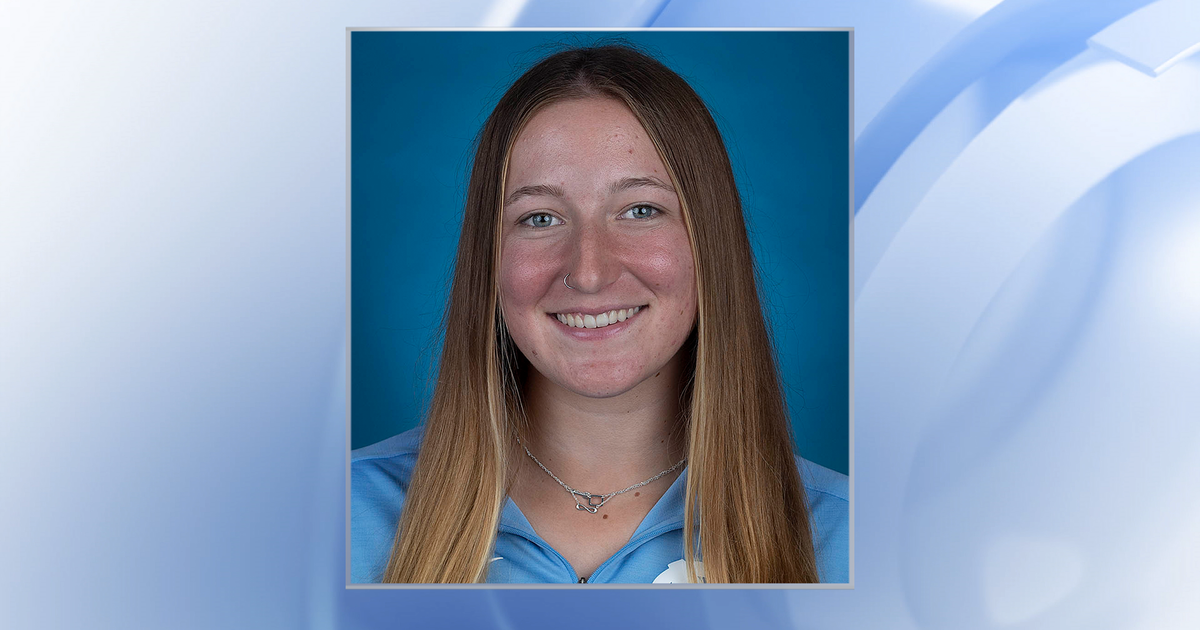
North Carolina women’s tennis star Reese Brantmeier and the NCAA have reached an agreement to settle her federal class action lawsuit over prize money.
The parties told the judge in a court filing Wednesday that they “have reached agreement on material terms of a class action settlement fully resolving this action.” They asked for a 60-day pause in deadlines and proceedings to finalize the agreement in a document filed with the United States District Court for the Middle District of North Carolina.
Brantmeier filed a federal lawsuit in March 2024 over the NCAA’s restrictions on individual athletes keeping prize money won in outside competitions. Brantmeier earned about $50,000 competing in the 2021 U.S. Open as a high school junior, but she was only allowed to keep $10,00 plus some expenses.
She filed an amended complaint in November 2024 limited to just tennis players who compete or competed at the Division I level. Former Texas women’s tennis player Maya Joint was added as a named plaintiff along with Brantmeier.
Federal District Court Judge Catherine Eagles certified it as a class. If Brantmeier had prevailed, the NCAA could have been forced to pay damages to everyone in the class.
“We have long thought the prize money case was a straightforward violation of antitrust laws,” Jason Miller, a Raleigh-based lawyer for Brantmeier, told WRAL in July.
Brantmeier, a senior, won the 2025 NCAA Singles Championship in November. She was the ACC player of the year and earned All-America honors in both singles and doubles in the fall of 2025. Brantmeier helped the Tar Heels to a team national title in 2023 and placed second in doubles (with Elizabeth Scotty) in the NCAA tournament that year.
Brantmeier, Miller and the NCAA didn’t immediately respond to requests for comment from WRAL.
Tennis players are allowed to accept up to $10,000 per calendar year in prize money from outside competition before enrolling. After enrollment, they are limited to actual and necessary expenses under current NCAA rules. The NCAA’s amateurism rules have changed dramatically in recent years with players being able to receive outside compensation and, now, money from their own schools.
The NCAA settled several class-action cases as part of the House settlement, agreeing to pay nearly $3 billion in damages and opening the door for schools to share revenue directly with student athletes.
The NCAA settled two cases involving Division I volunteer coaches in recent months, agreeing to pay $353 million in those cases.