

The Carney government is promising that Canada’s first high-speed railway will enter the pantheon of nation-building projects such as the St. Lawrence Seaway and the Confederation Bridge. But landowners in Mirabel, Que., say it’s a potential death blow that harks back to a painful history of expropriation they’d rather forget.
Stripped of their lands by the federal government to make way for Mirabel Airport in 1969, farming families in the region just northwest of Montreal are now girding for another battle against Ottawa, this time to prevent their properties from being wrestled away to accommodate trains going 300 kilometres an hour.
Decades after reclaiming their family acreages, they say the lives they’ve built are at risk of being upended once again.
“The scar was closed, and now it’s suddenly reopened,” said Sylvain Éthier, 65, who runs a modest maple sugar operation launched by his great-grandfather near Saint-Benoît.
He was nine years old when his parents’ home was expropriated and remembers missing school at the age of 12 to protest. His was one of many families who were able to repurchase their properties years later.
“We’re having to fight again, wasting time, going backwards,” Mr. Éthier said, his voice choked with emotion. “If they want to push a high-speed train through here, it will destroy us. It will destroy our villages.”

Sylvain Éthier is in the fourth generation of his family to work the sugar shack northwest of Montreal. His grandparents are on one of the portraits on the wall.
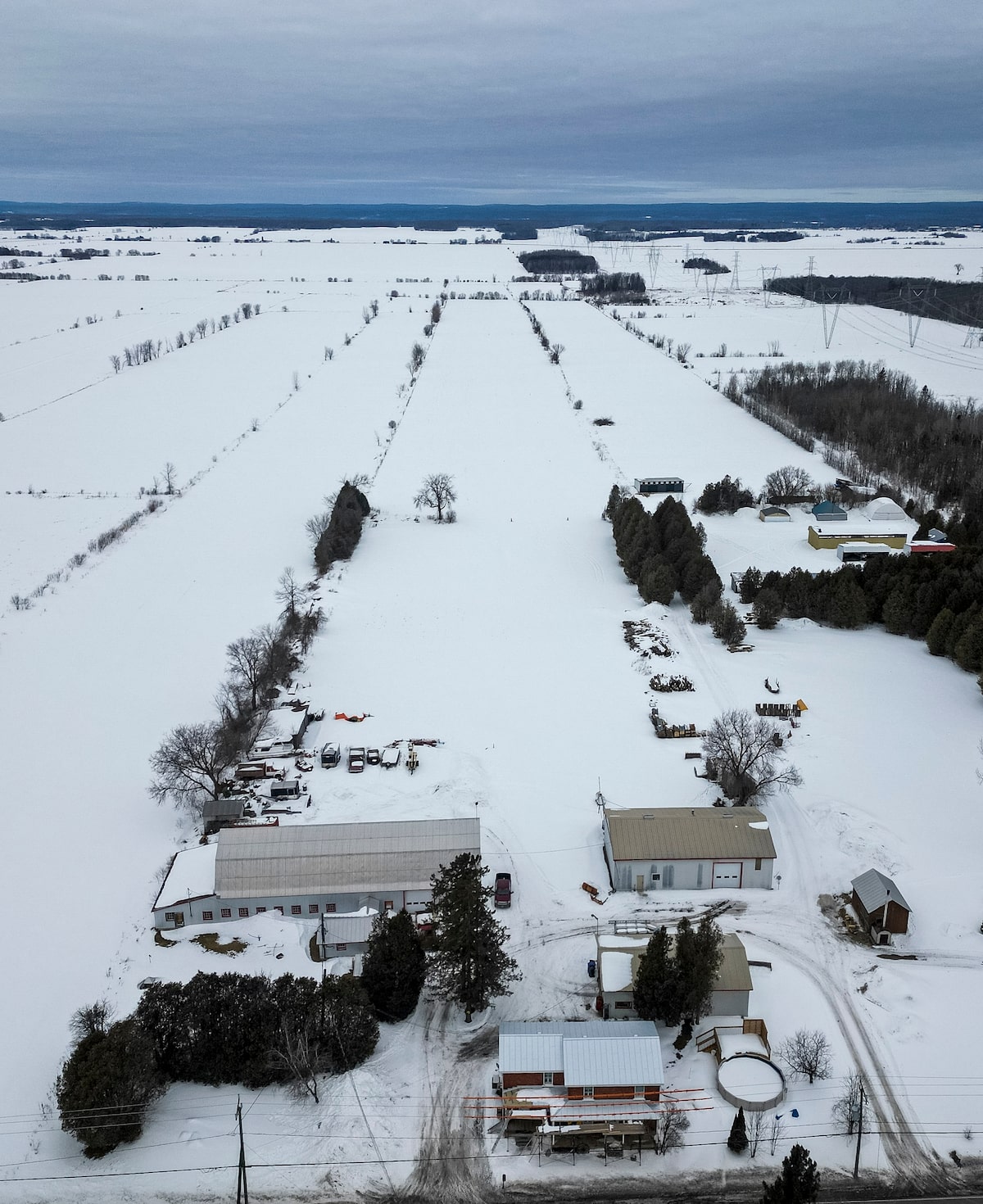
The federal government expropriated 97,000 acres of farmland to build Mirabel Airport, but needed only a fraction of that, hence why the Éthiers could return.
The prospect of travelling 1,000 kilometres from Quebec City to Toronto with a new fast rail network in half the current trip time has fired up the imaginations of Canada’s political and business leaders. It has also unearthed fears, not only of the potential price tag – estimates run at $60-billion minimum – but for the human cost in communities that are being asked to make way in the name of economic progress.
Alto, a Crown corporation responsible for overseeing the project, released a preliminary map for the new railway corridor earlier this year and invited feedback, both online and via community meetings held in person. The proposed path includes a 10-kilometre band across the Mirabel area, though the final track path will only necessitate a width of 60 metres.
Project officials held the meetings to gather input before presenting any plan as a fait accompli, and have unleashed a wave of concern in the process. In addition to pushback from Mirabel residents, rural residents north of Kingston have warned that an option to run trains through that part of Ontario would damage sensitive ecological lands and have a negative impact on farms and cottages.
Federal Transport Minister Steve MacKinnon calls Alto a transformative project at a time when Canadians face extraordinary threats to their economy. He says it will create more than 50,000 jobs, boost gross domestic product by up to $35-billion a year, and increase productivity while potentially using several hundred thousand tonnes of Canadian steel, lumber and concrete. “Our country cannot afford to miss this opportunity,” the minister told a House of Commons committee earlier this month.
Éric Desrosiers raises cattle in the Mirabel area, on land repurchased from the airport expropriation.
Farmers in Mirabel say they understand Alto’s potential benefits and that they’re not against technological progress. But they say they’re being asked to pay a heavy price for that advancement as the project barrels toward what they believe is the inevitable expropriation of their lands.
“What we have here is not for sale,” said Éric Desrosiers, 51, a cattle farmer whose grandparents lost the property he now owns with his brother after the family bought it back.
He sees only negatives if a busy rail line breaks up his fields, including less contact with neighbours and potential insurance trouble.
“Where is this headed? I don’t know. Will they send in the army? The farmers I know won’t support this, that’s for sure,” Mr. Desrosiers said. “I expect they’ll impose it on us, force it down our throats.”
Mirabel Airport was heralded as the airport of the 21st century when it opened in 1975. Instead, it turned into a white elephant that failed to come close to living up to its intended potential.
Ottawa expropriated 97,000 acres of prime farmland but used only about 5,000 acres for an airport that was so underused that passenger traffic was phased out in the 1990s. Most of the unused land was returned to the original owners or their descendants, and the terminal building has since been torn down. Former prime minister Stephen Harper in 2006 called it “a mistake of history.”
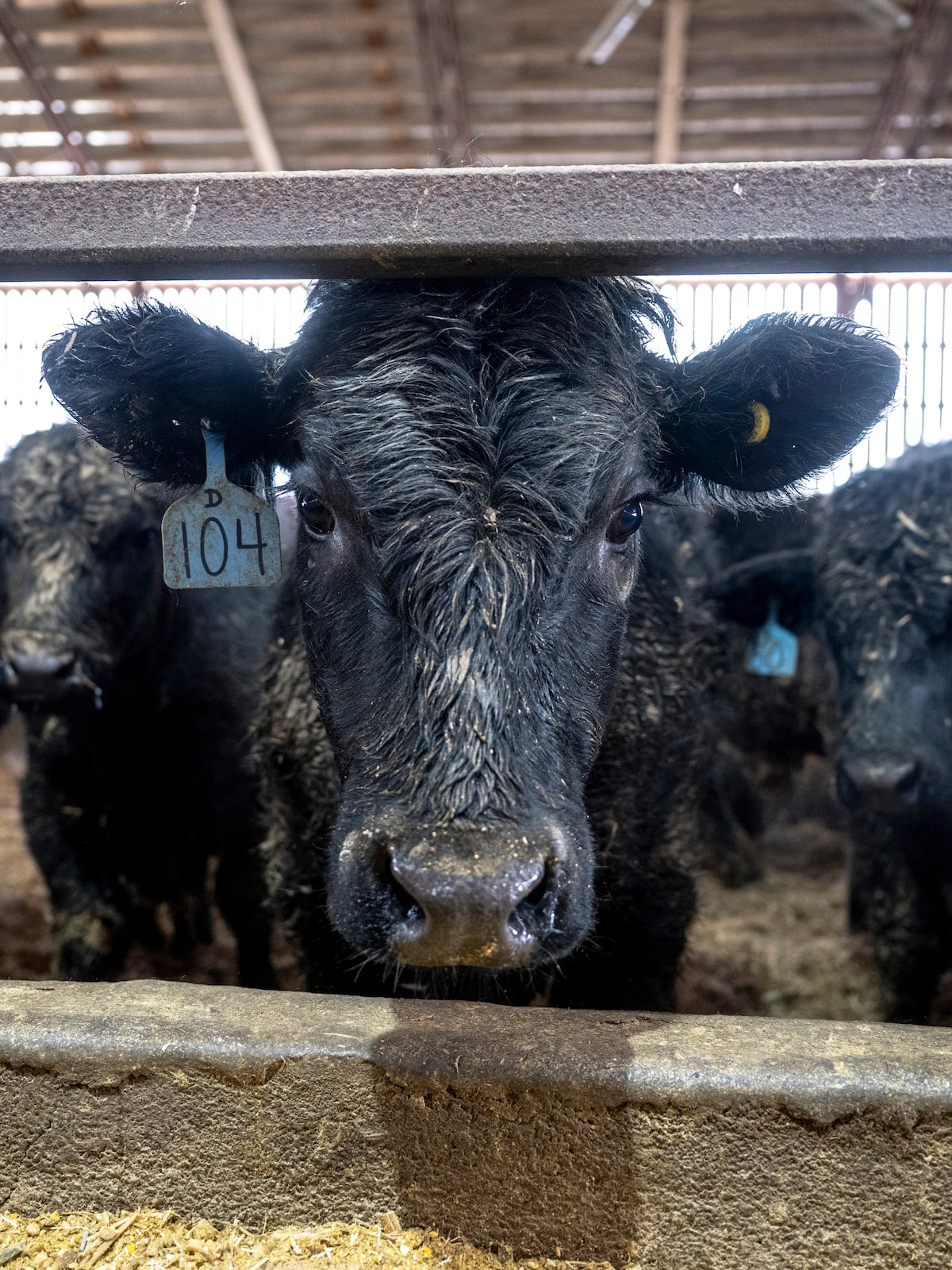
Les Fermes Desrosiers dates its origins to 1979, four years after the airport opened.
One big worry farmers have now is how Ottawa intends to use new expropriation powers currently being studied by lawmakers as part of the government’s C-15 omnibus budget bill.
Federal officials have said the purpose of the new powers is to make sure the Alto project gets moving and not bogged down. But the Montreal Economic Institute, a free-market think tank, says it amounts to “steamrolling” property owners.
Under the current Expropriation Act, the Crown must generally attempt to purchase land before expropriating it. The proposed changes create an exception for land required for the high-speed rail network, according to an overview by Toronto law firm Davies Howe. Among other proposed changes is a new approach to objections that allows written contestations but does away with public hearings.
Alto chief executive officer Martin Imbleau said several options for pathways exist for Mirabel, each with different implications. He insisted that financial offers will be made to affected landowners after a track route is finalized.
“We will really approach it from a ‘willing buyer, willing seller’ basis,” Mr. Imbleau said in an interview, acknowledging that Mirabel is a sensitive site because of its history and pledging a “human touch” in dealings with local residents. He cautioned, however, that landowners should be under no illusion that they’ll have any control over the final route once it is set.
“The reality is that the ability to change the alignment is limited, if non-existent,” Mr. Imbleau said. “So it becomes a transaction on the compensation.”
Alto CEO Martin Imbleau, pointing to Ottawa’s mayor at a news conference on the rail project, says he’s mindful of the sensitivities around Mirabel. So does Transport Minister Steve MacKinnon, right.Sean Kilpatrick/The Canadian Press
Mr. MacKinnon told the Commons committee that the situation now is not at all the same as what Mirabel residents experienced with the airport because the land requirements, while more rigid, are much smaller. He said the final track will follow existing corridors such as highways or power lines where possible.
“We will do this work using the lessons learned from the past,” Mr. MacKinnon said, adding that common sense will prevail. “There is obviously every interest on the part of Alto and on the part of the government to have good and effective relationships with people along the route.”
The consultation and design process on Alto will lead to a final decision by the government, expected in 2029, on whether to fund the project. Ottawa has already approved billions in funding for planning work. If approved, construction could begin that year, and the first segment would open around 2037.
With a report from Bill Curry
Trains of thought: More from The Globe and MailThe Decibel podcast
High-speed rail is one of many big goals for the federal Major Projects Office, which also has its eyes set on ports, mining and energy infrastructure. Feature writer Adam Radwanski spoke with The Decibel about the strategy. Subscribe for more episodes.
Commentary
Taras Grescoe: Canada’s passenger rail lines are getting revived after decades of vanishing service
Jerome Gessaroli: Alto high-speed rail is Canada’s next budget bomb
Matti Siemiatycki: High-speed rail is hardly the highest priority for Canada