
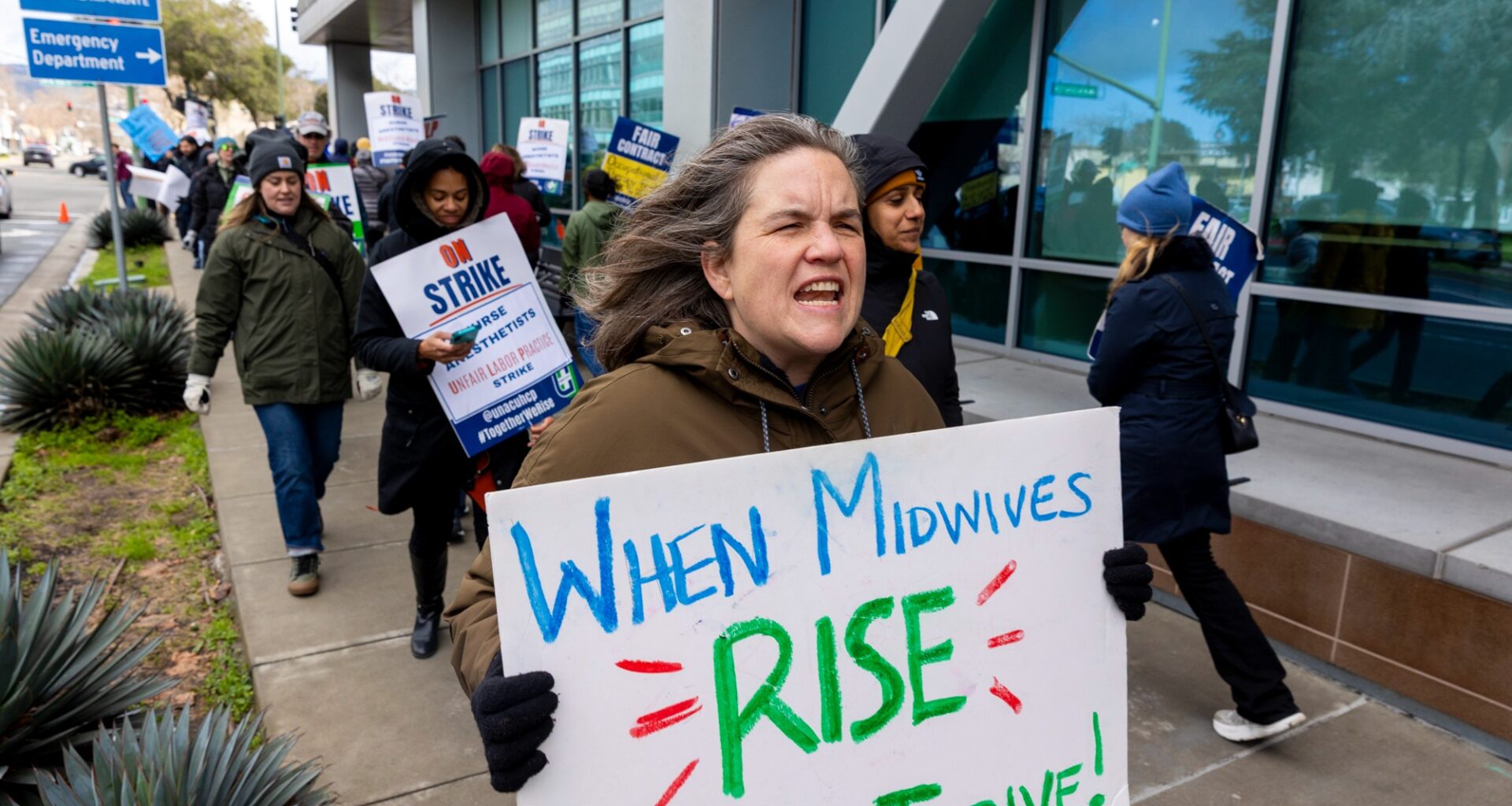
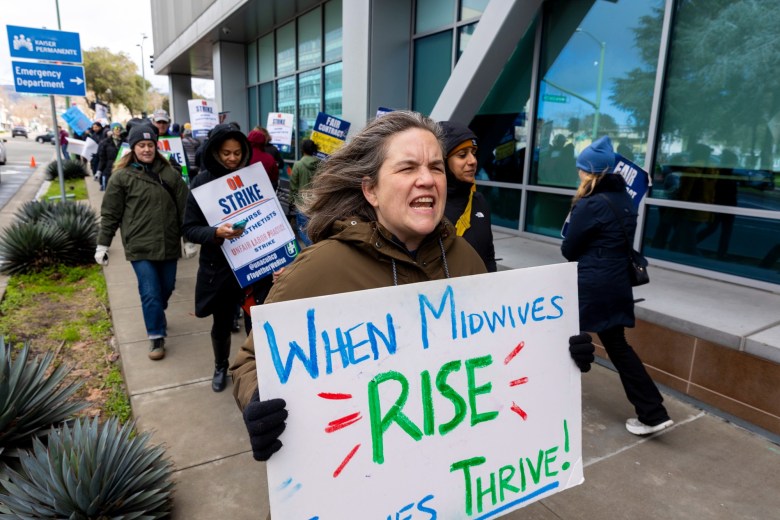
 Darcy Stanley, a nurse midwife from Kaiser Oakland, on strike at the picket line outside Kaiser Permanente Oakland Medical Center in Oakland on Feb. 19, 2026. Credit: Tâm Vũ/KQED
A four-week strike by thousands of Kaiser Permanente health care workers in California and Hawaii is set to end Tuesday morning, even though no contract deal has been reached, according to the union.
The walkout initially involved up to 31,000 nurses, physician assistants, physical therapists and others. Following significant movement at the bargaining table over the weekend, according to the union, no picket lines are being held Monday as return-to-work agreements are finalized.
“Returning members to their patients and their livelihoods is the clearest path to securing a final agreement and building on the progress achieved during the strike,” said a statement by United Nurses Associations of California/Union of Health Care Professionals, which notified Kaiser that the strike will conclude at 7 a.m. Tuesday.
Kaiser, the nation’s largest private nonprofit health care organization, did not immediately respond to a request for comment.
Pressure had been mounting on both parties to end the walkout, which began Jan. 26 and was dubbed the largest open-ended strike by nurses and other health care workers in the U.S. Top priorities in negotiations for Kaiser employees were staffing levels and compensation, common concerns for health care workers nationwide.
The company tried to minimize disruptions to patients by hiring contingency staff, rescheduling non-urgent surgeries and modifying other appointments at affected locations. But some patients were frustrated by delays in their operations, especially in Southern California, where most striking union members are located.
At the picket lines, several workers told KQED they were financially and emotionally stressed by forgoing their paychecks for weeks, as the union did not offer assistance via a strike fund.
Michelle Baird, a nurse midwife who lives in Berkeley and has delivered babies and cared for mothers since 2015 at Kaiser facilities in Oakland, said her household canceled subscriptions, stopped online shopping and quit eating out at restaurants. She said she hopes she won’t have to borrow against her daughter’s college fund and is looking for a job that she could add to her schedule, even after the walkout ends.
Last week, Kaiser said about 40% of nurses and pharmacists across striking locations had returned to their jobs, though union officials countered that those figures were inflated.
“While they will keep negotiating, they are losing leverage by going back to work, which suggests that they didn’t feel they had the capacity to sustain the strike any longer,” said Rebecca Givan, an associate professor of labor studies and employment relations at Rutgers University who specializes in the health care industry. “This is a tough outcome for these workers.”
Givan contrasted the outcome in California and Hawaii with a weeks-long strike by about 15,000 nurses in New York City, which led to significant employer concessions, including maintenance of health care benefits and improvements to pay and staffing.
Kaiser, which says its health care workers are paid on average more than those at other companies, has dismissed employee claims of chronic understaffing and long delays for patients.
Even as the strike dragged on, the company did not seem to budge from its offer to raise wages by 21.5% over four years. Anything higher would be unsustainable and lead Kaiser to increase premiums for its more than 9 million customers in California, according to company statements.
The union initially called for a 25% wage raise. It declined to comment on its current proposal.
Berkeleyside is a media partner of KQED, a listener-supported public radio station serving Northern California. Berkeleyside occasionally republishes KQED stories we believe will be of interest to our readers. This is a developing story, and it will be updated.
We know that most readers don’t get to the end of the article. But you did! To support our in-depth, rock-solid reporting, please consider making a donation to our nonprofit newsroom today. We rely on our readers — particularly the ones who read the whole story!
“*” indicates required fields