
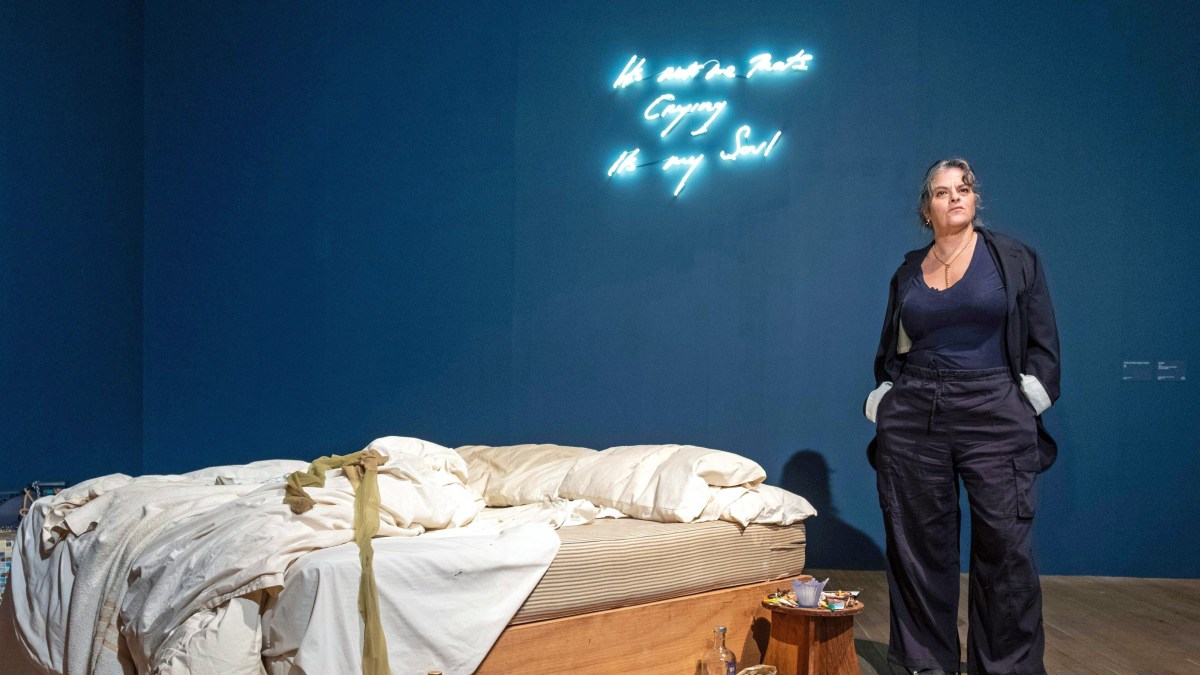
Wealthy people should automatically take out museum memberships and make voluntary donations to keep them free for the wider public, Dame Tracey Emin has said.
The artist and trustee of the British Museum said that “someone like me” should join every membership scheme at museums they visit and automatically “tap and make a donation”.
Emin, who was speaking at the opening of a retrospective of her career at Tate Modern, said that most British people did not realise how “lucky” they were to have the culture on offer across the country.

Emin with The End of Love, one of her paintings, at Tate Modern
TOLGA AKMEN/EPA
She added that a greater contribution from those who could afford it would make a “hell of a difference”.
Emin, 62, said: “I think if people were made to realise what amazing art and museums [there are] then they would be happy to pay something.”
There has been discussion in Britain about whether state-funded institutions such as the Victoria & Albert, Tate’s galleries and the National Gallery should start charging foreign visitors for entry and even whether free entry, introduced in 2001, should be abandoned entirely.
Many institutions are in dire financial straits. The Tate is operating with a deficit budget and the National Gallery revealed this month that it has an £8.2 million deficit.
Most of the world’s great cultural institutions — such as the Louvre in Paris, the Prado in Madrid and the Vatican Museums — do charge an entry fee while still receiving state support.
• Tracey Emin: ‘I can hardly see colours. I’ve got cataracts’
Emin said it was important that Britain’s museums remain free. She recalled how — coming from a working-class background in Margate, Kent, and having left school at 13 — she had needed to “find her own way” to art museums. She added that when she first arrived at the Tate, which has never charged for entry to its main collections, she was “really lucky that it was free”.
“The longer it stays free the better it is for everybody,” she said on Wednesday in an interview at Tate Modern, where her exhibition, Tracey Emin: A Second Life, will run until the end of August.
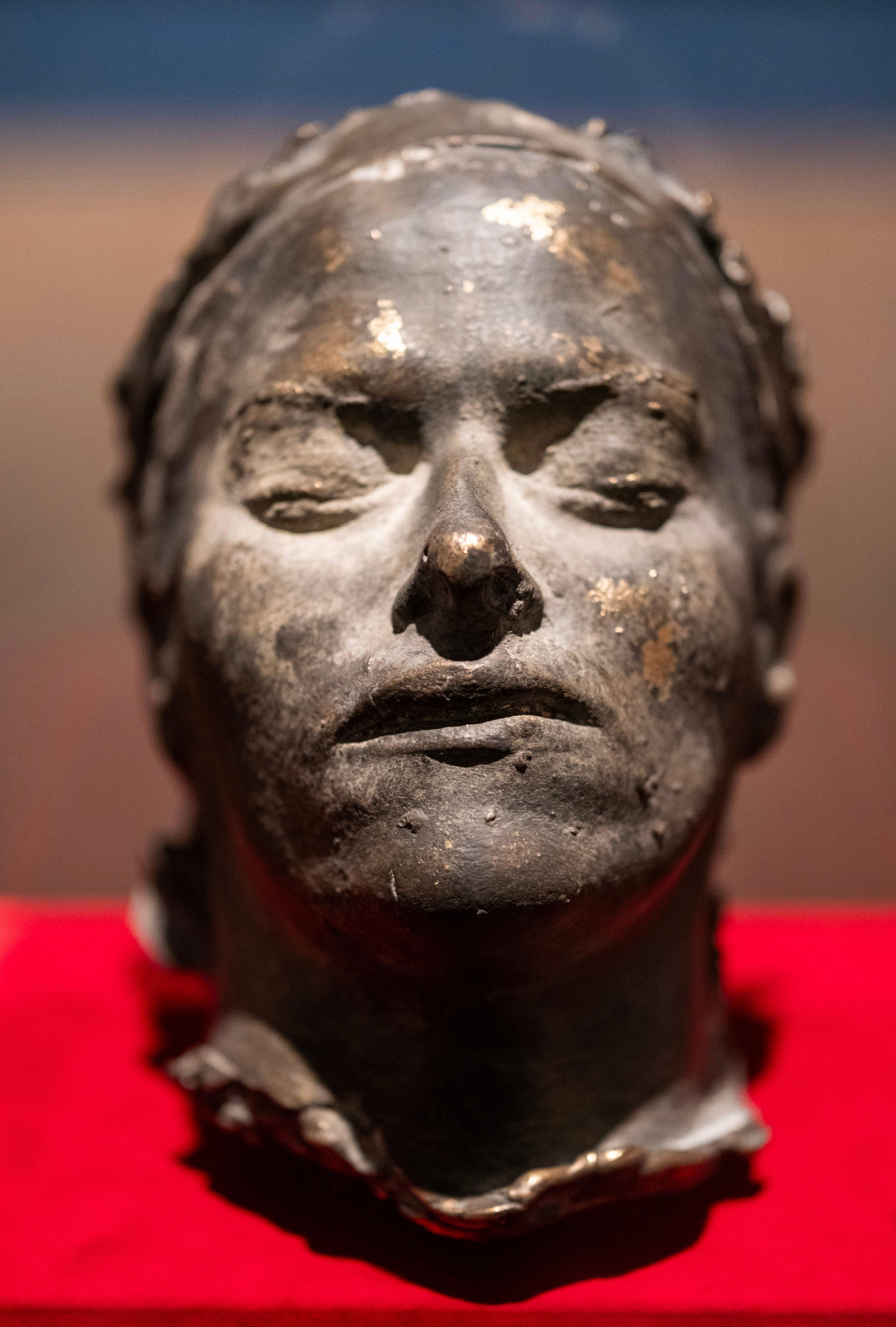
“But I would also say if you are someone like me [one of the country’s most successful and wealthiest artists] you should join the membership for every museum you go to, or you should tap and make a donation every time you go there and that would make a hell of a difference,” Emin added.
“The longer we don’t have to pay the better but people in responsible positions should start getting memberships not just for one museum but for every one that they visit.”
Emin also spoke about her frustrations at trying to bring the British Museum “into the 21st century” and away from its “terrible colonial past”.
The artist, who was appointed a trustee in November 2023, said that while she thought it was a “fantastic museum in a lot of ways” it also had to move “fast” into the 21st century.
“I hope it changes. Nick Cullinan, the new director, he’s pushing it, there are a number of new trustees and our aim is to actually get it into gear and into the 21st century. But it’s hard. It’s a battle with certain things and certain issues which I’m not allowed to talk about. I think it is a fantastic museum in lots of ways but it’s got this terrible colonial past.”
The museum has for some years been grappling with its possession of many artefacts, such as the Benin Bronzes, that were “stolen” during the colonial period and which are subject to restitution requests.
• British Museum sends artefacts abroad to help countries ‘decolonise’
Its chairman, George Osborne, has not managed to reach a deal with Greece over the Parthenon Marbles.
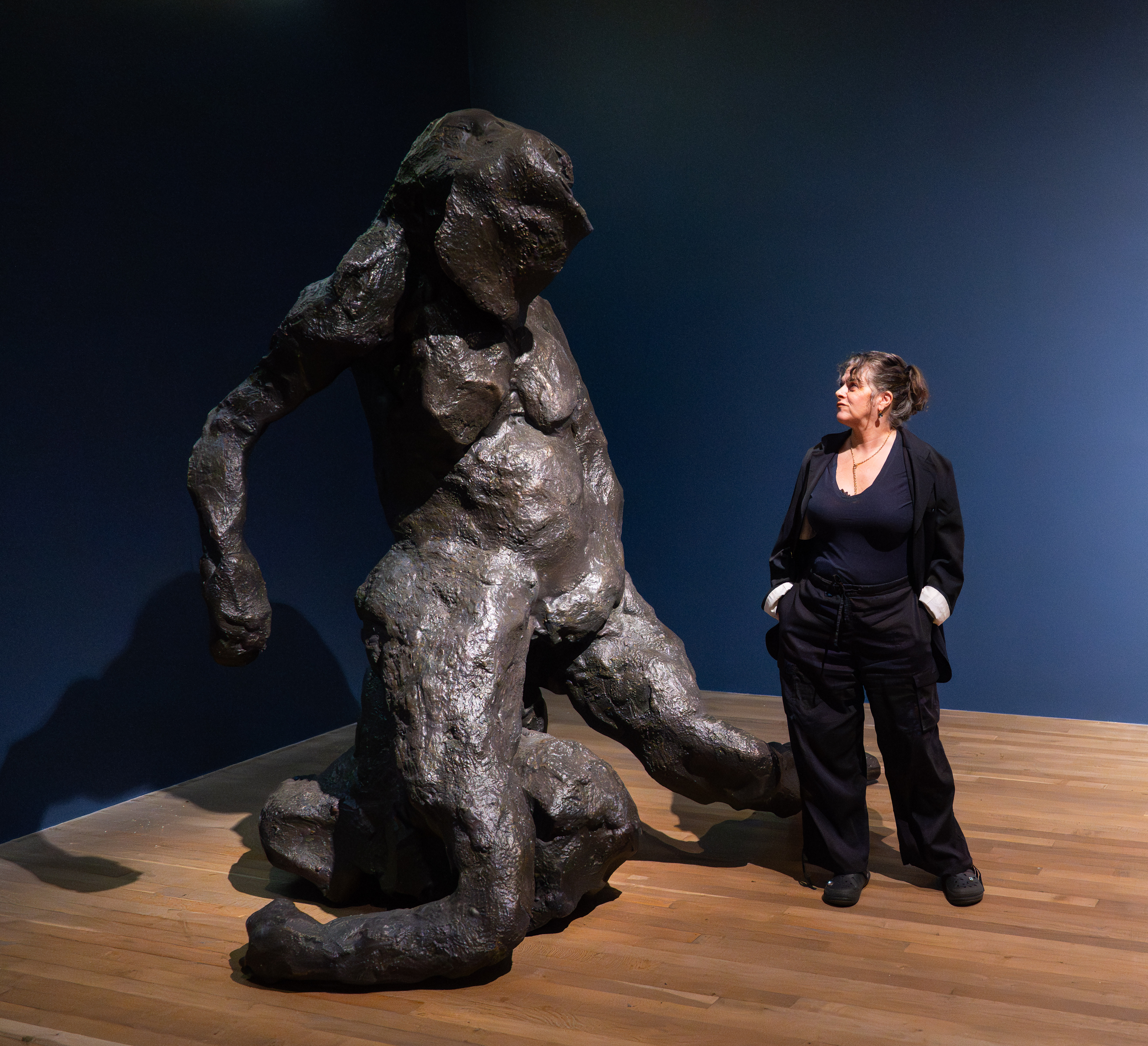
Emin’s career retrospective will run until August 31
ELLIOTT FRANKS
It has also been criticised by activists and directors of other museums for accepting a multimillion-pound donation from BP at a time when the vast majority of cultural institutions have rejected financial support from fossil fuel companies.
Emin said, however, that “you can’t just give things back … it doesn’t work like that.
“There is a level of responsibility for every museum to look after the works and if you just give something back you don’t know that it is going to be looked after. It is much more complex. I wish it was easier.”
Emin also made a plea for people to be more supportive of the institution, which remains one of the world’s most renowned and important museums.
“Rather than everybody slagging it off and trying to get it closed down, why don’t we just try to make it a better place,” she said. “Make it more ethical, make it stronger.”