
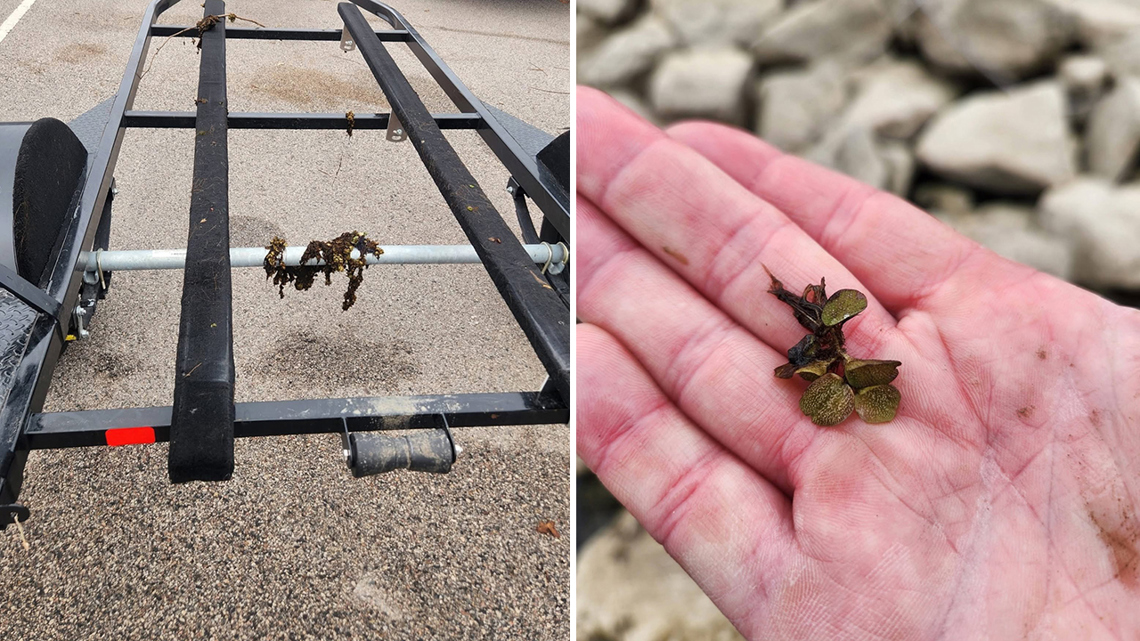
Texas Game Wardens posted photos of an invasive plant that a hunter at a Texas lake was recently cited for.
DENISON, Texas — Texas Game Wardens have a warning for anyone using who goes out on lakes and rivers around the state. Failing to properly clean boats and equipment can spread invasive species — and lead to citations.
That’s because not cleaning them can spread invasive plants.
According to Texas Game Wardens, certain invasive plants can cover lakes, block sunlight and oxygen, and destroy aquatic life below the surface. Officials say the species can spread quickly when boaters don’t properly clean, drain and dry their boats and gear after visiting an infested waterbody.
The warning comes after game wardens say they cited a duck hunter recently on Bois d’Arc Lake after an invasive plant was attached to his trailer. Officials say the hunter had previously launched a boat on an infected lake and, as a result, brought the giant salvinia and water hyacinth to Bois d’Arc Lake.
Members of the Texas Parks and Wildlife Department’s Inland Fisheries Department spent time on the lake collecting the invasive plants to try to prevent them from becoming established.
Officials say these invasive species can grow quickly under ideal conditions. One acre of giant salvinia can double to two acres in just a single week, Texas Game Wardens say.
What to know about giant salvinia and water hyacinth?
According to Texas Parks and Wildlife, giant salvinia is a floating fern native to southern Brazil and one of the problematic plants in Texas. TPWD says it damages aquatic ecosystems by outgrowing and replacing plants that are native to Texas that help the environment. You can read more about giant salvinia here. Water hyacinth are native to South American and can form dense colonies in bodies of water that block sunlight and can also crowd out native species.
Got a news tip or story idea? Email us at newstips@khou.com or call 713-521-4310 and include your name and the best way to reach you.