
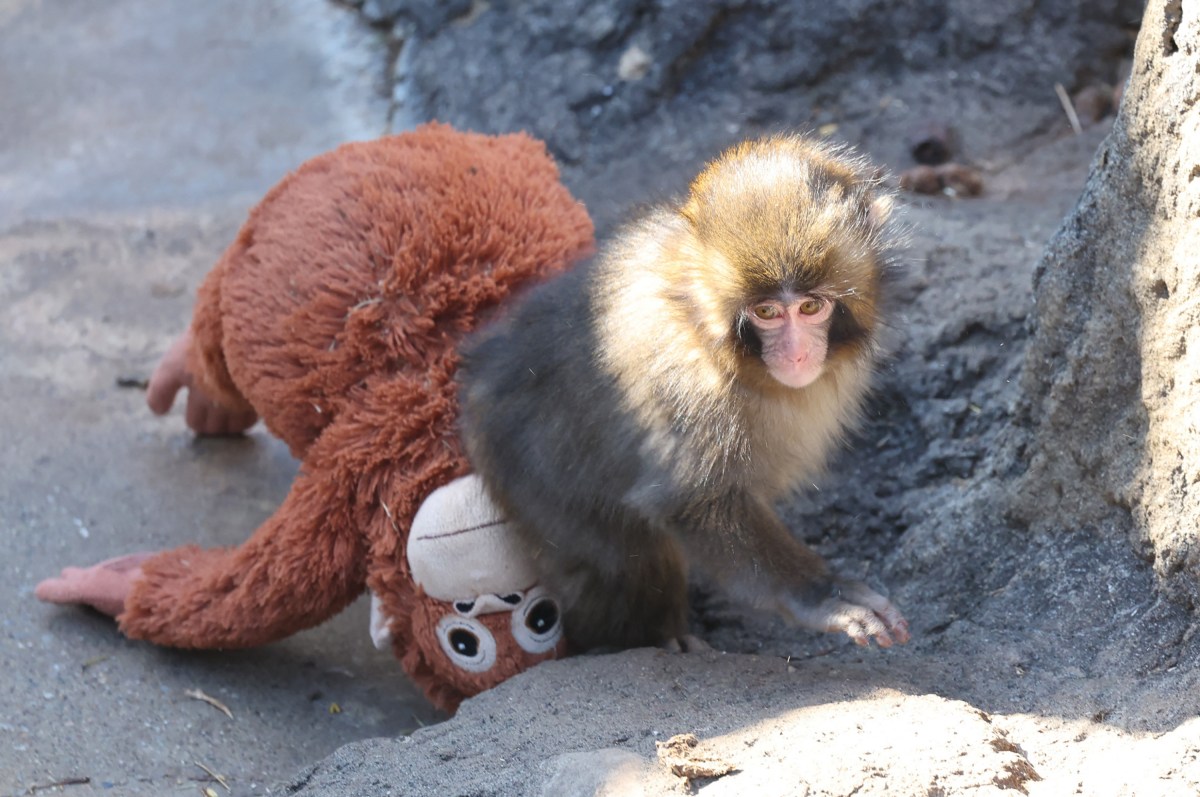
Punch, the seven-month-old Japanese macaque whose attachment to a stuffed orangutan toy has made him a viral sensation, is at the center of a growing debate over primate welfare after footage showed him being dragged by an adult monkey at Japan’s Ichikawa City Zoo.
The infant, known in Japan as Panchi-kun, was born on July 26, 2025, and rejected by his mother shortly after birth. Keepers provided soft comfort items, and Punch quickly bonded with a plush orangutan—a relationship that turned him into a social media star and drew surging crowds to the zoo.
But concern overtook curiosity after clips posted to X showed a larger macaque dragging Punch across an enclosure, with the infant fleeing to clutch his toy for comfort. The footage reignited questions and speculation about whether he should be separated from his troop, adopted by a third party or continue on the path toward reintegration.
The zoo has said it started reintegration training last month and urged visitors to be patient, noting the troop had not displayed serious aggression even though Punch was occasionally disciplined by older macaques. A visitor’s Instagram video appeared to show him receiving grooming and affection from others in the group, though those details could not be independently verified.
Scientists say the case captures a tension familiar to primate experts: balancing the real risk of physical harm against the long-term psychological damage isolation can cause an orphaned infant who needs social bonds to develop normally.
What Is Going to Happen to Punch The Monkey?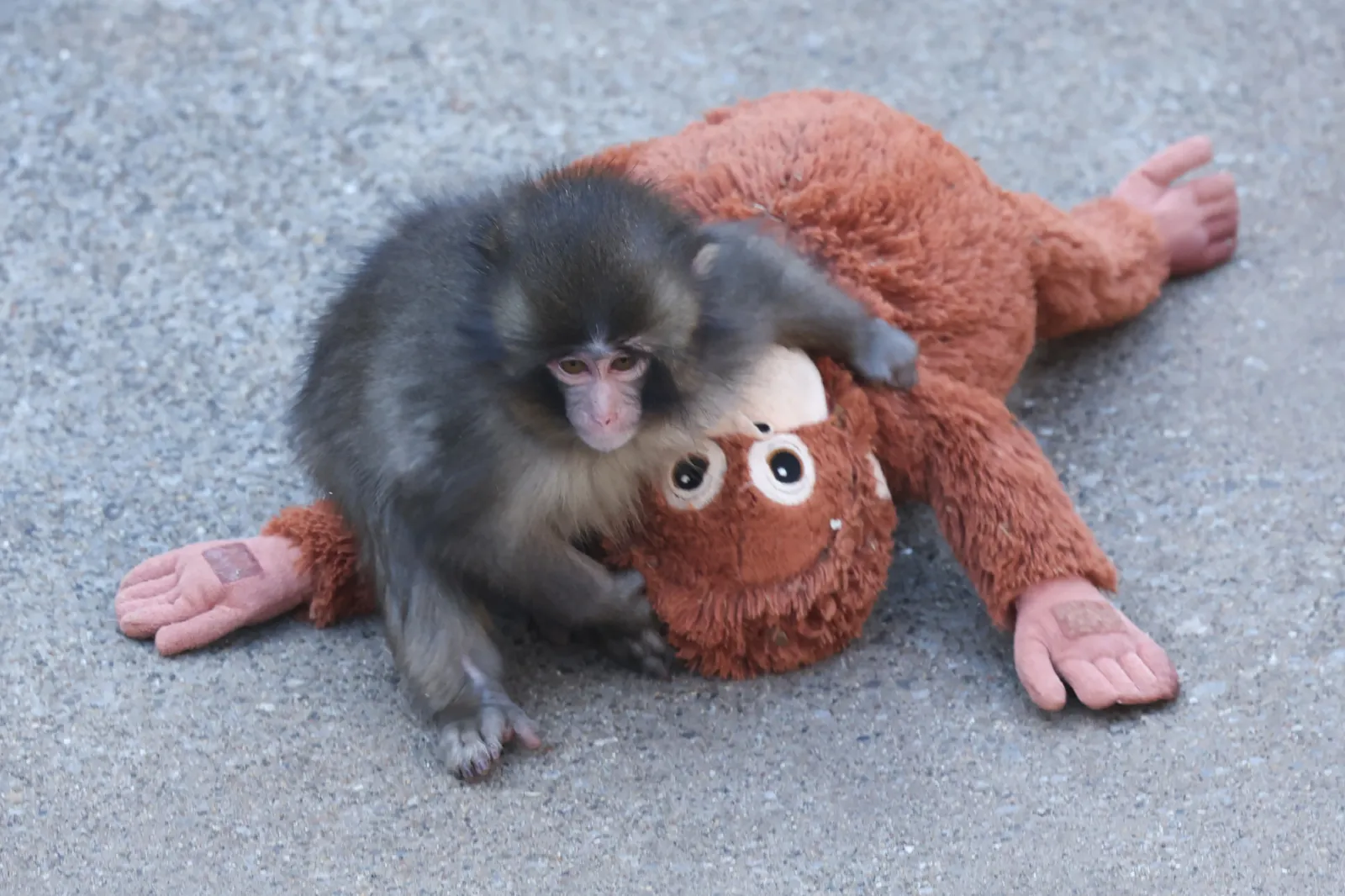
Dr. Emily Bethell, associate professor in primate cognition and welfare at Liverpool John Moores University, told the Daily Mail that keepers would closely monitor Punch and continue trying and testing approaches to keep him with the group because that is best practice, adding he would be removed only if he faced a real risk of physical harm.
The professor emphasized that the bigger risk to Punch is the long-term psychological impact of social isolation after abandonment, including missed key developmental opportunities to learn the social behaviors needed to navigate macaque hierarchies.
Bethell also noted that because Japanese macaques are female-bonded and males typically migrate at sexual maturity, Punch could potentially move to a new group later and form new social relationships.
Is Punch the Monkey OK and Safe in His Enclosure?
Despite some viewers being alarmed by recent viral clips showcasing troubling moments—such as Punch being dragged—the zoo’s statement said his troop had not shown serious aggression and asked visitors to support his socialization.
An on-site visitor video described incremental improvements, including play and proximity to other macaques, but this could not be verified, adding limits to independently assessing day-to-day conditions inside Punch’s enclosure.
Can Punch Be Adopted?
There have been calls for Punch to be adopted and placed outside of the zoo, however experts caution that heavy human involvement in the rearing of a macaque can hinder abilities to learn species-typical skills, giving Punch a reduced chance of successful social integration.
The legality of adopting a macaque varies from nation to nation, and within the U.S. by state. Some states outright ban primate ownership, while others have minimal restrictions. Japan, where Punch lives, prohibits keeping Japanese macaques as pets without special permission.
Beyond the legal side, expert opinion is united that macaques make terrible pets. They’re highly social, intelligent animals that need complex group dynamics to develop normally. They become increasingly aggressive as they mature, particularly males, and can carry diseases transmissible to humans. Owners who can no longer manage them often struggle to rehome them, since macaques raised in human households frequently can’t be integrated into social groups.
Punch The Monkey Latest Updates
Coverage from Japan and international outlets reported rising visitor interest, observations that Punch has attempted to interact with troop-mates, and a rotating mix of supportive and concerning moments captured on social media.
One report described a clip of Punch clinging to a zookeeper during feeding, reflecting his strong attachment behaviors.
Why Viral Fame Could Hurt Punch
Born Free, the wildlife charity, has warned that Punch’s viral fame could do more harm than good—for him and for his species.
The organization said the images and videos being widely shared do little to educate people about Japanese macaques’ natural behavior or the threats they face in the wild, and may actually be counterproductive. Content that triggers an emotional, human-like response to Punch risks fueling demand to own macaques as pets, a pattern Born Free says is commonly seen when wild animals go viral.
The charity also pointed to the commercial side of animal celebrity, noting that zoos typically profit from viral moments through merchandise, ticket sales, and social media engagement—while the animal itself remains in captivity with little prospect of that changing. Once public attention moves on to the next sensation, Punch will likely still be in the same enclosure for the rest of his life.
Born Free added that the circumstances behind Punch’s story may reflect deeper problems with keeping primates in zoos. Its 2025 report found that maternal rejection—the event that started Punch’s journey—occurs at significantly higher rates in captivity than in the wild, often because zoo environments fail to replicate the complex social structures primates need. The charity urged people to support wild macaque conservation rather than visiting zoos to see famous animals.
What Happens Next to Punch?
Experts indicated keepers would continue monitored integration with the troop and intervene only if physical harm risks escalate, while prioritizing social learning to reduce long-term psychological impacts from isolation. Because males in this species typically disperse at maturity, Punch could be moved to a different group as he grows older, offering another opportunity to build social relationships, according to expert commentary.
Public interest and visitor numbers are likely to remain high as new footage circulates.