
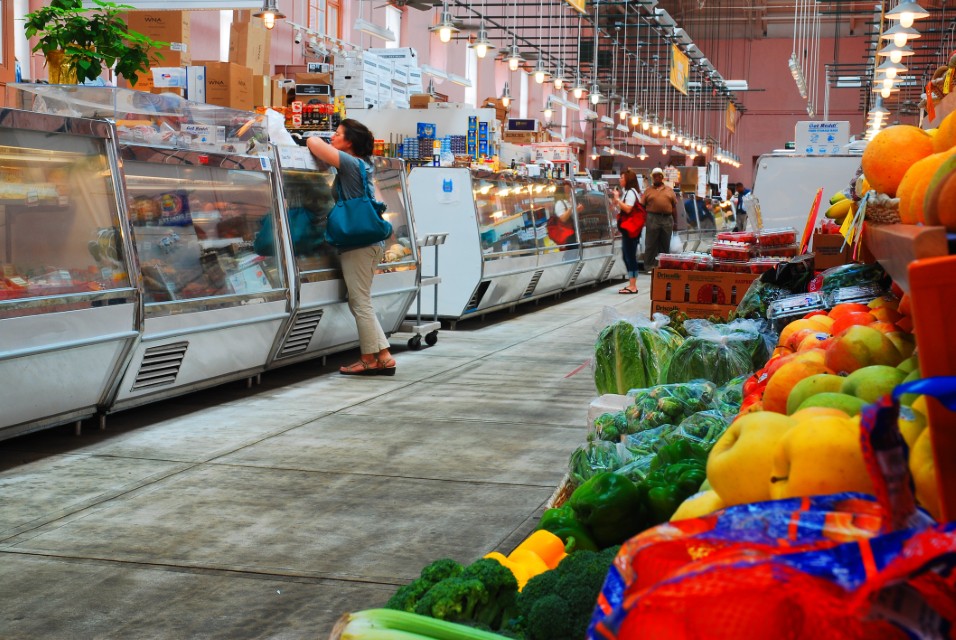
Food prices are expected to rise in 2026, with certain groceries particularly affected, according to estimates from the U.S. Department of Agriculture (USDA).
In its forecast for food costs in 2026, released on February 25, the USDA said food prices are generally expected to rise by 3.1 percent, with a prediction interval (a range of numbers expected to contain the value of a single future observation with a 95 percent confidence level) of 0.7 to 5.7 percent.
The department noted that costs of food away from home would rise by more than costs of food at home, with the costs increasing by 3.7 percent and 2.5 percent, respectively.
Although many food groups are forecast to go up in cost, egg prices are expected to continue going down.
The outcome may mean that “consumers, especially those on fixed, low incomes, will face difficult food purchase decisions as food prices rise faster than incomes,” Christopher Barrett, a professor of applied economics and management at Cornell University, told Newsweek. “Unfortunately, that typically means choosing cheaper, less nutritious diets.”
Why It Matters
Many Americans have been struggling to cover the high costs of living following years of inflation and other factors, making the cost of groceries a key point of contention over the past year. President Donald Trump vowed to make lowering the cost of food a major part of his administration’s efforts.
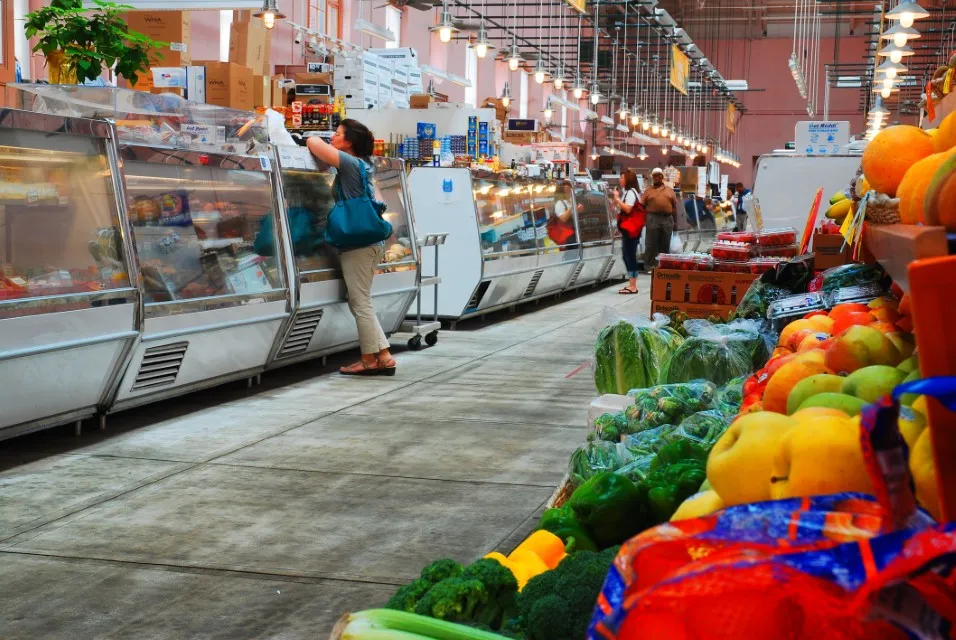 Groceries Expected to Have Highest Surge in Cost
According to the USDA’s report, the grocery items that will likely go up the most in 2026 are sugar and sweets. Prices for these groceries have been increasing by 1 percent from December 2025 to January 2026 and were 5.7 percent higher in January 2026 than in January 2025, with candy and chewing gum experiencing the largest price hikes.
The USDA predicted that prices for sugar and sweets will rise by 6.7 percent in 2026, with a prediction interval of 3.4 to 10.2 percent.
Other items likely to experience high increases in costs are beef and veal. The USDA said that beef and veal prices had decreased by 0.9 percent from December 2025 to January 2026 but were still 15.0 percent higher in January 2026 than in January 2025.
It noted that this was in the context of the U.S. cattle herd decreasing in size since 2019, while consumer demand has stayed strong, tightening supply.
“On top of this, feed cattle imports from Mexico have been halted due to the presence of New World Screwworm in Mexican herds,” Joseph Glauber, a research fellow at the International Food Policy Research Institute, told Newsweek. New World Screwworms are parasitic flies that infest warm-blooded animals, causing significant health issues.
As a result, the department predicted that beef and veal prices would increase by 5.5 percent in 2026, with a prediction interval of -2.7 to 14.4 percent.
Non-alcoholic beverages are forecast to be the item that will see the third-highest increase in cost, according to the USDA. The department said prices for non-alcoholic beverages had increased by 1.6 percent from December 2025 to January 2026 and were 4.5 percent higher in January 2026 than in January 2025.
The USDA said that prices for these drinks were rising faster than the 20-year historical rate, partly because of the surge in coffee prices.
It predicted that, for 2026, the cost of non-alcoholic beverages would rise by 5.2 percent, with a prediction interval of 1.6 to 9.2 percent.
Other Food Items
Other food items are expected to see smaller increases in cost, such as pork. The USDA expected that pork prices would increase by 1.9 percent in 2026, with a prediction interval of -3.8 to 7.9 percent. Pork prices rose 1.3 percent from December 2025 to January 2026 and were 1.4 percent higher in January 2026 than in January 2025.
Fresh vegetables are also expected to go up slightly in cost. The USDA said that retail fresh vegetable prices increased by 0.2 percent from December 2025 to January 2026 and were 0.8 percent higher in January 2026 than in January 2025.
It predicted that the cost of fresh vegetables would increase by 1.4 percent in 2026, with a prediction interval of -4.2 to 7.4 percent.
Fresh fruit may also experience a similar price change. Retail fresh fruit prices increased by 0.7 percent from December 2025 to January 2026, but were 0.5 percent lower in January 2026 than in January 2025.
The USDA estimated that prices for fresh fruits would increase 0.2 percent in 2026, with a prediction interval of -4.0 to 4.7 percent.
Poultry prices decreased by 0.1 percent from December 2025 to January 2026 but were still 1.6 percent higher in January 2026 than in January 2025, meaning the USDA forecast that poultry prices would go up by 0.1 percent in 2026, with a prediction interval of -4.4 to 4.7 percent.
What About Egg Prices?
The food item the USDA anticipated would go down in cost is eggs. Retail egg prices decreased notably by 5.3 percent between December 2025 and January 2026 and were 34.2 percent lower in January 2026 than in January 2025.
This is largely because of the spread of Highly Pathogenic Avian Influenza (HPAI), which caused retail egg prices to spike in late 2024 and early 2025. The USDA noted that HPAI “contributes to elevated egg prices by reducing egg-layer flocks and egg production.”
After confirmed cases of HPAI tapered in April 2025, and U.S. egg production has since increased, the USDA said it expected costs to continue to recover in 2026, with costs decreasing by around 27.4 percent in 2026.
Glauber told Newsweek that it is “not unusual” for the prices of eggs to fluctuate in this way. He said: “Egg prices are historically quite volatile and susceptible to supply shortfalls due to issues like avian influenza.”
What People Are Saying
Christopher Barrett, a professor of applied economics and management at Cornell University, told Newsweek: “Production costs are rising. Labor accounts for half the cost of the food in one’s grocery cart, and more in the case of food from a restaurant. The food system is especially dependent on foreign-born workers. So current immigration policy and tactics are creating labor shortages and driving up the cost of the food system workforce. Imported inputs like fertilizers and fuel make up another big chunk.
“Tariffs and the falling dollar make those more expensive. Growers, processors and retailers have to pass on those cost increases because they operate in low-margin industries. Productivity growth is slowing due to both climate change and disinvestment in the research that drives expanding output without more costly inputs.”
Joseph Glauber, a research fellow at the International Food Policy Research Institute, told Newsweek: “I think it is important to point out that while food price inflation has abated from the levels of 2-3 years ago, food prices remain high and are not likely to fall back to previous levels. At some point, assuming food price inflation falls back to historical levels, these new price levels will become the new normal, but for now, as consumers we still have “sticker shock” at the checkout line or when getting the restaurant bill.”
Update 2/26/26, 9:55 a.m. ET: This article was updated with comment from Joseph Glauber and Christopher Barrett.

In a polarized era, the center is dismissed as bland. At Newsweek, ours is different: The Courageous Center—it’s not “both sides,” it’s sharp, challenging and alive with ideas. We follow facts, not factions. If that sounds like the kind of journalism you want to see thrive, we need you.
When you become a Newsweek Member, you support a mission to keep the center strong and vibrant. Members enjoy: Ad-free browsing, exclusive content and editor conversations. Help keep the center courageous. Join today.
