
WASHINGTON and AFA WARFARE SYMPOSIUM — The leaders of the Senate’s small business committee have come to an agreement to restart the Small Business Innovation Research program, a key tool used by the Pentagon to flow seed funding to small firms developing new technologies.
The news will likely be welcomed by Pentagon leaders, as defense-focused projects have been slowed or paused due to the lack of funding authorization for the program.
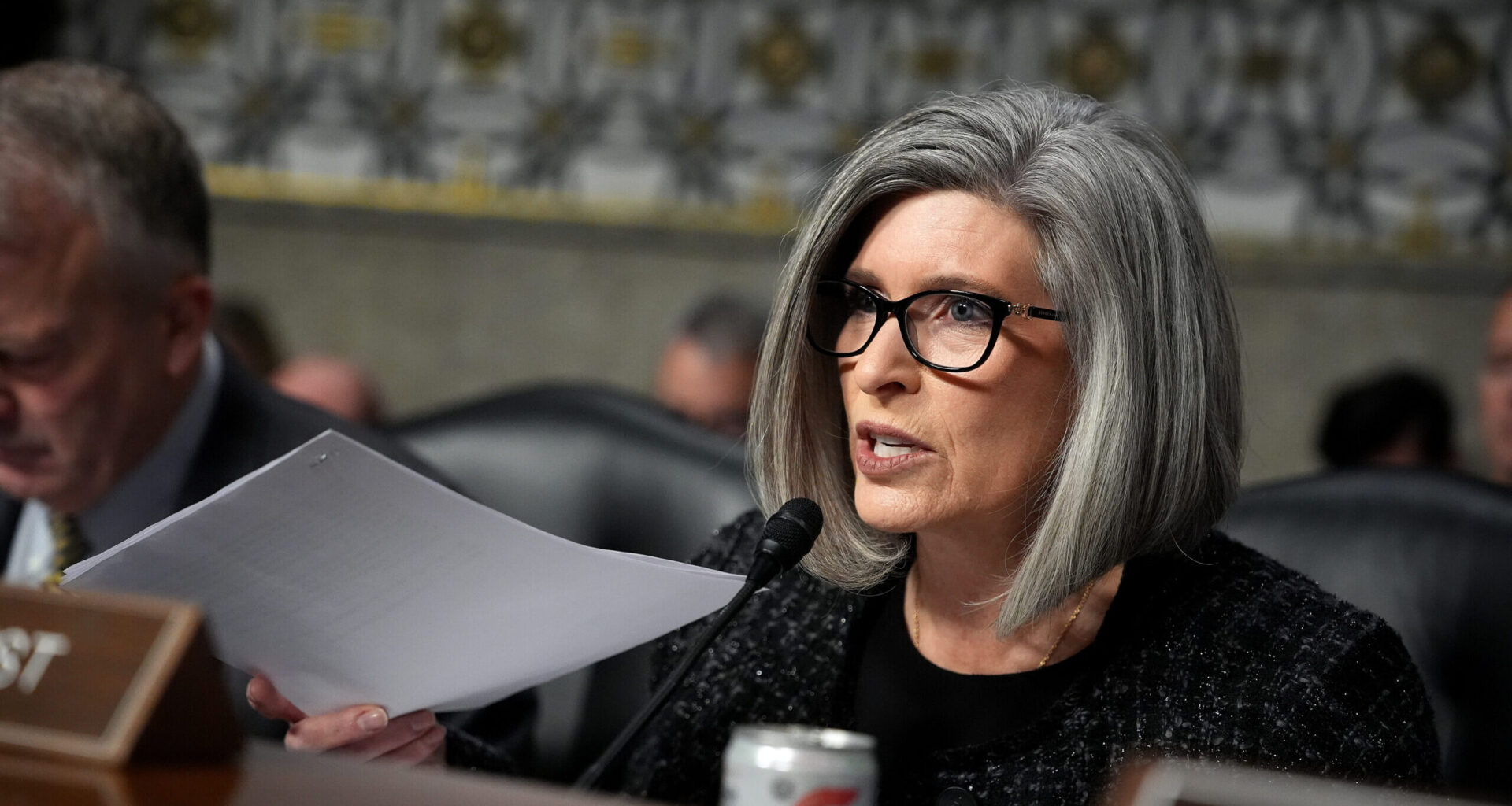
Sens. Joni Ernst, chairwoman of the Senate Small Business and Entrepreneurship Committee, and Ed Markey, its top Democrat, intend to introduce new legislation known as the “Small Business Innovation and Economic Security Act,” which would reauthorize SBIR for the next five years.
The bill — which two sources said could come to the Senate floor as early as tonight to be passed via unanimous consent — resolves a months-long gridlock between Ernst and Markey over how to reform the SBIR program. Once agreed to, it will move to the House, where passage is likely to occur.
Ernst’s original proposal, the Investing in National Next-Generation Opportunities for Venture Acceleration and Technological Excellence (INNOVATE) Act, imposed new rules meant to root out the risks of foreign nations like China gaining control of US technology. It also would have shifted some money from the Small Business Technology Transfer (SBTT) program to a new “Strategic Breakthrough” initiative aimed at helping companies bridge the timeline between developing a new technology and producing it.
However, the bill’s most controversial provision — one staunchly opposed by Markey — would have created a $75 million cap on SBIR funds a company could win throughout its lifetime. Ernst contended that the limit would force companies to move on from the program and find a wider market for their products in the commercial sector, while Markey argued it would kneecap research and development firms that have repeatedly won SBIR contracts. Since the SBIR program lapsed in October, Ernst has been adamant that she would not reauthorize the program without reforms.
RELATED: ‘Clean those bastards out’: Pentagon’s small business innovation fund in jeopardy
Like the INNOVATE Act, the Small Business Innovation and Economic Security Act establishes the Strategic Breakthrough initiative and includes provisions meant to safeguard technology from Chinese influence, Ernst’s office said in a news release.
However, it does not establish a lifetime cap on the amount of SBIR funds a company can win over its lifetime. Instead, the bill requires that SBIR offices instate an annual limit on applications, which Ernst’s office said would allow the program “to prioritize truly small businesses over large, entrenched companies that know how to game the system.”
Importantly, the bill provides federal agencies like the Pentagon some flexibility in implementing the rule. According to a version of the bill seen by Breaking Defense, the director of the SBIR office at each federal agency will be able to determine whether the applications ceiling limits how many proposals can be provided during a given fiscal year, to a certain topic or to a specific solicitation. Those officials will also be able to waive the proposal limit if a technology is time-sensitive or urgently needed.
Two sources told Breaking Defense that the breakthrough on the SBIR reauthorization happened earlier this week after Pentagon officials threatened to redirect funding if the program was not quickly reauthorized, and provided assurances to Markey about how the application limit would be implemented. CQ Roll Call was the first publication to report on the deal.
“When confronted with the status quo of the SBIR program, I knew I could no longer let China win, allow waste to run rampant, fail our warfighters, or let large companies crowd out actual small businesses,” Ernst said in a statement. “After working across the aisle, these necessary reforms will strengthen the integrity of America’s seed fund while unlocking new innovation, and I look forward to working with this administration to make sure taxpayers’ investments are turned into a reality. Now, with these commonsense changes, America’s seed fund can serve our truly small businesses.”
Markey said the reauthorization is a win for American small businesses, innovation and the workforce, but criticized the length of the program lapse.
“While I’m glad to have come to a bipartisan agreement, I am disappointed at the unnecessary suffering that was caused by the programs’ longest shut down in their history — a shut down that I fought hard to prevent as negotiations progressed,” he said in a statement. “This much-improved reauthorization has come a long way from early proposals that would have immediately kicked dozens of U.S. small businesses out of the programs and severely limited the ability of hundreds more to grow and thrive.”
Defend SBIR, an industry group that has been advocating for the reauthorization of the SBIR program without Ernst’s lifetime cap provisions, hailed the new bill as good news for American innovation and economic competitiveness.
“This bipartisan legislation followed months of negotiations to ensure that the renewal of these investments included common sense reforms to protect our know-how from potential adversaries, keep their merit-based competitive principles, and broaden participation,” the organization said. “Senator Markey has worked tirelessly with his colleagues in both parties to make sure what makes these programs successful are not undermined by arbitrary restrictions so we can build on their unsurpassed return on investment for taxpayers.”
A Delay On Enemy-Sensing Satellite Capabilities
The potential reauthorization of the SBIR program will be welcome news for the Pentagon, with a Space Force official today laying out one example of how the lapse in funding has impacted the service.
Speaking today the Air Force Association’s air warfare conference, Kelly Hammett, the director of the Space Rapid Capabilities Office, said his office has been prepared to award three contractors for satellite communications and warning payloads — “sensors that tell you something is tracking you” or approaching — but has been forced to pause due to the lack of SBIR authorization.
“We’ve already gone through the [request for proposals], the evaluation. We’ve been waiting for months to award these contracts through SpaceWERX” — the Space Force’s innovation arm — “to get some small businesses in this area,” Hammett said during a media roundtable here.
The sensors are for a task called “own-ship awareness,” and experiments in the area have been underway for years. Hammett previously revealed the Space Force launched payloads in 2023 to assess how China’s satellite surveillance network tracks US birds. One goal of fielding these new sensors, he said, is to place them on satellites next to other birds already flying that don’t possess own-ship awareness, since spacecraft can’t be retrofitted on orbit.
“What we can do is put companions near them that have these capabilities to either sense adversary tracking radars or LaDARs [laser detection and ranging], or approaching snugglers. That’s what we’re pursuing,” he said.
Theresa Hitchens in Washington contributed to this report.