
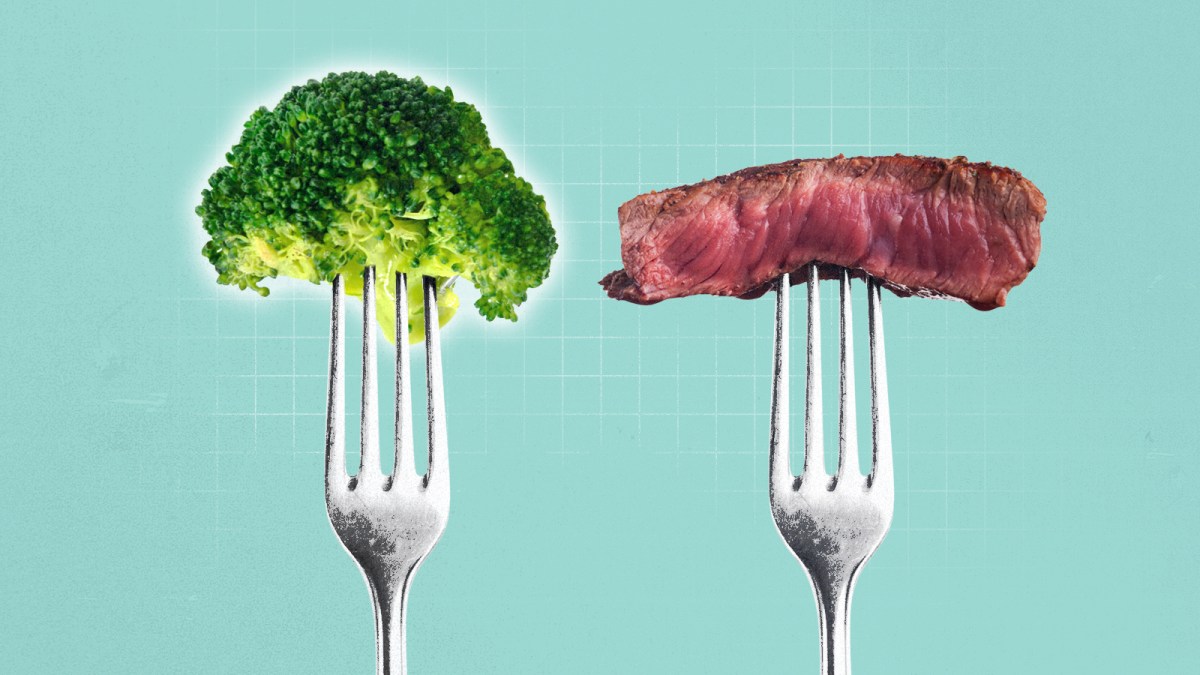
Vegetarians are up to a third less likely to get five types of cancer, the largest study of its kind has concluded.
A team at Oxford University looked at 1.8 million people, finding that those who did not eat meat were at a lower risk of developing several cancers, including breast and prostate.
They said “meat itself” was likely to be the problem, urging people to avoid processed meat and instead build meals around wholegrains, pulses, fruit and vegetables.
Compared with meat eaters, vegetarians have a 21 per cent lower risk of pancreatic cancer, a 9 per cent lower risk of breast cancer, a 12 per cent reduced risk of prostate cancer, 28 per cent lower risk of kidney cancer and 31 per cent lower risk of multiple myeloma, a form of blood cancer.
In total, these cancers kill 41,800 people and account for 143,000 new cases in Britain each year.
However, it was not all good news for vegetarians: they were nearly twice as likely to get the most common type of oesophageal cancer, while vegans were at higher risk of bowel cancer. This was probably because they missed out on key nutrients such as calcium and vitamin B12 which could help protect against the disease, researchers said.
People who ate only poultry and no red meat had a slightly lower cancer risk than those who ate all types of meat.
The study, published in the British Journal of Cancer, pooled data from previous research involving 1.8 million people, mainly in the UK and US, who were tracked for two decades and completed food questionnaires to assess their diets.
• How cats may prove an unexpected ally in fight against cancer
There were 1.64 million meat eaters in the study, who ate on average 50g of meat a day — the equivalent of one sausage or two slices of ham.
Tim Key, emeritus professor of epidemiology at Oxford Population Health and a study author, said the reduced cancer risk was probably not simply because vegetarians were healthier overall and ate more vegetables and fibre.
He said: “My feeling is the differences are more likely to be related to meat itself than to simply vegetarians eating more healthy foods.”
It is already known that eating processed meat such as ham, bacon and salami is linked to an increased risk of bowel cancer, and possibly stomach cancer.
Possible reasons that meats can cause cancer include chemical changes during cooking and inside the body that damage cell DNA. Some manufacturers add nitrates to processed meat to preserve colour and prevent bacterial growth known to damage DNA in the bowel.
Key said: “There are around three million vegetarians in the UK, with interest in vegetarianism growing in many parts of the world. Cancer is a leading cause of death worldwide, accounting for nearly one in six deaths. Dietary patterns that prioritise fruit, vegetables and fibre-containing foods, and avoid processed meat, are recommended to reduce cancer risk. Our study helps to shed light on the benefits and risks associated with vegetarian diets.”
The study is the first to quantify how diet pattern affects the risk of cancers, investigating 17 forms of the disease. The results were adjusted for other factors, such as obesity and alcohol, which can increase cancer risk.
When looking at vegans, researchers found they had a significantly higher risk of bowel cancer when compared with meat eaters. They said this might be due to a low average intake of calcium compared with other people. Cancer Research UK has already found that calcium lowers bowel cancer risk. A large glass of milk a day is linked to a 17 per cent reduction.
• Dr Mark Porter: Early onset bowel cancer — don’t ignore these symptoms
Aurora Pérez-Cornago, the principal investigator of the study, said: “Vegetarians typically consume more fruit, vegetables and fibre than meat eaters and no processed meat, which may contribute to lower risks of some cancers.
“The higher risk of oesophageal squamous cell carcinoma in vegetarians and bowel cancer in vegans may relate to lower intakes of certain nutrients more abundant in animal foods. Additional research is needed to understand what is driving the differences in cancer risk found in our study.”
The study was funded by the World Cancer Research Fund, which supports global scientific research on cancer prevention and survival through diet, weight and physical activity. It is published on Friday in the British Journal of Cancer.
Dr Helen Croker, assistant director of research and policy at World Cancer Research Fund International, said: “We funded this research because people deserve evidence they can trust as they consider eating less meat, and this study provides the most comprehensive evidence yet on vegetarian and non-meat diets and cancer risk.
“The results suggest non-meat diets are linked to lower risks for some cancers, though not all, highlighting important differences between cancer types and the role of different dietary patterns.”