
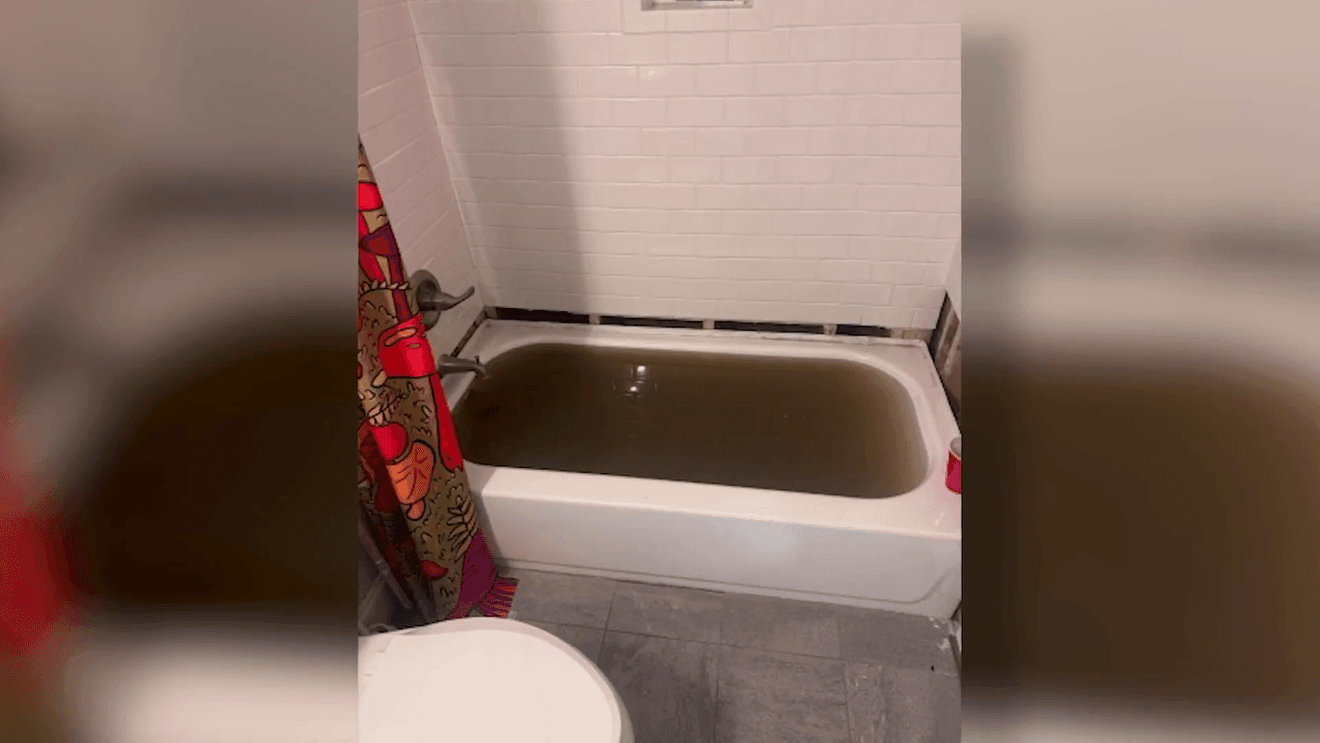
BALTIMORE (WBFF) — Some residents in Hampden are demanding action from the City for damages from sewage back-ups.
A letter has been submitted with the Department of Public Works (DPW).
ALSO READ | ‘Alarming’ and ‘wasteful’: City residents react to IG report on mayor’s office spending
Eight households are making reimbursement requests, including more than $120,000 in documented damages from sewage back-ups.
The households also shared photographs that captured the damages, including sewage overflowing from toilets and in bathrooms.
Why is this DPW’s believed problem?
Back in 2002, the City entered into a federal consent degree to fix aging infrastructure that was causing raw sewage back-ups in homes. The City is required to maintain a $2 million fund to reimburse those impacted.
During a press conference on Thursday, former Maryland Deputy Attorney General Thiru Vignarajah shared data that he said showed since 2021 only about eight applicants were approved.
“We don’t understand this,” Vignarajah said. “The application is pretty straightforward. Give us your name, your address, when it happened, did you call 311? Show us some documentation in the form of videos and photographs of the damage done to you and share with us some invoices. Of how much it costs to fix it, not rocket science, doesn’t need a federal lawsuit, you don’t need to prove violations of the Clean Water Act. Just confirm that you did what you had to do to document what had happened and submit this.”
FOX45 News sent questions to DPW asking how it’s responding to this letter, and why so few applicants were approved.
A spokesperson released the following statement:
Comment with Bubbles
BE THE FIRST TO COMMENT
The Department of Public Works understands the concerns raised by residents and takes reports of basement backups seriously. The City maintains reimbursement programs for certain wet-weather sanitary sewer overflows; however, eligibility is governed by specific criteria. Claims that fall outside existing program parameters, including basement backups produced by dry-weather events, may be submitted to the City Law Department for review through the standard claims process, and each claim will be evaluated on its individual merits. Since 2002, the City of Baltimore has invested nearly $2 billion in wastewater system improvements to reduce sanitary sewer overflows. Wet-weather SSO volumes have been reduced by approximately 84 percent compared to 2002 levels and are projected to be reduced by 94 percent by 2030. The City has also enhanced its operations and maintenance plan for the collection system to improve its ability to proactively prevent sewer backups that occur when pipes become choked with debris, tree roots, or other materials. The City continues to strive to replace and correct issues with its aging infrastructure, while keeping in mind the financial constraints of its ratepayers.”