
WASHINGTON — The Space Force has seen positive results from experiments with space-based sensors to track airborne targets, and now is hoping to use incoming funds to speed capability to orbit, according to Chief of Space Operations Gen. Chance Saltzman.
Speaking on Tuesday at the annual Air Force Association Warfare Conference in Colorado, Saltzman said that it is still too early in the acquisition process for such sensors, known as Airborne Moving Target Indicators (AMTI), to talk about program “specifics” and timelines being put together by the Space Force and the National Reconnaissance Office (NRO).
However, he waxed positive about the prospects for rapid progress for the program.
“We have seen demonstrations and some prototypes of payloads that will collect the data. And all of the data that we’re seeing is highly encouraging. The fidelity that we’re able to achieve from on orbit payloads is very promising,” he said.
The Space Force and the National Reconnaissance Office (NRO) have been cooperating on the AMTI prototypes, although officials from both have been coy about of the effort, including refusing to provide a budget or name the contractor(s) involved citing classification issues.
Further, Saltzman said, the work already done by the two sides to develop and launch Ground Moving Target Indicator payloads for tracking terrestrial targets should help expedite the development of the AMTI constellation’s parameters.
“How will the RF [radio frequency] links come back? How do we do data processing? How do we rapidly fuse the information and make sense out of a battle management situation? All of those concepts and technologies are evaluated and will have application as we move into AMTI,” he said.
“So, I’m very hopeful, because the money is coming through, that we’ll be able to progress quickly through because of what we learned with the GMTI piece of it,” Saltzman added.
Under the Defense Department’s spending plan for fiscal 2026 reconciliation funds recently sent to Congress, the AMTI program is slated to get a whopping $2 billion, “pending approval.”
Further, the Space Force leaders are optimistic that the service will get a big budget boost in FY27 as the Trump administration plots the way forward to a $1.5 trillion defense topline.
“The budget outlook for FY27, without going into specifics, is pretty positive for the Space Force in general. The request is large, and … we could be getting a lot more money,” Kelly Hammett, head of the Space Rapid Capabilities Office told reporters today at the AFA Warfare conference on Wednesday.
AMTI and GMTI are both being developed to replace the aircraft fleets that primarily conduct target tracking for the US and allied air forces, but which are aging out of operation.
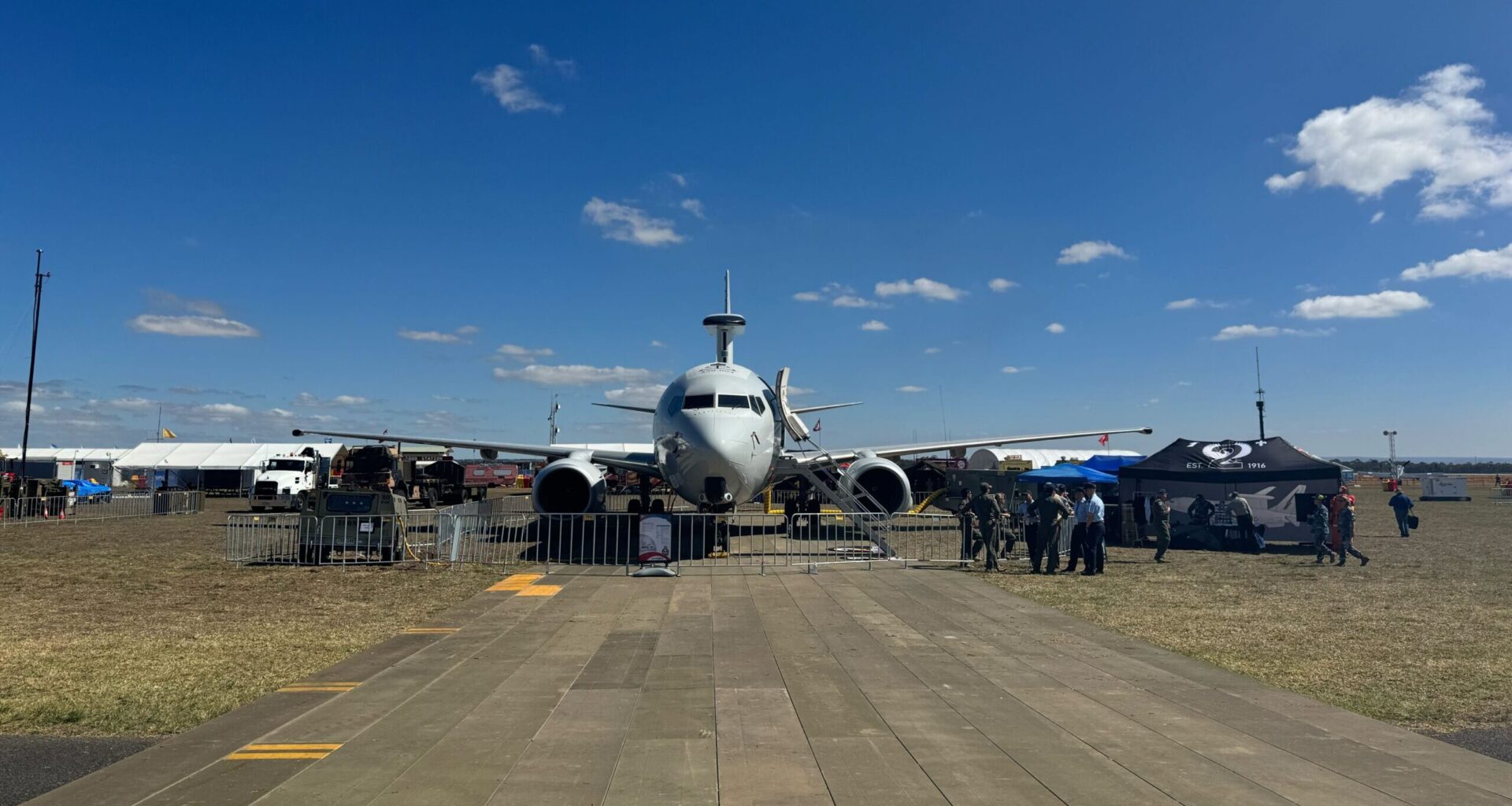
AMTI is intended to eventually replace the Air Force’s E-7 Wedgetail aircraft, which in turn was envisioned as a replacement the outdated E-3 Sentry Airborne Warning and Control System (AWACS) fleet. The service proposed canceling the Wedgetail program this year, but ran into congressional opposition and now intends to finish producing the two rapid prototypes under contract with Boeing.
GMTI will replace the E-8 Joint Surveillance Target Attack Radar System (JSTARS) aircraft.
Air and Space Force officials argue that shifting the tracking mission from the air domain to space is necessary given improvements in adversary air defenses.
“JSTARS and AWACS are not going to survive right off the coast of China at the beginning of a war,” Gen. Gregory Gagnon, commander of the Space Force’s Combat Forces Command, told the Air Force Association’s annual AFA Warfare conference on Wednesday.
Senior Space Force officials have said they are hoping to get both AMTI and GMTI capabilities on orbit by the early 2030s — with those capabilities foundational to the Trump administration’s ambitious Golden Dome initiative to create a comprehensive air- and missile-defense shield over the American homeland.
However, they also acknowledge that the challenge is greater for AMTI than GMTI, since tracking fast-moving planes, drones and airborne missiles is harder than keeping close tabs on relatively slow moving tanks, trucks, mobile missile launchers and ships.
Gagnon explained that the key differentiators of AMTI from GMTI are “speed” and “clutter” in the air domain.
The speed issue is not only about how fast the targets are moving, but, as an NRO spokesperson explained, it also is about how fast data from space-based AMTI sensors can be analyzed, fused and transmitted to “shooters” on the ground, at sea or in the air.
“The [AMTI] data the Intelligence Community and warfighter need presents a multi-phenomenology challenge that requires automated orchestration of the NRO’s collectors, low-latency data transport, and rapid data fusion by the NRO’s unmatched space communications and ground architecture capabilities,” the spokesperson said.
Indeed, the ability to rapidly fuse data from multiple space- and air-based sensor systems into targeting data that can be disseminated to warfighters via multiple communications networks in near real time is a major hurdle for the Air and Space Force in supporting Golden Dome. To overcome those challenges, Secretary of the Air Force Troy Meink on Monday announced a new series of exercises called Ringleader designed to help the services understand how to stitch together disparate sensing capabilities.