
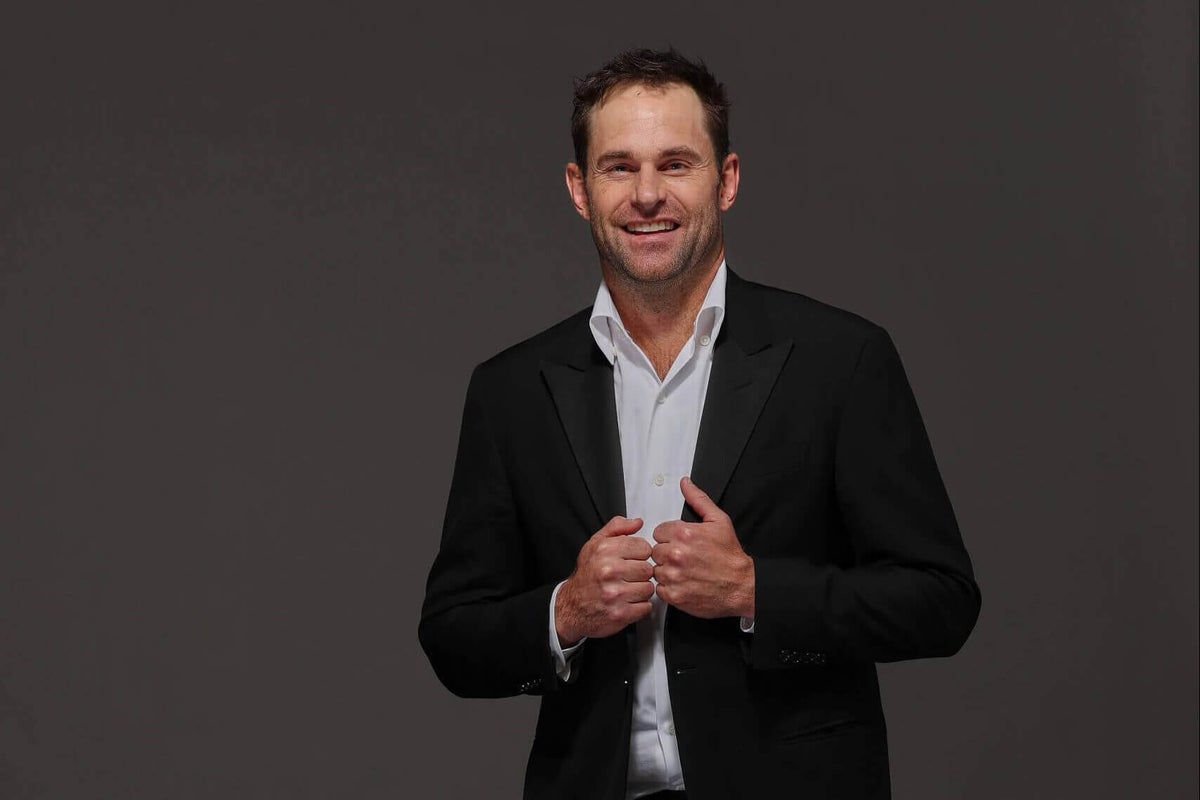
Tennis has never been so fragmented, but occasionally something happens which prompts virtually no dissent.
ESPN’s decision to add Andy Roddick to their team for Wimbledon and the U.S. Open on a multi-year deal was one such moment. When it was announced on Monday, fellow former world No. 1 Andy Murray captured the mood. “This is a great deal for tennis,” he posted on X. “Great knowledge of the game, well researched, speaks well, loves tennis, good fun, enjoys a debate and my god tennis needs way more of that on its broadcasts.”
Since retiring in 2012 aged 30, Roddick has established himself as one of the sharpest minds in the sport. He was initially largely invisible, save for a brief stint with the BBC, Britain’s state broadcaster, for their Wimbledon coverage in 2015. Roddick earned rave reviews but no longer wanted to base his life around tennis and its relentless travel and largely faded from public view.
That was until he launched his own podcast, Served with Andy Roddick, in 2024. The show is produced by Served Media, a company the 2003 U.S. Open champion co-founded with sports television producer Michael Hayden, and now has nearly 200,000 subscribers on YouTube.
In a sport that can be cosy and traditional, Roddick offers something different. He has an uncompromising approach on Served, while breaking down complex or technical topics in engaging, accessible ways. At 43 he’s also a lot younger than many of the dominant tennis voices in the media, and is able to combine his expertise and knowledge of playing and beating so many of the game’s best with an everyman appeal.
As Hayden, who also appears on Served, put it to The Athletic this week: “It’s like you’re sitting at the bar having a conversation.”
But will Roddick still be the straight-talking pundit not afraid to shoot from the hip when working for a more traditional broadcaster?
“Well, straight-talking is different from shooting from the hip,” he said in a phone interview with The Athletic on Wednesday. “Shooting from the hip implies that you haven’t thought about what you’re saying.
“I can’t go and drop 16 F-bombs on ESPN. But I don’t know that ESPN made the approach for me not to do it the way that I’ve been doing it. That would seem like a waste of resources to me. I’m not going to change much — if I believe something, then I’m happy to commit to that opinion.”
Hayden’s view? “Yeah, I mean he definitely won’t be wearing a tie.”
The straight-talking, shooting-from-the-hip distinction is key. Murray, a similarly keen tennis mind, has said he’s wary of commentating because he didn’t like it when former players made comments on his game without sufficient knowledge.
Part of Roddick’s appeal is that his research, closeness to a number of current players and first-hand experience allows him to give listeners and viewers important context about the sport’s unique dynamics and how challenging it is. So he’s often an ally rather than an antagonist when it comes to current players.
An impassioned defence of world No. 4 Alexander Zverev in November is a case in point. “It p***** me off,” Roddick said of the frequent criticism Zverev receives. “I don’t ever ever want to get to the place where anyone who’s not them (Jannik Sinner and Carlos Alcaraz) is treated like a piece of s***. That’s ridiculous.”
After years of staying much the same, the tennis broadcast landscape appears to be slowly changing. Roddick is a refreshing new voice, while Andre Agassi, absent from tennis for so long after retiring in 2006, has started doing more regular television analysis work and was a big success for the BBC at Wimbledon last year.
One moment that summed up the different energy and insights he brought came in the men’s semifinal between Alcaraz and Taylor Fritz. “People watching are watching for tennis, not for this,” Agassi said to the main commentator Andrew Castle, after frequently being interrupted trying to analyze the match so that Castle, a 62-year-old former British No. 1, could identify another celebrity in the crowd.
A day after the Roddick ESPN announcement meanwhile, Tennis Channel confirmed a three-year deal with Chris Eubanks, who only stopped playing tennis at the end of last year, aged 29. “Eubanks is the most natural broadcaster I’ve seen in a long time,” Roddick said, while also citing four-time Grand Slam champion Jim Courier as one of his favourite analysts.
Eubanks was part of the revamped ESPN team at the Australian Open last month, which also included CoCo Vandeweghe, a 34-year-old who retired in 2023. Longtime analysts Pam Shriver, Brad Gilbert and Darren Cahill were not part of the lineup. Meanwhile Danielle Collins, who at 32 is taking a break from the sport, covered the event for the Tennis Channel. Andrea Petkovic, the 38-year-old former world No 9 was also part of the Tennis Channel team, and over the last few years has earned pretty much universal acclaim for her incisive and entertaining analysis.
Veterans like Shriver and Mary Carillo remain extremely well-respected but some, like John McEnroe, have come in for criticism for a perceived lack of originality and insight.
The BBC, meanwhile, was told by Wimbledon to freshen up its coverage for this year’s event, according to a report last month in the Times of London. The broadcaster did not wish to comment on the story (nor did the All England Club), but a BBC spokesperson said on Thursday via email that exciting plans were in place for this year’s coverage of the event.
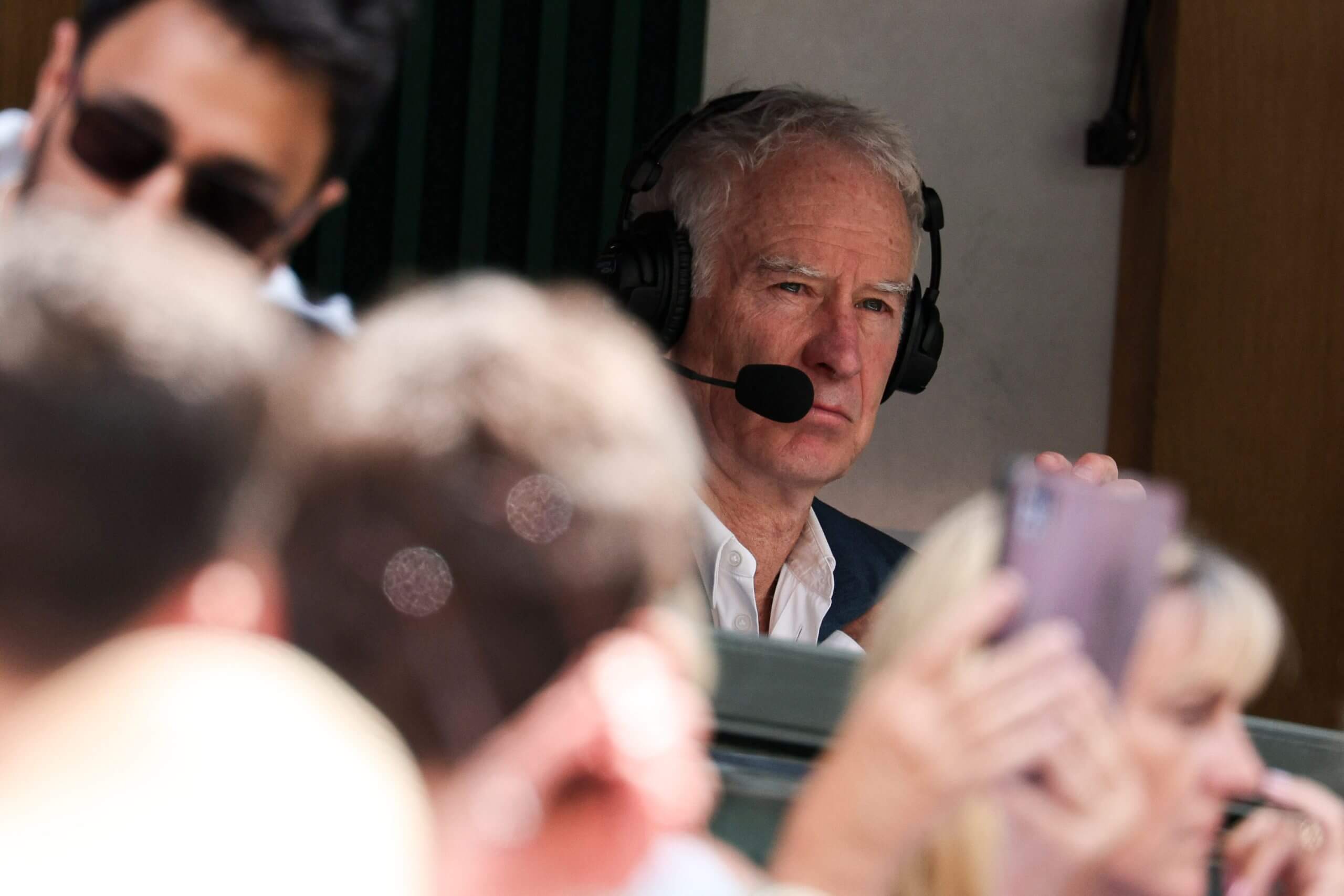
John McEnroe’s punditry style is not to everyone’s taste. (Adrian Dennis / AFP via Getty Images)
As for ESPN, Roddick is full of respect for their tennis coverage over the last two decades or so: “I would challenge you to find any coverage of any sport that has had that good of a run.”
He doesn’t know yet how his workload will be divided between the studio and commentary booth, but he is determined to get himself up to speed as quickly as possible with the latter. Roddick has only commentated on three matches in his life — all at Wimbledon in 2015 — but pledged to “empty the canister of advice with people that I have access to. I won’t be understudied going in.”
He said he would be conscious of the difference between the brevity needed for 20 seconds between a point during commentary or a seven-minute match preview compared to a freewheeling podcast that can last a couple of hours. The fundamental principle of what he tries to do, however, would remain the same. “It’s still tennis and it’s about not just the what, but explaining the why. I think that’s probably the lane that they hired me for.”
Neither Roddick nor ESPN wanted to comment on the finances of the deal, but he said it was a straightforward one to agree. The timing felt right. Initially focusing on other pursuits in retirement, including a highly lucrative commercial real estate company, Roddick is now sufficiently reengaged in the sport through Served to feel confident that what he has to say about it is worth listening to. “I didn’t watch enough before to believe my own musings,” he said. “That’s changed in the last five or six years.”
He pointed too to the fact that his kids are older now — Roddick’s son Hank is 10, his daughter Stevie eight — and there’s a little more scope to travel. Though he still has too much going on at home to commit to the kind of peripatetic lifestyle that defines many coaches and analysts in retirement. And indeed himself for pretty much his first 30 years.
Roddick lives in Charlotte, North Carolina, and leads a full life with his wife, the actor Brooklyn Decker, and their kids. When we spoke he was about to set off on a three-hour drive to Athens, Georgia to see the Runarounds, the band made famous by the show of the same name, which Decker was in.
Much of Roddick’s time is spent recording Served to an increasingly big and global audience — now in a purpose-built studio five minutes from where he lives, having moved from a corner of his home gym after last year’s U.S. Open.
Roddick’s ability to pull A-list guests like Roger Federer and Rafael Nadal adds to the show’s appeal, but the main draw is the intimacy listeners feel with the host, despite him being a Grand Slam champion and former world No. 1.
The New York Times reported in September 2025 that “Served” had surpassed $2million in revenue for the year up until that point, doubling its previous year. That figure rose by the end of 2025, and according to Hayden they have already booked more revenue than they generated in all of last year.
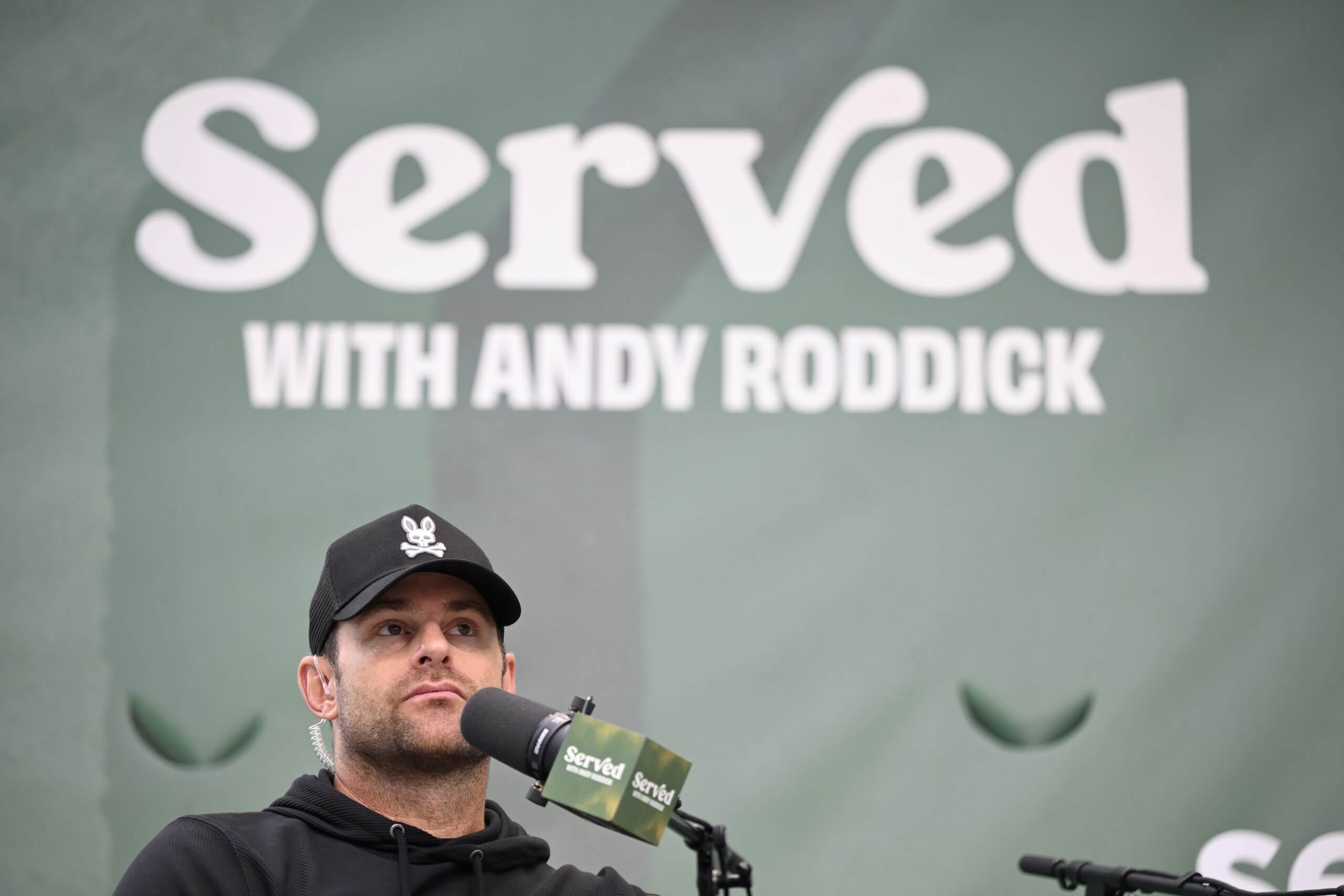
Roddick’s Served podcast has been a hit. (Eakin Howard / Getty Images for Laver Cup)
The success of Served shows both what former players can achieve on their own, but also its limitations. “We started our show with I think $7,000 worth of Amazon equipment and you don’t need permission to go on YouTube or Apple or Spotify, but we will never be able to afford the rights to the biggest tournaments,” Roddick said. “So you can have an impact, you can have an audience. But it is going to be siloed and non-live.”
The greater amount of data and graphics available to Roddick at ESPN excites him, and Hayden sees it as win-win for Served, whose output won’t be affected by the deal (“my single biggest non-negotiable” Roddick said on the show this week). At the U.S. Open last year, they hosted a live recording of the show on site, and there is the scope for similar tie-ups this year, while having Roddick onsite at Wimbledon and the U.S. Open will only add to his visibility and first-hand knowledge of how the sport looks in 2026.
Hayden references figures in other sports like the now Los Angeles Lakers coach JJ Redick, whose podcast The Old Man and the Three only grew in popularity alongside his work with ESPN.
ESPN may well benefit from Served viewers following Roddick to their channel. This could be helpful given the backlash to its decision to only stream the matches on the three major Australian Open courts — Rod Laver Arena, Margaret Court Arena, and John Cain Arena — to those willing to pay an extra $30 a month for ESPN Unlimited.
The network said it makes decisions about which events are shown on ESPN Unlimited on a sport-by-sport and event-by-event basis, and told The Athletic that plans for Wimbledon and the U.S. Open will be announced closer to the events.
But Roddick’s presence there will undoubtedly freshen things up. The man who is never short of an opinion has become an unlikely tennis unifier.