Many nonprofit wildlife rescues function as emergency animal hospitals with specialized equipment and rehab spaces, but rely on the public to bring in sick animals.
ELIZABETH, Colo. — A majestic bald eagle is fighting for its life Thursday after two good Samaritans stepped in to rescue the distressed bird from a creek side property — guided every step of the way by experts at Rocky Mountain Wildlife Alliance.
What unfolded earlier this week was not a routine wildlife call. It was a reminder of how much wildlife rehabilitation depends on everyday people.
On Sunday, Allan Morton Jr. and his wife, Joy, were walking their property at Further Up Farms in Elizabeth when they spotted the eagle. The bird appeared weak and disoriented. They kept their distance, took photos and monitored its condition.
By Monday, the bird had barely moved.
Concerned, Morton contacted Rocky Mountain Wildlife Alliance, expecting a rescue team would arrive. Instead, he learned something many Coloradans don’t realize: most wildlife rehabilitation centers do not dispatch field rescue crews.
“We operate like an animal hospital,” explained Executive Director Emily Davenport. “The public brings animals to us. We don’t have the funding or staffing to go out on rescue missions.”
Like many wildlife hospitals, the Alliance is a small nonprofit, largely volunteer-supported and resource-limited. On the day Morton called, staff members were short-handed and out of the immediate area.
But that didn’t mean they couldn’t help.
Rather than leaving the situation unresolved, Davenport and her team did what they are trained to do — provide expert instruction.
“My team walked these two through the process to save the eagle and not get injured themselves,” Davenport said. “When any wild animal is sick or distressed, to contain it is pretty easy to do.”
The eagle initially moved into a nearby creek, complicating efforts to contain him. From there, the rehabilitators guided Morton and his neighbor, Seth — a U.S. Army veteran — step by step. They adapted their approach as the bird shifted between water and land.
After about 25 minutes, the pair successfully secured the powerful raptor without injury to themselves or the bird.
Watch Allan Morton’s YouTube video of the rescue:
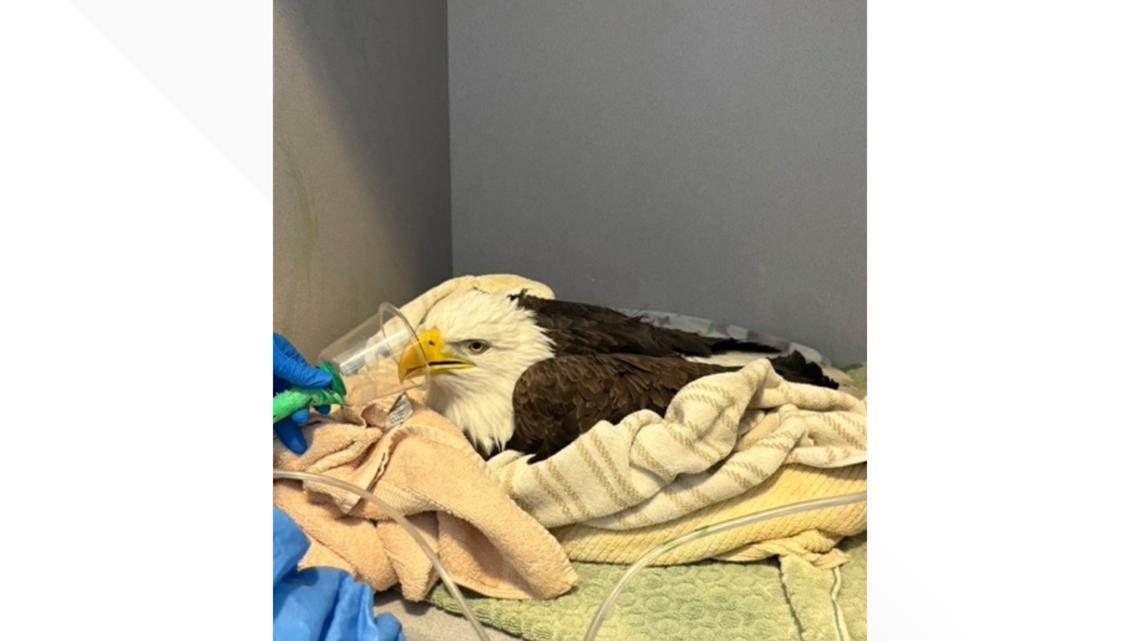
Once transported to the Alliance’s facility, veterinarians assessed the bird and discovered the likely cause of its weakness: lead poisoning, commonly contracted when eagles consume animals shot with lead ammunition.
The prognosis is guarded.
“Right now, it’s about a 50-50 chance and we’re trying to save his life after the poisoning,” Davenport said. “He’s not out of the woods.”
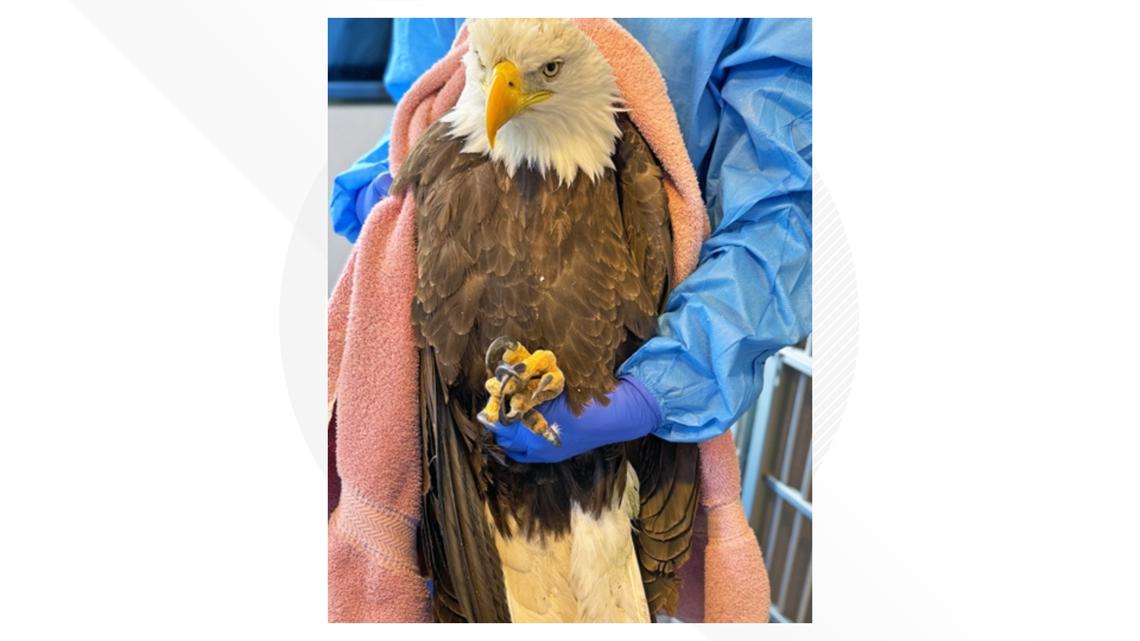
Photos taken in the days following the rescue show the eagle alert but clearly weakened as staff work to stabilize him.
Clearing up a common misconception about animal rescue
Davenport said the bird’s rescue highlights a widespread misunderstanding about wildlife rehabilitation.
“There’s a misconception that wildlife centers automatically come out and perform rescues,” she said. “Most of us simply don’t have the resources. We rely on the public.”
Facilities like Rocky Mountain Wildlife Alliance function much like emergency animal hospitals. They maintain specialized containment procedures, medical equipment and rehabilitation spaces — but depend on citizens to transport animals to their care.
“The cool thing about our organization is that we can give them the instruction,” said Davenport. “We give them the information and resources they need to help safely. We walked them through the directions; it was the only option.”
And it worked.
For Morton, the experience was unforgettable. “At one point, my finger was within his talons,” he wrote in a social media post. “I was amazed by the strength he exhibited. What a magnificent bird.”
He also shared two takeaways: that ordinary people can accomplish extraordinary things — and that hunters should consider switching to lead-free ammunition.
Lead poisoning remains one of the most common threats to bald eagles and other raptors across the country. Davenport hoped the story inspires both awareness and understanding.
“They did an excellent job by themselves, and our team gave them expert direction, and they saved the life of this bald eagle,” she said. “We can’t do this alone.”
As the eagle continues treatment, staff remain cautiously hopeful. With intensive care and time, they aim to release him back into the wild where he belongs.