
Two cases of measles were recently diagnosed in Massachusetts residents, according to the Department of Public Health. The cases are the first two with ties to the state this year, but they come amid a large national outbreak.The first case involved a school-aged resident, but health officials said the child was diagnosed out of state and will remain out of state during the infectious period. DPH said there are no known exposures to others in Massachusetts. In the second case, DPH said the patient is an adult who lives in Greater Boston and recently returned from international travel. Health officials said the individual had an “uncertain vaccination history” and visited several locations where others may have been exposed. DPH said health officials are working to identify and notify anyone who was potentially exposed. “These two cases of measles in Massachusetts have occurred in the context of a large national outbreak of measles and a very large international outbreak. Although there is no evidence of the spread of measles within Massachusetts at this time, additional cases could occur,” DPH wrote in a statement.Vaccination rates in Massachusetts are high, and DPH said the risk to most residents remains low, but the risk is not zero. “Measles is the most contagious respiratory virus and can cause life-threatening illness. These cases are a reminder of the need for health care providers and local health departments to remain vigilant for cases so that appropriate public health measures can be rapidly employed to prevent spread in the state,” said Public Health Commissioner Robbie Goldstein. What to know about measles?Measles is caused by a highly contagious virus that is airborne and spreads easily when an infected person breathes, sneezes or coughs. It is preventable through vaccines and has been considered eliminated from the U.S. since 2000, though the country is at risk of losing that achievement.Measles first infects the respiratory tract, then spreads throughout the body, causing a high fever, runny nose, cough, red, watery eyes and a rash. Most kids will recover, but infection can lead to dangerous complications such as pneumonia, blindness, brain swelling and death.Why vaccination rate mattersThe best way to avoid measles is to get the measles, mumps and rubella vaccine. The first shot is recommended for children between 12 and 15 months old and the second between 4 and 6 years old.After two doses, the shot is 97% effective against measles and its protection is considered lifelong.Measles has a harder time spreading through communities with high vaccination rates — above 95% — due to “herd immunity.” But childhood vaccination rates have declined nationwide since the pandemic and more parents are claiming religious or personal conscience waivers to exempt their kids from required shots. How bad is measles right now?Last year was the nation’s worst year for measles spread since 1991, according to the Centers for Disease Control and Prevention. The U.S. confirmed 2,144 cases across 44 states. Three people died. All of them were unvaccinated.Already this year, an outbreak in South Carolina has logged nearly 1,000 cases. In December, Massachusetts health officials issued a warning about possible exposure to measles in locations visited by an infected tourist visiting from Texas.
BOSTON —
Two cases of measles were recently diagnosed in Massachusetts residents, according to the Department of Public Health. The cases are the first two with ties to the state this year, but they come amid a large national outbreak.
The first case involved a school-aged resident, but health officials said the child was diagnosed out of state and will remain out of state during the infectious period. DPH said there are no known exposures to others in Massachusetts.
In the second case, DPH said the patient is an adult who lives in Greater Boston and recently returned from international travel. Health officials said the individual had an “uncertain vaccination history” and visited several locations where others may have been exposed.
DPH said health officials are working to identify and notify anyone who was potentially exposed.
“These two cases of measles in Massachusetts have occurred in the context of a large national outbreak of measles and a very large international outbreak. Although there is no evidence of the spread of measles within Massachusetts at this time, additional cases could occur,” DPH wrote in a statement.
Vaccination rates in Massachusetts are high, and DPH said the risk to most residents remains low, but the risk is not zero.
“Measles is the most contagious respiratory virus and can cause life-threatening illness. These cases are a reminder of the need for health care providers and local health departments to remain vigilant for cases so that appropriate public health measures can be rapidly employed to prevent spread in the state,” said Public Health Commissioner Robbie Goldstein.
What to know about measles?
Measles is caused by a highly contagious virus that is airborne and spreads easily when an infected person breathes, sneezes or coughs. It is preventable through vaccines and has been considered eliminated from the U.S. since 2000, though the country is at risk of losing that achievement.
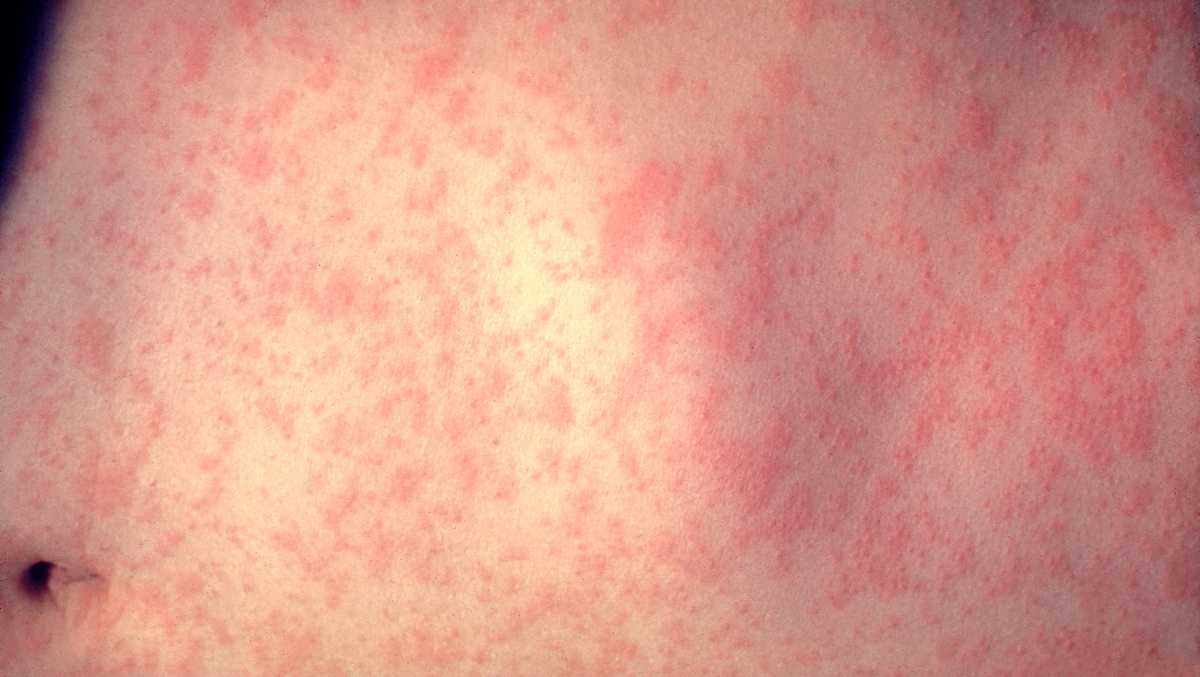
Measles first infects the respiratory tract, then spreads throughout the body, causing a high fever, runny nose, cough, red, watery eyes and a rash. Most kids will recover, but infection can lead to dangerous complications such as pneumonia, blindness, brain swelling and death.
Why vaccination rate matters
The best way to avoid measles is to get the measles, mumps and rubella vaccine. The first shot is recommended for children between 12 and 15 months old and the second between 4 and 6 years old.
After two doses, the shot is 97% effective against measles and its protection is considered lifelong.
Measles has a harder time spreading through communities with high vaccination rates — above 95% — due to “herd immunity.” But childhood vaccination rates have declined nationwide since the pandemic and more parents are claiming religious or personal conscience waivers to exempt their kids from required shots.
How bad is measles right now?
Last year was the nation’s worst year for measles spread since 1991, according to the Centers for Disease Control and Prevention. The U.S. confirmed 2,144 cases across 44 states. Three people died. All of them were unvaccinated.
Already this year, an outbreak in South Carolina has logged nearly 1,000 cases.
In December, Massachusetts health officials issued a warning about possible exposure to measles in locations visited by an infected tourist visiting from Texas.