
There are worse things to be vexed about these days than the Atlanta Hawks sponsoring “Magic City Night” next month before and during their March 16 game with the Orlando Magic.
Go ahead and vex, if that’s your thing. I’ll pass.
Magic City is a strip club. Let’s get that front and center for the uninitiated. The Hawks brought well-deserved laughs on themselves by trying to play it cute in their news release Thursday, calling it an “iconic cultural institution” rather than what it’s most known for being.
But Magic City has also been in business for 40 years, in case you’re uncertain about its impact and longevity. It has been central to the development of the rap, trap and hip-hop scene in the city, which has produced a slew of multi-million-selling artists in the last 20 years: T.I., Migos, Jermaine Dupri, 2 Chainz, Killer Mike, Big Boi, Future and numerous others. And many of them got their starts handing out mixtapes to DJs at Magic City, particularly on what became known as “Magic City Mondays” at the club, praying that the influential DJs would play them — and the dancers on stage wouldn’t clown the music as they performed.
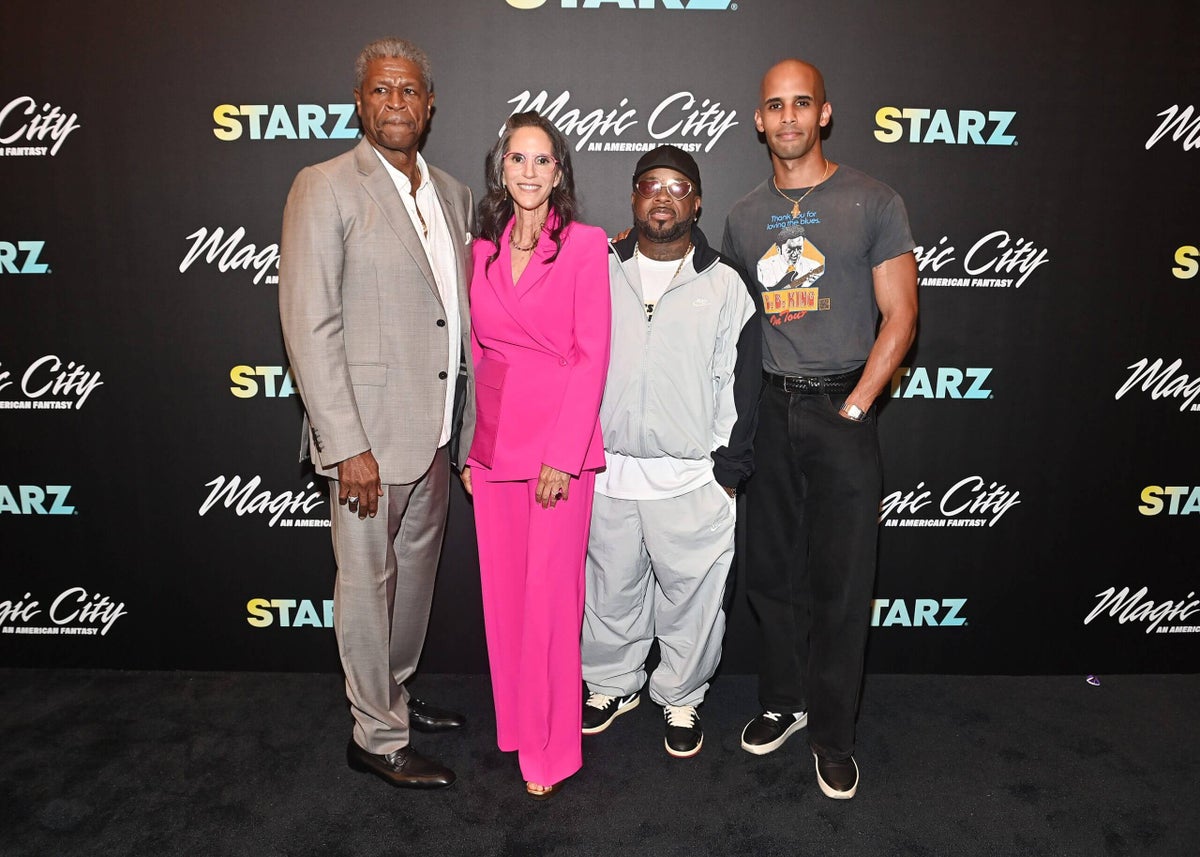
“Magic City became an unofficial A&R hub,” filmmaker Bayan Joonam, one of the executive producers of a five-part docuseries on Magic City that ran last year on STARZ, told Georgia Public Radio last year.
It is, nonetheless, quite unusual for an NBA team to embrace and center a business in which, in the most charitable interpretation possible, women take off their clothes for money and dance provocatively in (very) close proximity to the (mostly, but not all) male patrons. The NBA is, compared with most other major sports leagues, pretty progressive. But it’s still a multi-billion-dollar enterprise, with fans from all over the world and all parts of the political spectrum. Including some who, whether fans of the team or not, aren’t cool with the Hawks centering a place like Magic City.
Those folks, though, probably didn’t buy the nearly 2,000 tickets the team sold, according to a team spokesman, in the first 24 hours after it announced the promotion. Or the more than 90 percent approval the team says it’s received on social media since Thursday’s announcement.
“I don’t think that I’ve gotten as many requests for tickets to a game,” said Melissa Proctor, the Hawks’ and State Farm Arena’s executive vice president and chief marketing officer. “I have people saying, ‘Hold a hoodie for me on the side.’”
For this and other reasons, the Hawks aren’t backing up at all. Their organization, up to and including ownership, has longstanding ties to the club.
The actress, producer and philanthropist Jami Gertz — a co-owner of the team along with her husband, Hawks governor Tony Ressler — co-executive produced the STARZ docuseries. Her son Nick, now the team’s principal adviser to his father, was a Georgetown University classmate of Cole Brown, the author and producer who was helping Dupri get his memoir together a few years ago. One of the chapters in the book was about the impact of Magic City on the Atlanta music scene.
And the first people Gertz met when she and Ressler attended their first game in State Farm Arena were the sons of the club’s legendary founder and owner — Michael “Mr. Magic” Barney — JuJu and Michael “Little Magic” Barney.
“I didn’t know who they were; I didn’t know what their family business was,” Gertz said. “But they extended their hand and said if you need anything, we’re here for you. They were the first people to extend Southern hospitality to me.”
Gertz, well-known for her roles in “The Lost Boys,” “Twister” and “Still Standing,” was intrigued by the club, as Hawks fans, through the years, told her about how much business was done there and how the club’s food made it a go-to hangout spot for people who — really — weren’t just there for the strippers. Once she began digging into the club’s impact and history, her day job as a storyteller kicked in. Among the many things that intrigued Gertz was that every dancer she contacted to ask to be in the documentary agreed, quickly, to be on camera and tell the unvarnished truth about working in the industry.
“First and foremost, this was an American family, a quintessential American family, that’s been in business for four decades,” she said. “And now it’s a father and son business. The second (reason) was, this was a love note to my adopted home, Atlanta. I love it so much.”
From afar, it may seem absurd. But Magic City and the city’s other strip clubs are part of Atlanta’s cultural vibe, like go-go music is in D.C., or rapping and breaking are in Brooklyn, or jazz is in New Orleans. You can turn your nose up at it or look down upon the people who work there. But it’s more likely than not that your favorite hooper or football player — or, politician — has probably been up in Magic City over the decades.
“At my funeral, don’t cry. I had a hell of a run,” the elder Barney said in a long, NSFW oral history of the club in Atlanta Magazine in 2019.
To be sure, it hasn’t been all Disney World at the club. Every dancer didn’t have a great experience. The elder Barney was convicted in 1994 of a single count of conspiracy for allegedly being part of a drug ring. He served seven years in prison before being released in 2002. And the club became known as a favorite hangout spot for members of the Atlanta wing of the notorious drug trafficking Black Mafia Family, with many crediting BMF members for introducing the “make it rain” concept to strip clubs.
Barney regained ownership of the club after returning from prison. He doesn’t run the day-to-day operations as much anymore but is still the club’s central figure and remains beloved by the community for not just having superstars in his establishment, but welcoming the city’s rank-and-file with open arms, too.
“To me, what’s most inspiring about Mr. Maj is that he cares about, he’s kept his prices reasonable,” Gertz said. “He doesn’t forget about the regular Joes that come to his club, even though it’s world-renowned. The swag is seen and sold all over the world, but he still runs it like a regular club. Many of (the dancers) were cheerleaders, they were musicians. They went to Spelman (College, the renowned HBCU for Black women in the city) and got extra money from dancing. The pride in Atlanta really comes out in it. They all came from different backgrounds. I think my idea of why someone dances changed dramatically after speaking with dancers who’d danced there for years, dancers who dance there currently. … three of the dancers, we filmed them at homes that they owned. This is not a shameful thing. This is a family-run business and a family-run atmosphere, if I can say that.”
The Hawks didn’t need to get permission from the NBA to have a team-themed night. This was all their doing. (They, like other teams, do have to clear the types of merchandise they sell at or from such team-themed events with the league beforehand.)
Proctor, who’s been EVP and CMO of the Hawks since 2016, said the idea of doing a Magic City night when Orlando came to town is not new. Gertz’s involvement in the docuseries only heightened the team’s desire to do something.
“When the schedule came out for this year, and we saw we played the Magic on a Monday, we thought, ‘This would be cool,’” Proctor said. “What we thought about was, if we were going to do this, our motto is ‘True to Atlanta.’ And we thought if we could do this in a way that’s classy to the city, with no dancers (performing), and is part of the connective tissue, that’s how it netted out.”
The team chose to feature the “G-rated” elements of the club, Gertz said.
To that end, the club’s famous lemon pepper wings — both the ones named after three-time NBA Sixth Man of the Year Lou Williams and the “regular” version — will be on sale, along with a special version of the Hawks’ Peachtree City Edition hoodies. A live episode of the team’s “Hawks AF” podcast (Hawks And Friends, Proctor made sure to note), with the elder Barney and three-time Grammy Award-winning rapper T.I., will be broadcast pregame. T.I. will perform at halftime.
The club’s dancers will not take part in any aspect of the evening, Proctor said, but employees of the club will have access to a suite at the arena to watch the game.
“This wasn’t a cakewalk, easy decision,” Proctor said. “We had to make sure we positioned the experience in a way that made sense for our business. That was 100 percent of how we landed where we did. So, dancers, no, but they talked extensively in the documentary about the music being a big part of the experience and culture.”
But, I had to point out: Some of your fans, and some who aren’t fans at all, legitimately object to the idea of celebrating the exploits of a strip club.
“While I understand the question,” Proctor said, “we’re spotlighting a place that’s had a huge impact on Atlanta culture, at the end of the day. There’s nothing that’s going to be super provocative at the game. We are at the top of the league in our game presentation. If you’re not from Atlanta, you may not understand.”
I’m not from the ATL. But I understand how, often, a city’s actual history — who got rich and who didn’t, and why the neighborhoods got to be how they are — is far from pristine. Empires, criminal and political, were built at the turn of the last century on booze, including alcohol sold and distributed during Prohibition. There’s a lot of generational wealth in this country that was built on the free labor of others, from slaves to indentured servants to just plain poor folks, who received no benefits for their backbreaking work.
So, as long as the club’s most important employees keep their clothes on and don’t display their talents at midcourt on March 16, it’s not something to lose one’s mind over.
“It’s fun, and it’s cheeky,” Gertz said of Magic City Night — and, no, she wasn’t making a pun.