
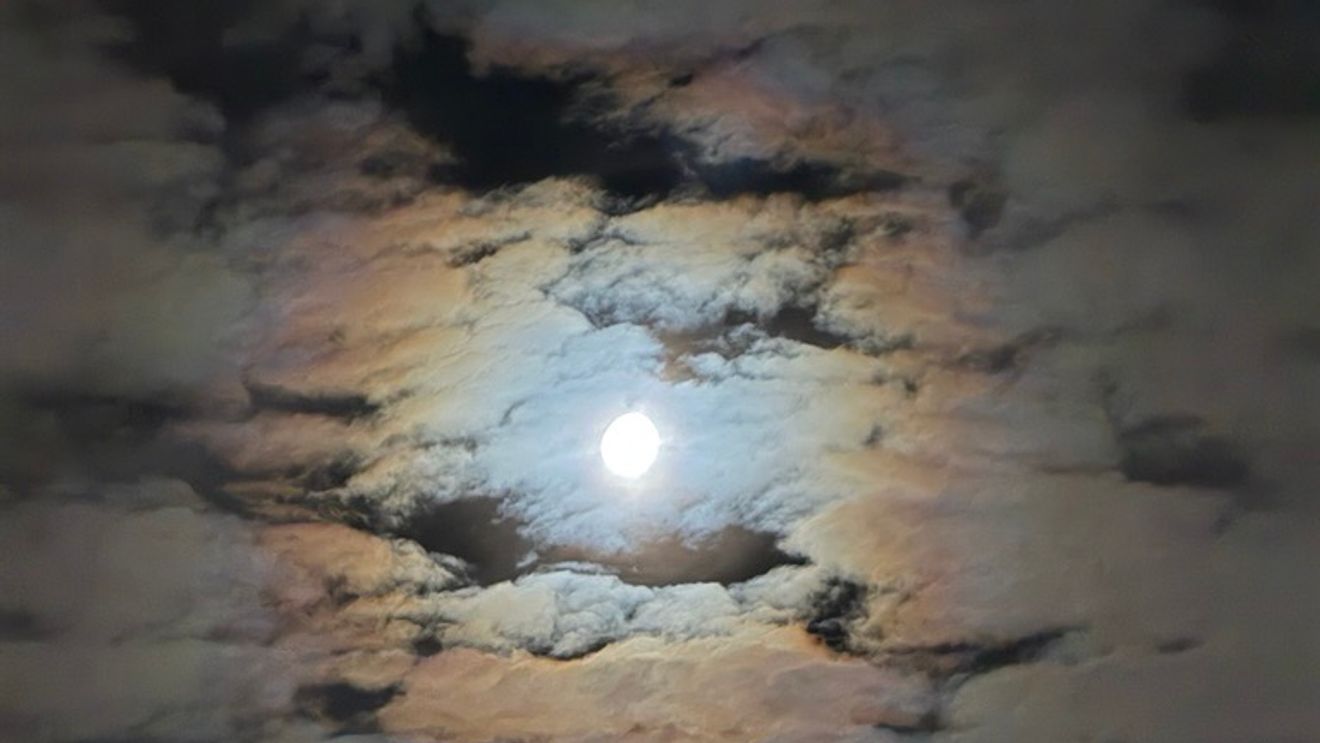
PORTLAND, Ore. (KATU) — A bright, colorful ring around the moon spotted early Saturday morning can be more than just a striking sight in the night sky — it can also be a sign of changing weather.
I saw it on my way to work, and was reminded of when I was a child, asking my dad why a red ring was surrounding the moon. He told me it meant it was going to rain soon.
Now, as a weather forecaster, I can explain the science behind it.
The phenomenon, often called a “lunar halo,” “moon halo,” or “22 halo,” happens when moonlight refracts through ice crystals in high-level cirrostratus clouds.
Cirrostratus clouds are described as transparent, veil-like sheets of ice crystals that form at high altitudes between 20,000 feet and 40,000 feet, resembling a thin, pale blanket spread across the sky.
As moonlight passes through that layer, the ice crystals bend the light — a process known as refraction, not reflection. Reflection is when light bounces off a surface, like a mirror.
Refraction is when light bends as it passes through a surface, like a straw appearing distorted in a glass of water.
Lunar halos are relatively common, especially during the winter, and to summarize, yes: lunar halos often precede precipitation.
This tracks for our forecast. Today in Portland, we expect mostly cloudy skies with light rain possible tonight and tomorrow, followed by a partly sunny Monday. But starting Tuesday, we’re tracking another storm system that’s expected to bring widespread rain and possibly pass-level snow in the Cascades, followed by showers later in the week.
If you spotted a lunar halo, send a picture to KATU through Chime In at KATU.com/ChimeIn.