
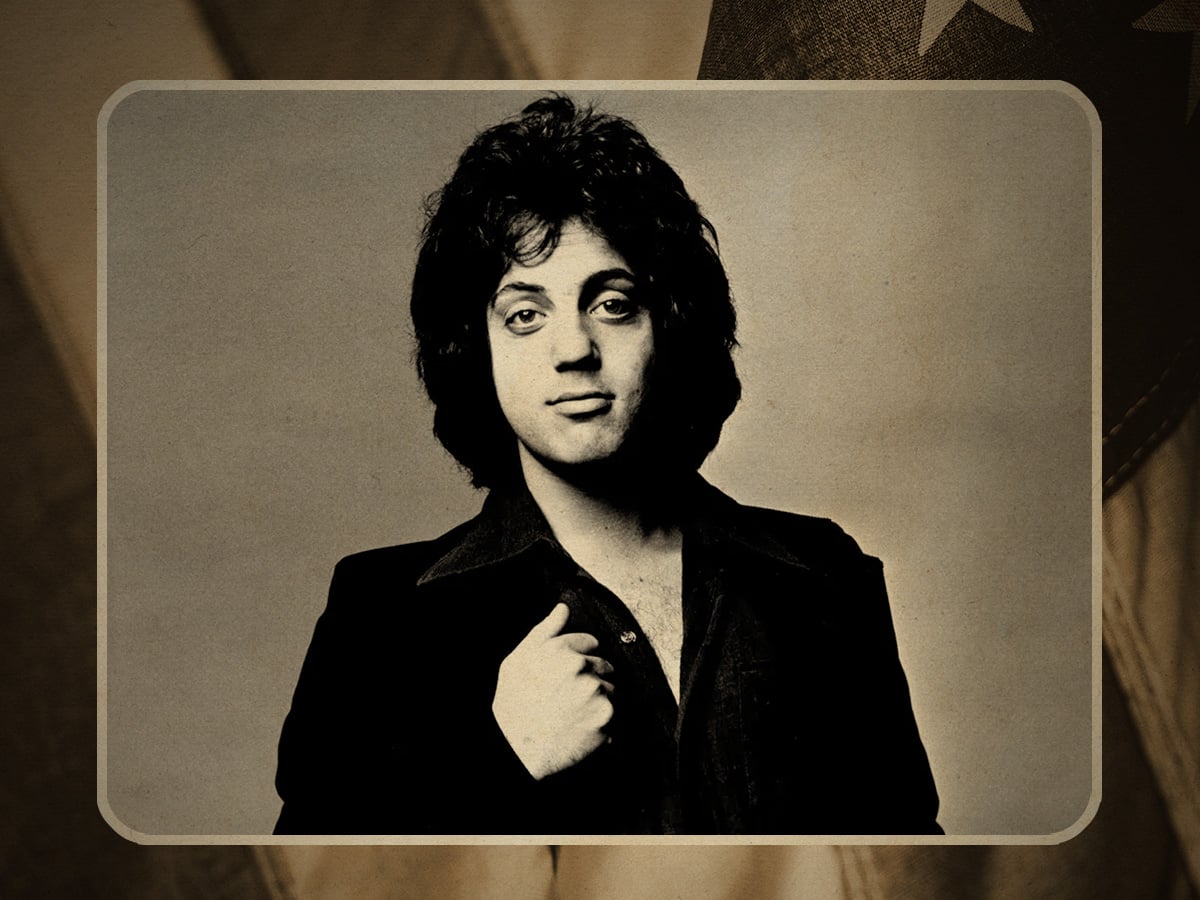
(Credits: Far Out / Columbia Records)
Tue 3 March 2026 2:30, UK
Billy Joel never claimed to be one of the coolest figures in the rock and roll world.
His business was always about writing the greatest songs that he could, and he has given us more than our fair share of perfect melodies whenever he started working out tunes like ‘Piano Man’ or ‘Just the Way You Are’ back in the day. But while some of his songs are more autobiographical than others, he knew that he couldn’t go wrong with singing songs that hit a little bit closer to home than others.
Then again, telling the story of an average guy who grew up dreaming of being in a rock and roll band isn’t exactly prime fodder for the most original song in the world. You can only go so far after revamping what Chuck Berry did on ‘Johnny B Goode’ back in the day, so the best way for Joel to find his own voice was to write from his experience. And as if the two people who haven’t heard his songs needed to know, Joel wore his New York influences on his sleeve whenever he made a record.
Aside from namechecking Oyster Bay on his early records or writing a love letter to his home on ‘New York State of Mind’, a lot of his music also feels like a time capsule of each part of his musical psyche. There are some records that tend to lean more towards his jazz influences, like on 52nd Street, Glass Houses is him trying on a more rock and roll sound, and even if An Innocent Man is pure pop, you can hear the love of everything from The Four Seasons to Motown absolutely spilling out of every tune.
But Joel wouldn’t have been able to enjoy this kind of life if he hadn’t seen so many of his friends not make it to their twilight years. You have to remember that this was the era of the Vietnam War, and while Joel already had to deal with the horrors that his parents had seen from World War II, it was a much different story with his soldiers going off to war. A lot of them were being treated like trash because of what they had done, but underneath it all, most of them were still kids trying to figure out what they should do with their lives.
So when they found themselves lost in those jungles and seeing the most heinous things human eyes could see, Joel felt that he needed to do his part as a songwriter. He could have made any other protest tune like the rest of the rock and roll world did, but when listening to ‘Goodnight Saigon’, there was a lot more empathy in his words whenever he talked about seeing his friends who came home and those who didn’t make it.
And even if Joel had his own thoughts about the war, this tune was more about the brotherhood that he saw his friends have when they walked through Hell on earth, saying, “I wanted to do that for my friends who did go to ‘Nam. A lot of them came back from being in the country and really had a hard time getting over it, and still to this day I think a lot of them are having a hard time. They were never really welcomed back, and whether you agreed with the war or not, these guys really took it on the chin.”
Many of them didn’t want to be there in the first place, but that kind of thankless job has also earned Joel some of the greatest moments of his career whenever he played the tune live. Everyone remembers when they hear tunes like ‘Piano Man’, but when he brings out different veterans during the performance of the song as they sing the line ‘We will all go down together’, you can guarantee that there aren’t that many dry eyes left in the audience when the song is finished.
Because as much as people can disagree with the war’s practices and all of what went on, you can’t deny the raw humanity of seeing all of these veterans embrace onstage. They had been lucky enough to see the other side of their lives, and so when Joel is singing that song, it’s not just about celebrating patriotism. It’s about giving credit to those kids who will forever be a part of the story of America’s darkest chapters.