
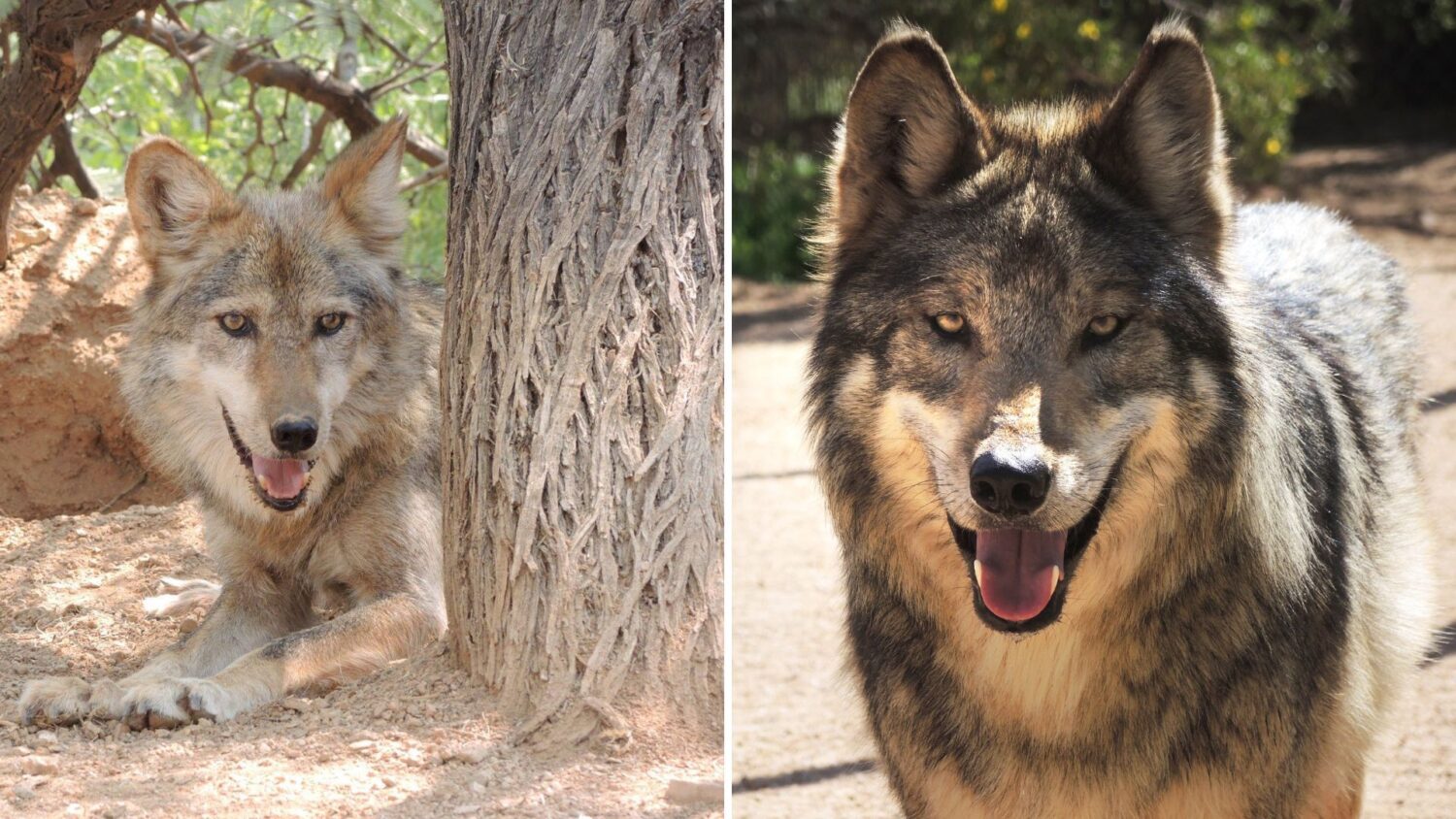
PHOENIX — Conservationists and animal lovers have something good to howl about. Arizona and New Mexico wildlife agencies recently reported that the population of endangered Mexican gray wolves grew by 33 wolves last year.
The total number of wild wolves is now 319, which is up from 286 in 2024.
Michael Robinson, a senior conservation advocate at the Center for Biological Diversity, called the growth remarkable.
“It’s inspiring that there are now hundreds of Mexican wolves in the Southwest, especially considering there were zero roaming the wild just three decades ago,” he said in the announcement.
The population growth marks a milestone for endangered Mexican gray wolves
Mexican gray wolves — also known as “el lobo” — are the most genetically distinct lineage of gray wolves in the Western Hemisphere, according to the Southwest Wildlife Conservation Center. Once widespread, the species was wiped out in the wild by the mid‑1980s due to poisoning, hunting, and trapping.
RELATED STORIES
Their path to recovery began in 1998 with a federal reintroduction effort under the Endangered Species Act. That year, the U.S. Fish and Wildlife Service set 11 Mexican gray wolves free into the wild in Arizona, according to Defenders of Wildlife.
Since then, the Mexican Wolf Species Survival Plan (SSP) has grown into a nationwide network of more than 300 zoos, conservation centers and partner facilities working to rebuild the population.
One of those partners is the Southwest Wildlife Conservation Center in Scottsdale, near Rio Verde Drive and 156th Street. There’s no breeding onsite, but the center functions as a holding facility for wolves that have either aged out or haven’t been successful in a breeding program.
Despite population growth, wild wolves still face threats
Despite the progress made through the SSP, Robinson said there’s still more work to be done.
“I used to fear they’d all get wiped out by a major wildfire or a spate of illegal killings, but now I’m confident they won’t disappear in my lifetime,” he said. “The big danger is that politics will strip these still‑imperiled wolves of their Endangered Species Act protections before they’re truly recovered.”
The Center for Biological Diversity said inbreeding is worsening. Captive wolves, including those in zoos, are 37% more genetically diverse than their wild counterparts, yet that diversity is not being successfully transferred through releases.
“An increase in wolf numbers is encouraging, but headcounts alone do not mean recovery,” Michelle Lute, the executive director of Wildlife for All, said.
She and other leading conservationists are calling for the release of captive‑born male and female pairs — along with their pups — into the wild. The Center for Biological Diversity said wildlife managers have been taking captive‑born pups from their parents and placing them into wild wolves’ dens since 2016.
This practice has resulted in 79% of those pups disappearing.
“Mexican gray wolves remain genetically imperiled, and human-caused mortality continues to undermine their future,” Lute said. “Until agencies prioritize strict protections and release bonded family groups to strengthen the gene pool, these wolves will remain vulnerable.”
Under the current federal recovery plan, the Mexican gray wolf cannot be delisted until the wild population averages 320 wolves over eight years and the population in Mexico reaches 200 wolves. Only 35 to 40 wolves currently live in Mexico, making it unlikely recovery goals will be met before 2043, according to High Country News.
We want to hear from you.
Have a story idea or tip? Pass it along to the KTAR News team here.
