
The United States’ international relations have changed significantly since the beginning of the second Trump administration, in particular regarding tariffs.
Another area has been the environment, especially with the withdrawal of the U.S. from the Paris Climate Accords. While that’s affected domestic policies regarding everything from windmills to electric vehicle charging stations, it hasn’t stopped every environmental initiative.
“Our county has made many changes over the years in how we manage our county forests, and those changes have basically made us eligible now to sell carbon credits,” said Fred Strand, a member of the Bayfield County Board of Supervisors. “There’s a market for them, and we can sell them.”
News with a little more humanity
WPR’s “Wisconsin Today” newsletter keeps you connected to the state you love without feeling overwhelmed. No paywall. No agenda. No corporate filter.
Those sales began with a modest four-figure deal in 2024, ballooning to a $2.2 million purchase of credits by a Spanish company announced last week. Strand spoke about the program and its potential with WPR’s Robin Washington on “Morning Edition.”
The following interview has been edited for brevity and clarity.
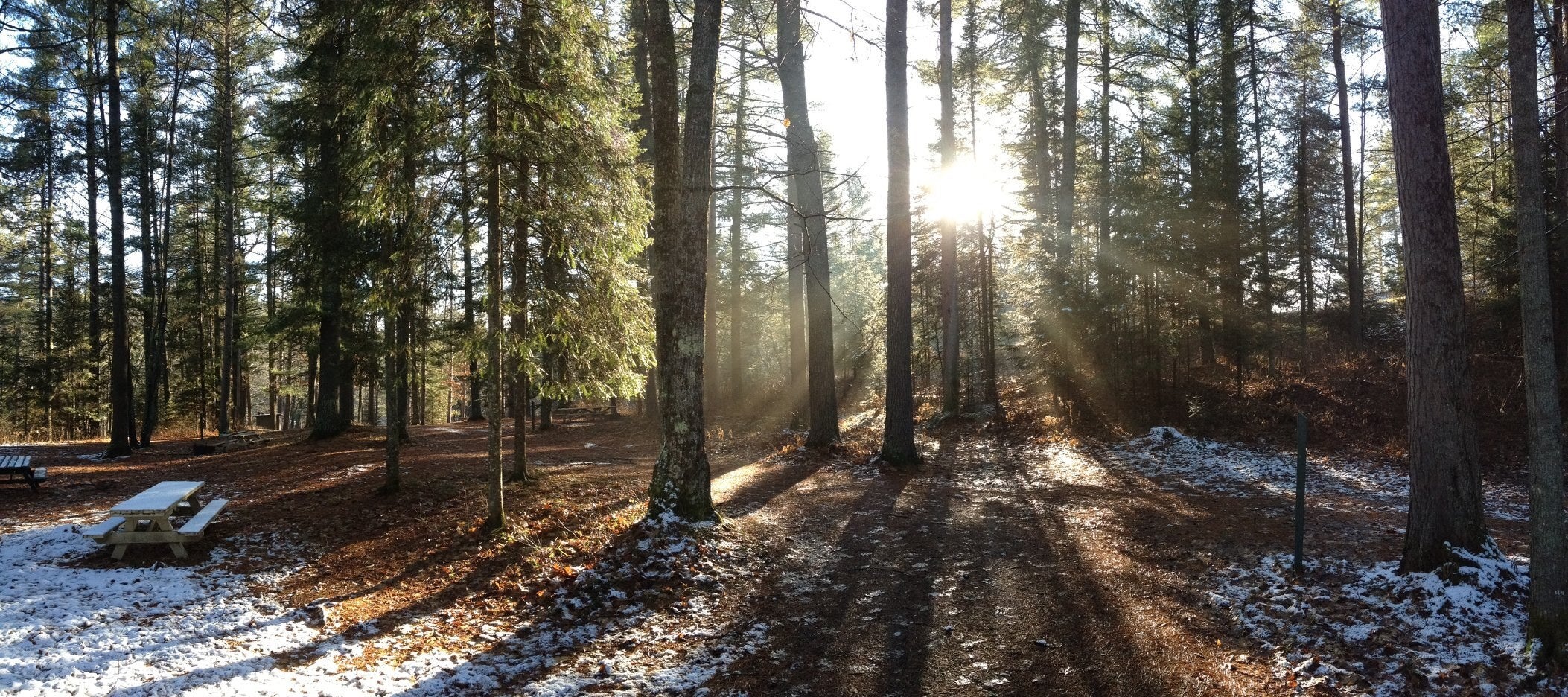 County forest land and visitor area maintained by Bayfield County Forestry & Parks. Photo courtesy of Bayfield County Forestry & Parks
Robin Washington: Before we get into what Bayfield County is doing, refresh us on what carbon credits are in the first place.
Fred Strand: First, you have to understand about sequestered carbon, which is carbon that is removed from the air. And in our county forests, we are removing more carbon from the air and storing it — sequestering it — in the trees that we grow in the forest.
RW: Who are your customers? Or maybe more germane, where are they — mostly in Europe?
FS: Yes, we have other European countries that have expressed an interest. We sell our carbon credits through a third party, which verifies that we have carbon credits that can be sold, and then they continue to monitor our county forest management to assure that we’ve continued compliance with the sustainable forest management.
RW: Tell us what it’s meant economically.
FS: We started this program in 2021. It took about two years before we met all the certification requirements. By 2023, our first credits were available to be sold and in 2024, we sold about $5,000 worth. In 2025, about $500,000. But now the bigger, better news is that a large sale of carbon credits has just been finalized with a Spanish company, and we will be receiving about $2.2 million from the sale. And there’s substantially more available that we hope to sell in the coming years, literally in the millions of dollars, that could benefit the residents and the taxpayers of Bayfield County.
RW: Selling carbon credits isn’t limited to a government entity like a county. Private landowners can sell them, too. The websites farmraise.com and climatefarmers.org talk about this. Are there also private individuals in the market for buying carbon credits, even here in the United States?
FS: Yes. There are individuals who are concerned about their carbon pollution. Recently, Taylor Swift purchased carbon credits that would more than offset the carbon emissions from her worldwide tour last year.
RW: Her concerts are big affairs that take up entire stadiums, so a lot of energy is expended there.
FS: Certainly, but she also travels the world, which emits lots of carbon.
RW: Have you called her up and to say Bayfield County has credits available for her?
FS: No, I haven’t done that, but my grandchildren are Swifties. Maybe I could get an angle in that way.
If you have an idea about something in northern Wisconsin you think we should talk about on Morning Edition — including an opposing view on this subject — send it to us at northern@wpr.org.