
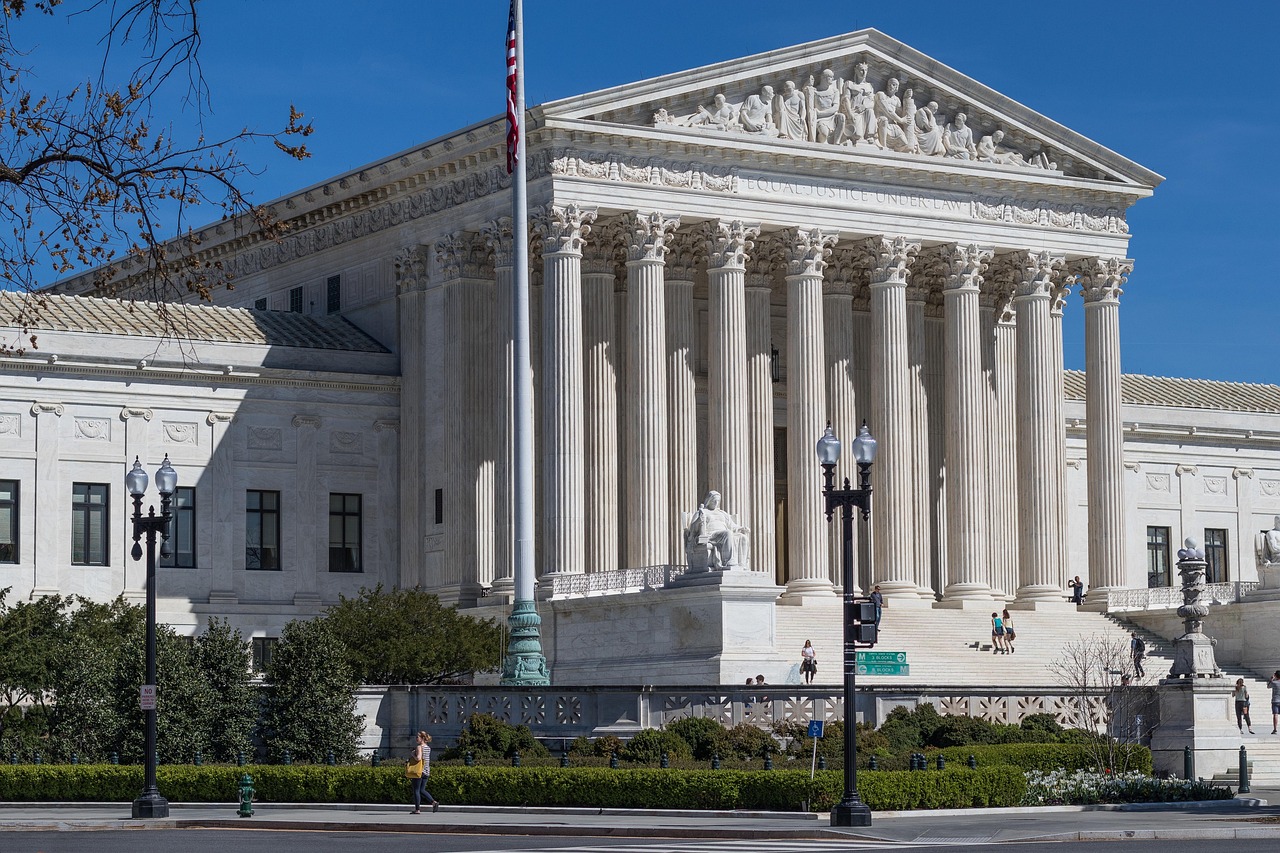
As the Supreme Court hears arguments in Hunter v. United States, a case asking whether defendants can be compelled to waive appellate rights before sentencing even begins, the authors argue that Justice Ketanji Brown Jackson brings an unusual vantage point to the case: a 1992 college thesis that exposed the coercive power dynamics baked into plea negotiations from the start.
The Supreme Court heard arguments today in Hunter v. United States, a case about when people can be forced to yield their rights through a plea “agreement.” It’s a case that, for at least one of the Court’s justices and a longtime critic of plea bargaining, is likely to resonate especially strongly: Justice Ketanji Brown Jackson, whose college thesis, “The Hand of Oppression,” took the practice to task in 1992. The Hunter case raises a narrow but troubling question: can people validly surrender their right to challenge unconstitutional aspects of their sentence even before that sentence is imposed?
The case before the Court started in February 2024, when Petitioner Munson Hunter entered a guilty plea to one federal count of aiding and abetting wire fraud. He did so pursuant to a written plea agreement containing a provision waiving nearly all of his rights to appeal his sentence. Three months later, he was sentenced. At that time, he objected on constitutional grounds to a requirement that he take mental health medication while on supervised release. Though the district court imposed this condition, it assured him: “You have a right to appeal. If you wish to appeal, [your counsel] will continue to represent you.” Directly after this, the district court invited any further comments from the lawyers, and the prosecutor demurred: “Your Honor, I believe—well, no. I—no.” The judge’s statement that Mr. Hunter could appeal, together with the prosecutor’s failure to object, reasonably led him to believe he could appeal the conditions of his sentence.
That proved not to be the case. Mr. Hunter did seek review from the Fifth Circuit, but that court dismissed his appeal, based on his appellate waiver and because it held that the district court’s assurance was legally meaningless. Mr. Hunter has asked the Supreme Court to reverse, supported by a Cato Institute amicus brief.
As the Court considers the case, Justice Jackson may be thinking back to her thesis, which unmasks the power imbalance baked into plea negotiations at every stage of a case. One relevant question: Was Mr. Hunter given an offer to trade away his rights—or was he threatened into surrendering them? Scholars sometimes say that whether a proposal is a threat or an offer depends on whether it improves or worsens an individual’s situation relative to a baseline. Justice Jackson’s thesis argued that there is no neat line between an offer and a threat. It’s hard, she wrote, to pinpoint where a defendant’s “baseline” truly is—in fact, that’s inherently a judgment call. The thesis invokes a colorful example from libertarian philosopher Robert Nozick: if person Q is drowning and person P refuses to help unless Q first promises to pay $10,000 upon reaching shore, is P extending an offer or threatening to let Q drown if Q refuses?
That ambiguity is precisely what plea agreements exploit, as Justice Jackson’s thesis makes clear. If a charge carries a sentence of mandatory life imprisonment without the possibility of parole, but the prosecutor can downgrade it in exchange for the defendant agreeing to a 10-year prison sentence, is the prosecutor making an offer or a threat? The accused’s desperate position, and the catastrophic consequences of refusal, are coercive pressure that can make the proposal into a threat.
Prosecutors are not the only ones who pressure defendants into plea agreements. Judges also play a role by signaling to defendants who plead guilty that they will receive more lenient sentences, denying bail and, in some cases, even engaging in direct intimidation. Judges can also manipulate their “administrative scheduling power” to leave defense counsel without enough time to prepare for trial. While it is illegal for judges to try to sway plea negotiations in most American jurisdictions, Justice Jackson’s thesis found that it happens anyway.
Even those tasked with representing the interests of the accused bear some responsibility for coercion. Defense attorneys may pitch plea options in a biased way, fail to advocate zealously for more favorable terms, and withhold critical information. For example, an attorney might not inform a client that sentences could be served concurrently, or might seek adjournments even as the defendant lingers in jail.
Justice Jackson found that at every turn, court actors choose between pursuing their interests in efficiency, conformity, and networking—and seeking justice. “Assembly line justice” is often the result.
Even after facing these realities, the future Justice Jackson did not surrender to cynicism. Rather, she urged citizens to commit to “ridding the system of unnecessary and unacceptable forms of coercion, at almost all cost.”
When she handed in those words back in 1992, Justice Jackson was just setting out on her legal career. Now, she sits at its apex. Hopefully, in Mr. Hunter’s case, she maintains her conviction that “the hand of oppression” should be lifted.
Kayla Susalla is a Research Associate in the Cato Institute’s Project on Criminal Justice and Matthew P. Cavedon is its Director.
Opinions expressed in JURIST Commentary are the sole responsibility of the author and do not necessarily reflect the views of JURIST’s editors, staff, donors or the University of Pittsburgh.