
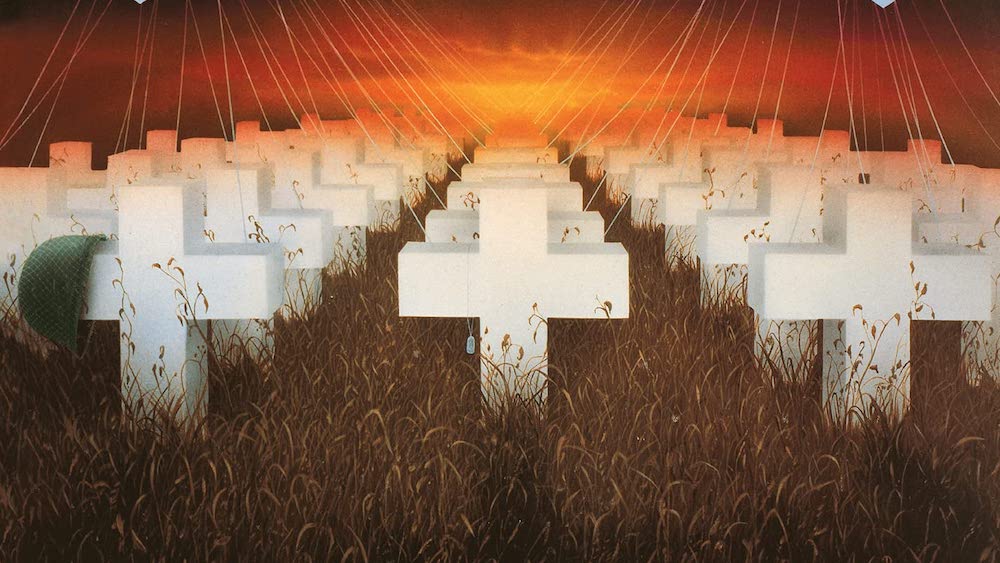
Four decades is a long time to be at the top of anything. Sales records are topped. Winning percentages are beaten. Music gets louder, faster, and more intricate as each new artist tries to top what came before it. But when it comes to thrash metal, there are few albums that have stood the test of time and remained one of the greatest examples of the genre than Metallica’s 1986 masterpiece, Master Of Puppets.
Looking back on it now in 2026, it’s easy to see Master for where it stands in the pantheon of metal albums. It’s unassailable in almost every way. From the opening salvo of “Battery” to the firebreathing, furious fuck you of “Damage, Inc.” the entire 55 minute runtime pulls no punches. And unlike its predecessor Ride The Lightning, there are no filler songs like “Escape” to muddy the waters.
But I cannot fathom what it was like on March 3, 1986 when the metal world was forever changed by the release of this titan of a record. Up until this point, Metallica only had two albums under their collective belt. And while Ride The Lightning was already considered a certified banger, nothing prepared the world for the sonic barrage that was their third studio effort. Imagine, if you will, opening up a copy of Master Of Puppets on release day and hearing “Battery” for the first time, followed by the now infamous title track. If your hair wasn’t already on fire and your neck wasn’t already sore, you could have probably been deemed legally dead by a physician.
Then came the slower and at times haunting one-two punch of “The Thing That Should Not Be” and “Welcome Home (Sanitarium)”. The former is yet another song in Metallica’s discography about H.P. Lovecraft’s works of cosmic horror, while the latter is a song inspired by One Flew Over the Cuckoo’s Nest. And while the latter song is slightly controversial because of claims that Metallica plagiarized the song’s main riff from Bleak House’s “Rainbow Warrior”, it still remains a fan favorite.
Then comes what I consider the “hypocrisy” block of the album with “Disposable Heroes” and “Leper Messiah”. In “Disposable Heroes”, Metallica confronts the hypocrisy of sending our young men and women out to fight and die in some war for bullshit reasons (totally not applicable to today, though… /s). Then “Leper Messiah” deals with the hypocrisy of televangelism and churches demanding you pay money to “get a better seat” to heaven. Both songs are a big “fuck you” to those institutions.
Then comes “Orion” — the incredibly tasty instrumental track that really highlights the incredible bass playing of the late Cliff Burton. This would sadly be the final album that Burton ever played on, since he was sadly killed in a bus accident in Sweden that September at the age of 24. Burton’s deft playing really stands out above the rest of the band throughout the whole thing, but it’s at about the four minute when things slow down a bit and the bass line really floats within the mix. It’s an amazing moment where you get to just vibe with the record and hear Burton and the rest of the guys just jam. It’s a great moment of reprieve before things pick up again just in time for the album’s finale, “Damage, Inc.”
Not ones to let the album go quietly into the night, they blast into one hell of a closer with “Damage, Inc.” This isn’t a “metal anthem”, so much as it’s a call to action. From the intense riffing to Lars just thundering away on the drums in a way that he couldn’t even dream of doing these days, this final track is a reminder that at the end of the day, Metallica is here to lay waste to the pretenders. Posers beware — “life ain’t for you and we’re the cure.”
This album was the manifesto of a Bay Area thrash metal band planting their flag on the genre and claiming it for their own. Master Of Puppets was a mission statement — the world was going to fucking listen to this quartet from California and finally understand what thrash metal was all about. This was the benchmark by which all other thrash metal records will be judged moving forward. After all, Slayer doesn’t release Reign In Blood until seven months later in October, Anthrax’s Among The Living doesn’t come out for another year or so, and Megadeth won’t release Peace Sells… But Who’s Buying? until September. So for months, Master Of Puppets was the new hotness in town and it propelled Metallica to begin headlining arena tours and never again looking back.
I’ll leave this retrospective with a personal anecdote. Back when I was just getting into metal, I was a nu metal kid — Korn, Limp Bizkit, Linkin Park — you know the drill. I’d been dipping my toes into other, more extreme forms of metal to see what I liked and at the time, Slayer kinda scared me (I was still kinda religious back then) and I never even heard of Anthrax or Megadeth. It wasn’t until I got Master Of Puppets as a gift that I realized this was my shit.
I have a distinct memory of me begging my mom to leave me in the car while she went shopping just so I could practically blow out her Pontiac’s speakers listening to Master Of Puppets. I remember the looks I got from passersby as they could clearly hear what I was listening to while I thrashed about in the front seat.
This album, above all else, changed my life and I know I’m not the only one. As I turn 40 this year as well, it’s hard not to look back at the years and wonder where it’s all gone. This album’s older, I’m older… Hell, the dudes in Metallica are way older. But what will outlive us all will be the fact that Master Of Puppets is one of those albums that will stand the test of time. From its release in 1986 until the eventual heat death of the universe, it’s an undeniable, unfuckwithable metal classic.