
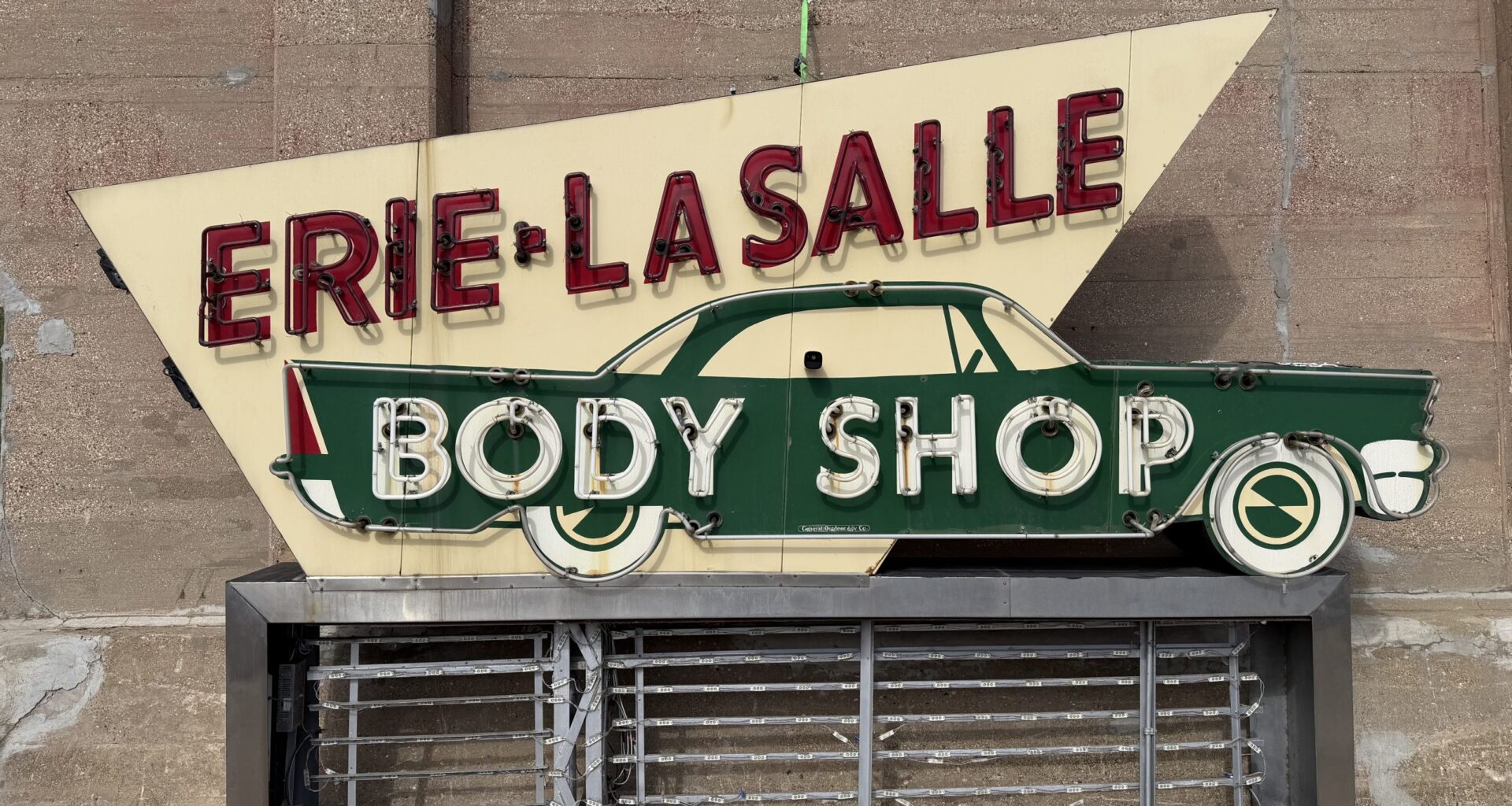
RIVER WEST — Bob Gottfred can’t help but feel “very blue” after selling his 92-year-old family business, Erie-LaSalle Body Shop, for what he would only call “an offer we couldn’t refuse.”
The new owners, a national auto chain, have no use for Erie-LaSalle’s mid-century neon sign — featuring the shape of a 1957 Plymouth — that’s been a bright anachronism presiding over River West for decades.
“It’s been gratifying, taking a car that’s wrecked, pieces of steel all bent up, to put it back together and deliver it to somebody,” Gottfred said.
Gerber Collision & Glass, a national auto repair chain, bought out Gottfred and recently slapped its own logos on Erie-Lasalle’s shops in Little Village, 2440 S. Kedzie Ave., and River West, 1005 W. Huron St. The deal closed Feb. 13.
Gottfred recognized the more-than-1,000-pound sign from the River West shop was worth more than just scraps of steel. He found Nathan Rock, owner of restoration business Industrial Artifacts, by “going through the internet.” Rock bought the sign and lugged it out of the city last week to his warehouse in DeKalb for repairs.
The move is being mourned by local preservationists who are seeing mixed fortunes for the city’s iconic neon signs as owners of businesses like Gottfred cash in on their private property.
The future is unclear for another mid-century modern sign outside Pride Cleaners after the historic Chatham business closed last weekend, leaving neighborhoods increasingly vulnerable to losing some of their clearest signs of identity.
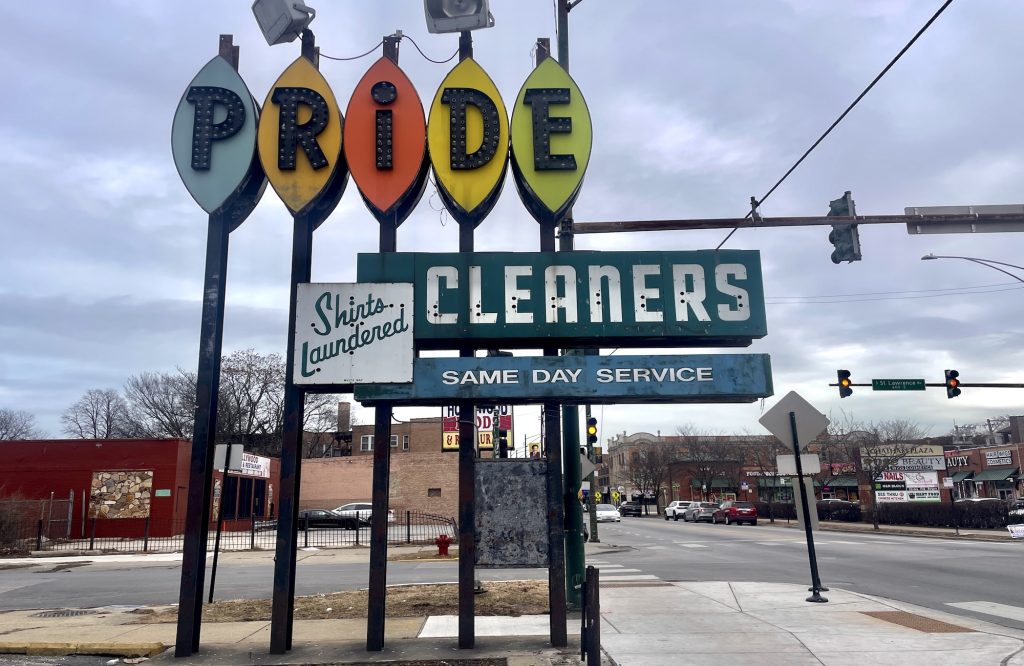 The former Pride Cleaners, 558 E. 79th St., now known as Family Strong Fold, closed on Fed. 28, according to managers at the store. Credit: Atavia Reed/Block Club Chicago
“I hate to be the guy who takes it out of Chicago, but I don’t know if anyone was presenting Bob [Gottfred] with real opportunities,” Rock said. “He maintained the sign. It’s not unreasonable to expect a return at the end of it.”
Neither would say how much the sign was sold for, but Rock said he “basically mortgaged the house” to flip the sign for what he thinks could be a six-figure sale. He’s looking for a Chicago collector or organization that will put it up for to public view — but couldn’t guarantee the sign will wind up back in Chicago.
“There’s no one to blame,” said Kelsey McClellan, a local sign-maker who is looking to start a nonprofit for preserving the city’s classic neon signs. “We need to figure out how the goal of preservation becomes more important than profiting.”
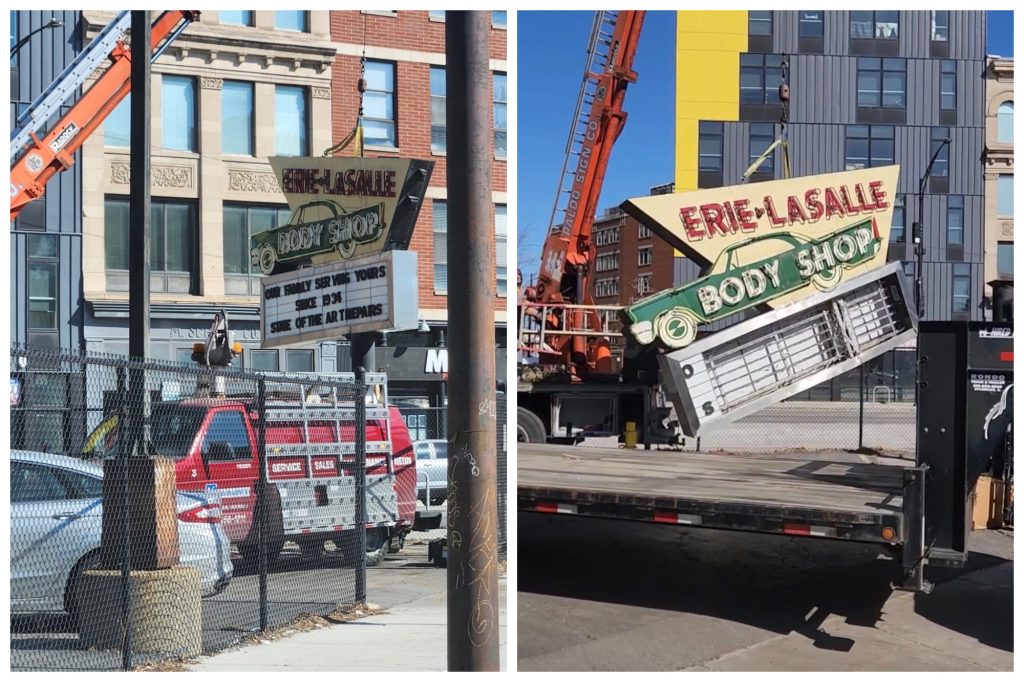 The iconic Erie-LaSalle Body Shop sign was hauled away to an antique restorer in the suburbs after the family sold the 92-year-old business on February 13, 2026. Credit: Nathan Rock
McClellan said there’s about 30 classic neon signs left in the city, from the famed marquees outside the Chicago Theatre and Wrigley Field to small businesses stretching the city from Candlelite Pizza in West Ridge to Fox’s Pub in Beverly.
The nonprofit could offer tax write-offs to businesses willing to donate the signs for preservation, McClellan said.
But those same signs now fetch “demand as a form of art,” Rock said. McClellan’s effort faces challenges from private collectors with deep pockets — and a public that “doesn’t know yet there’s a problem,” she said.
“The city has more difficult issues to face, but we have to collectively make a decision if these signs are worth saving,” McClellan said. “They are a big part of our community that anchor us to our past and the histories and stories of the small businesses that made it.”
The City Council passed an ordinance in 2023, backed by Mayor Brandon Johnson, allowing for new building owners to keep up designated “vintage signs” even if their permits expired. The ordinance saved the Grace’s Furniture sign in Logan Square after a developer bought the building.
But preservationists say there is little financial incentive for owners like Gottfred to keep signs up as public art after their small businesses twilight. Historical designations aren’t given for signs without also landmarking the building, said Ward Miller, executive director of Preservation Chicago.
“The costs fall on owners,” said Miller, who named neon signs to Preservation Chicago’s 2015 “Most Endangered” list. “They could use a little help with waving fees.”
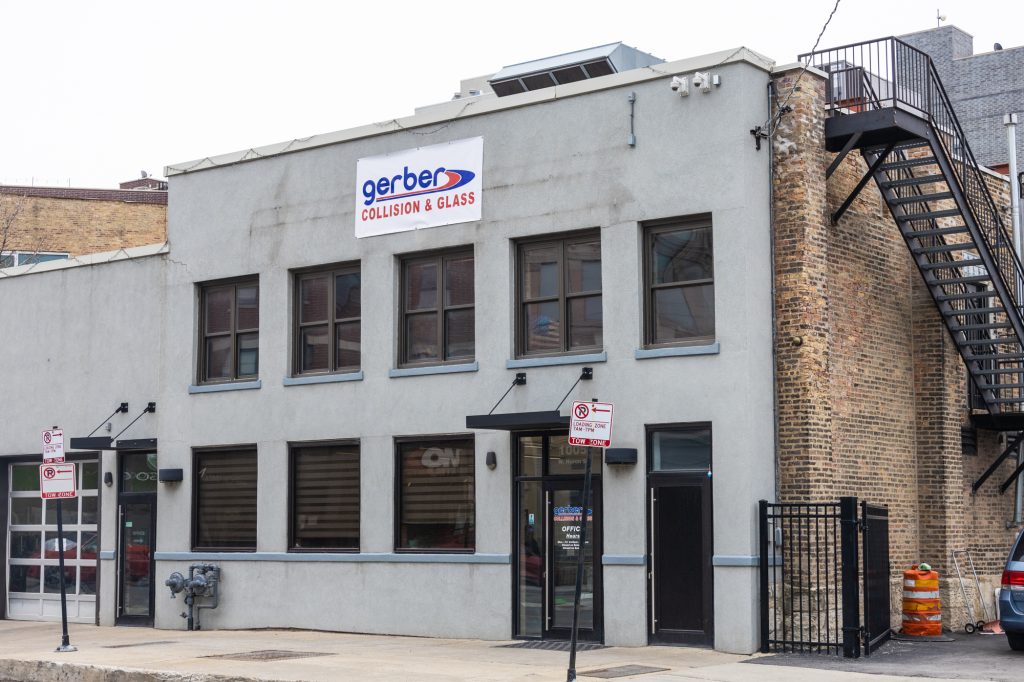 A new Gerber Collision & Glass sign hangs at 1005 W Huron St. on Tuesday, March 3, 2026. Credit: Jeremy Battle/Block Club Chicago
Miller said neon signs used to light up Chicago streets before they began to decline in the ’60s as new city laws limited signs, raised fees and required street safety inspections.
By the ’80s and ’90s, new technologies, like large-format printing and vinyl lettering, reduced skilled labor in sign-making, McClellan said.
“It effectively wiped out a huge number of sign makers who had learned in trade schools,” said McClellan, adding sign-makers and muralists face a new threat from artificial intelligence.
McClellan is seeing small businesses with thinner margins who are choosing to advertise online instead of betting on signs to draw customers. Strict city codes still limit large electronic signs that aren’t grandfathered in, she said.
McClellan’s sign business, Heart & Bone, recently did free restoration work for Central Camera’s famed neon sign Downtown.
“The few historic signs left, they’ll never be replaced,” McClellan said. “Any minute a business owner can get an offer, and another sign is gone.”
Gottfred held on to his sign even when he had to move it — and the auto shop — from its namesake intersection to west of the Chicago River near Milwaukee Avenue nine years ago.
Gottfred never really liked working on cars growing up in the shop. But he stepped up to take over the business after the family’s heir apparent, his stepbrother, also named Bob, died in a water-skiing accident. Gottfred eventually passed down much of the work to his two sons, Jim and Jay.
“It’s a dirty job, getting up at 5 in the morning,” Gottfred said. “But I decided to do it, and 50 years later to the day, we sold.”
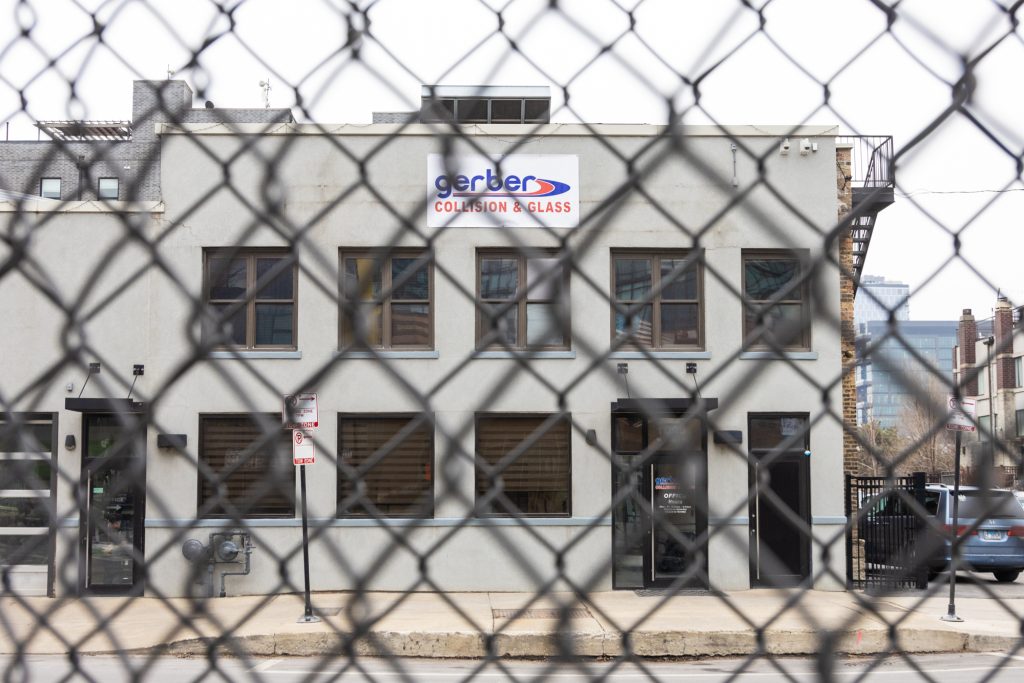 A new Gerber Collision & Glass sign hangs at 1005 W Huron St. on Tuesday, March 3, 2026. Credit: Jeremy Battle/Block Club Chicago
The business was started in 1934 by Gottfred’s stepfather, Ivan Goodmonson, the son of Norwegian immigrants who were “broke farmers” in Bemidji, Minnesota, Gottfred said.
Goodmonson shucked corn in Iowa and hopped freight trains to Chicago with a dream of making it in the city’s budding aviation industry. He rented three stalls in the alley near Erie and LaSalle streets from a “drunken German” and fixed up cars to get by, Gottfred said.
Eventually, Goodmonson bought the building, and he put up the sign that cemented the business, even as the neighborhood changed around it.
Gottfred counts 2024 as the shop’s best year. The Gerber deal wasn’t the first time he’s been made an offer for it.
“There’s always been a sheer volume of cars around Downtown,” Gottfred said.
Gottfred was recently fixing his windshield wipers. Now he’s coming back from a golf vacation in the Dominican Republic with plans for a ski trip.
As he heads into retirement, taking the sign down “to all kinds of reactions, it makes you bluer,” he said. “I’m not going to miss the insurance companies. But the people. The people, for sure.”
McClellan said she wishes preservationists had gotten to Gottfred sooner.
“Part of keeping the sign up is keeping the family’s story alive,” McClellan said. “There’s stories tied to the sign.”
Listen to the Block Club Chicago podcast: