
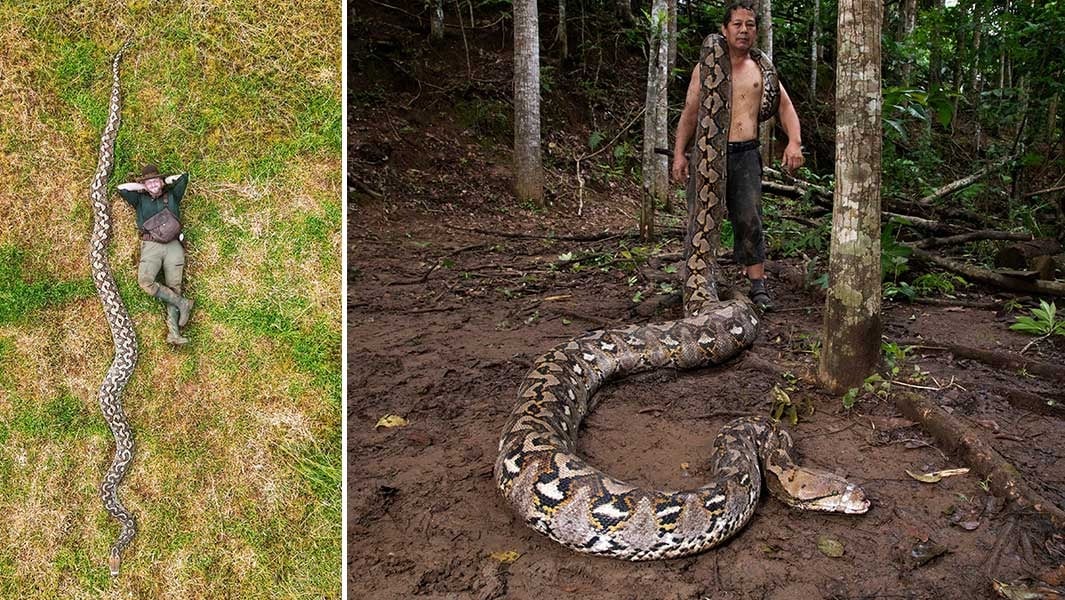
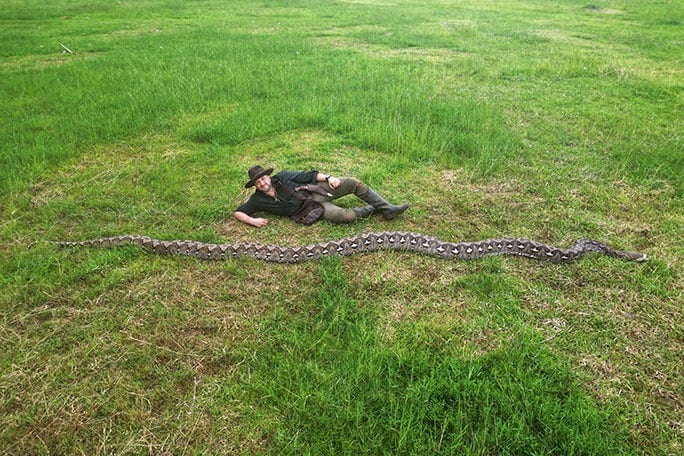
 Wildlife expert Radu Frentiu poses next to Ibu Baron (Credit: Guinnessworldrecords.com)
A reticulated python in the tropical forests of Sulawesi, Indonesia, has broken the Guinness World Record for the longest wild snake ever measured. Nicknamed Ibu Baron, or “The Baroness,” the massive reptile stretches an astounding 23 ft. 8 in (7.22 m) long. The title was officially confirmed on January 18, 2026. It had previously belonged to a 22 ft. 10 in (6.95 m) reticulated python. That snake was found in Malaysia in 1999.
Ibu Baron was first seen by local villagers in late 2025. The residents were familiar with long snakes, but this one seemed bigger than any they had seen. When news of the sighting reached wildlife experts Diaz Nugraha and Radu Frentiu, they rushed to Sulawesi to investigate. The two eventually found the massive snake slithering across the forest floor.
Moving carefully to avoid stressing her, Nugraha and Frentiu used a long measuring tape to determine her length. They then gently lifted Ibu Baron into a secure sling and placed her on an industrial scale. Even without a recent meal, she weighed an impressive 213 lbs (96.5 kg).
“I had never seen a snake this big,” said Frentiu. “This snake could easily swallow at least a calf, if not an adult cow.”
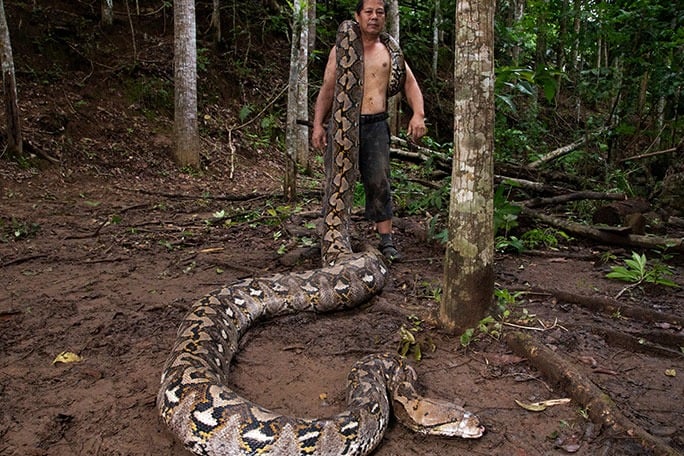 Ibu Baron is now under the care of local conservationist Budi Purwanto (Credit: Guinnessworldrecords.com)
After the examination, Ibu Baron was transported to local conservationist Budi Purwanto, who cares for rescued pythons. As forests shrink and natural prey becomes harder to find, these snakes sometimes wander into villages. There, fear often leads to them being killed. Keeping Ibu Baron in a secure enclosure will ensure both the snake and the surrounding community are safe.
Native to Southeast Asia, reticulated pythons are among the longest snakes in the world. Even so, specimens like Ibu Baron are rare. The snakes feed on mammals, ranging from rodents and pigs to deer, and even livestock if they get close to villages. Despite their enormous size, these snakes are not venomous. Instead, they kill prey by wrapping around it and squeezing until it suffocates. Reticulated pythons are not currently classified as endangered. However, habitat loss and human-wildlife conflict have put pressure on some local populations, making conservation important.
Resources: Guinnessworldrecords.com, vice.com, nationalgeographic.com