
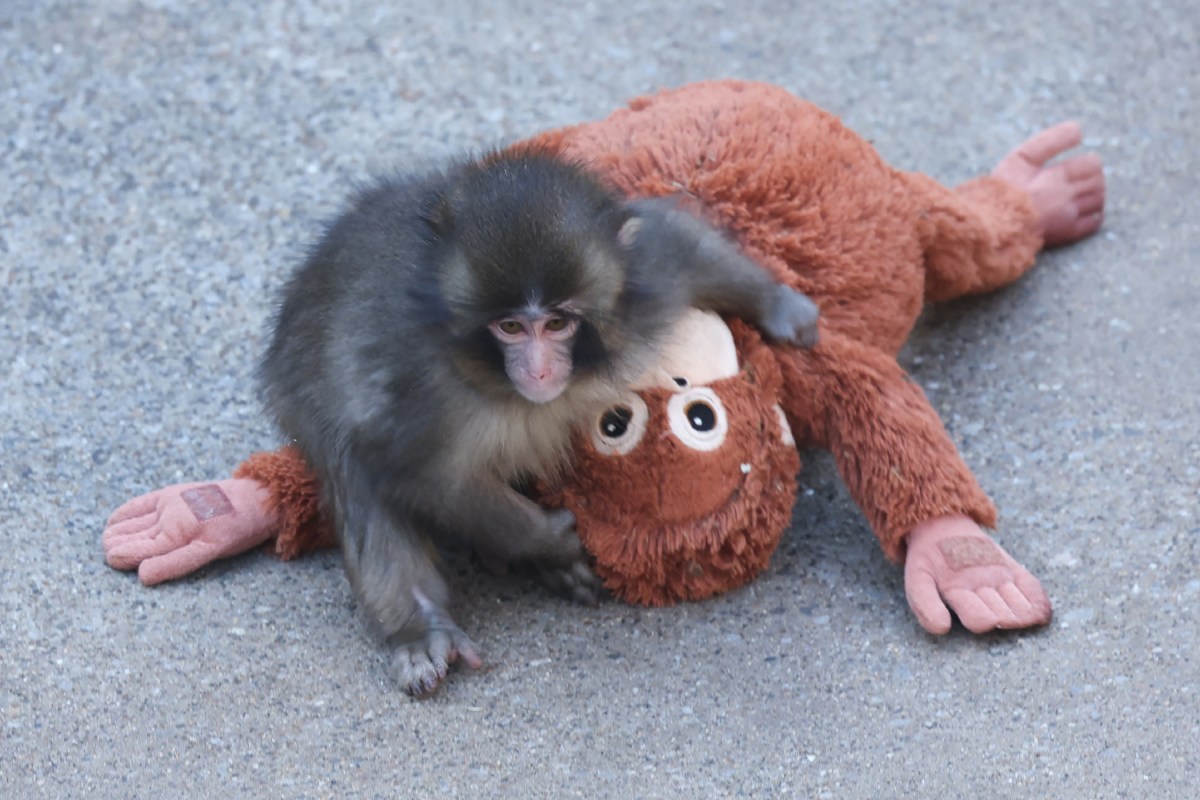
Punch, the 7-month-old Japanese macaque who captured millions of hearts after bonding with a stuffed orangutan, has reached a new milestone: he’s waving at fans.
In a TikTok video posted by phillygoonsquad, Punch can be seen lifting his small arm toward visitors gathered outside his enclosure at Ichikawa City Zoo in Japan.
The on-screen text reads, “Punch waves to his fans now,” as the infant macaque appears to mimic the gestures of the crowd watching him.
The clip sparked 2.6 million views, almost 628,000 ‘likes’ and 1,600 comments in a day from fans who have followed Punch’s journey since birth.
“He probably sees people waving at him and now he copies people. This is the cutest,” one person declared.
Another admirer added, “He knows he’s a star, he’s so special.”
A fellow pundit chimed in, “He’s probably seen thousands of visitors waving at him.”
Punch, known in Japan as Panchi-kun, was born on July 26, 2025, and was rejected by his mother shortly after birth.
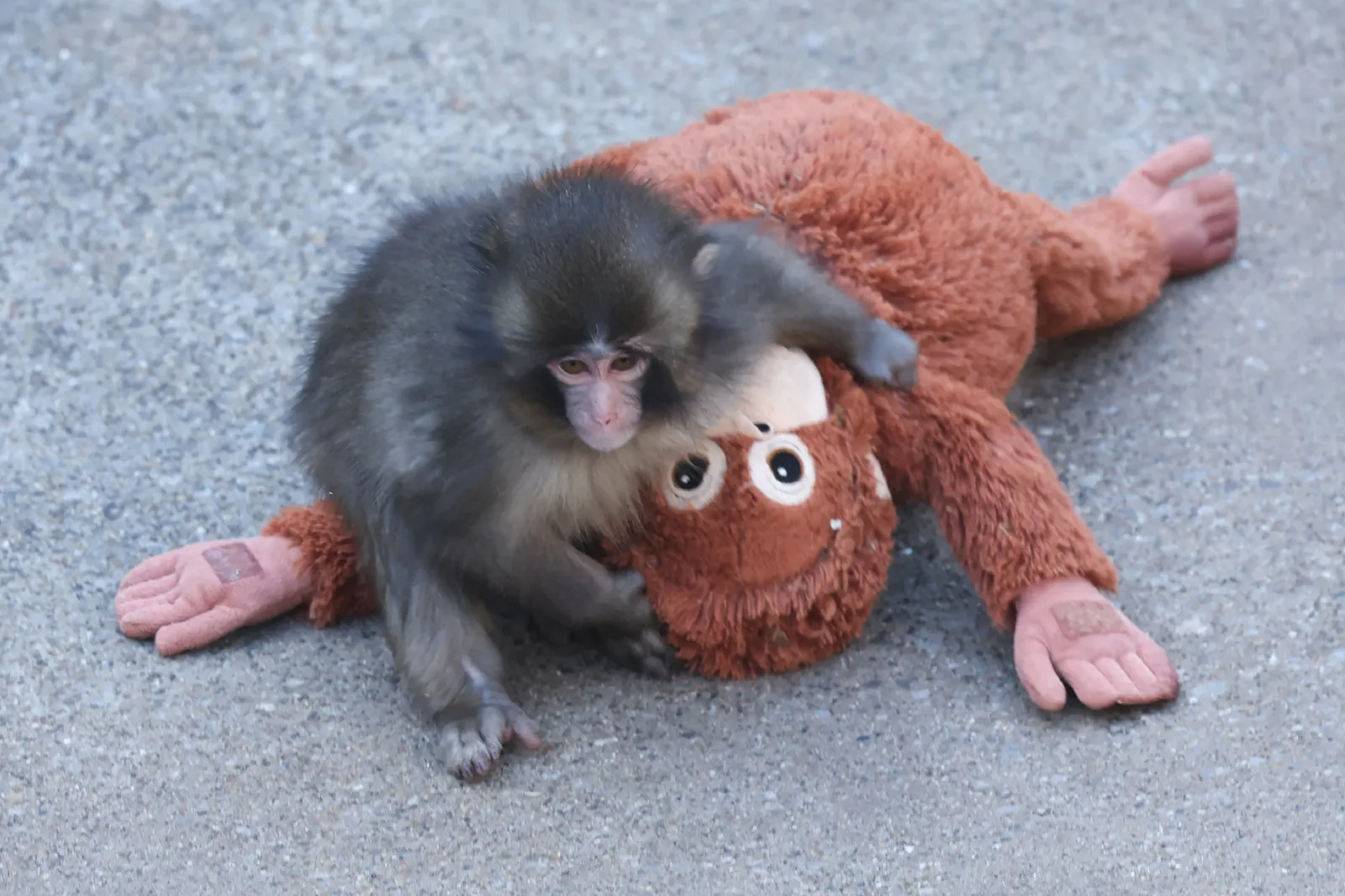
As previously reported by Newsweek, keepers provided soft comfort items and the animal formed a strong attachment to a plush orangutan toy that he frequently clutches for reassurance.
His bond with the toy, along with videos showing his interactions with other macaques, turned him into a viral sensation and drew increased attention to the zoo.
The Imitation Game
The new waving behavior has prompted questions about whether Punch is intentionally communicating—or simply imitating.
Research suggests imitation plays a powerful role in primate social behavior. In a study published in Science, researchers found that capuchin monkeys responded positively to humans who mimicked their actions.
“Matching or coordination of behaviors may lead to higher levels of tolerance and affiliation as well as decreases in aggressive behaviors, thereby increasing group cohesion,” Annika Paukner of the National Institutes of Health Animal Center wrote in the journal.
“Behavior matching can therefore be regarded as a type of ‘social glue,’ helping to bind individuals together,” according to the American Association for the Advancement of Science.
Animal Instinct
Though many like to think that Punch is inheriting human tendencies, experts seem to disagree, pointing instead to other explanations of primate behavior.
“It’s understandable that viewers might interpret the movement as ‘waving,’ but short clips like this can be misleading because they remove the behavioral context. What looks like a wave could easily be a stretch, a reach toward something outside the frame, a balance adjustment or a response to a stimulus nearby,” Debra Curtin, founder and CEO of the New England Primate Conservatory told Newsweek.
While this behavior may not be human-inspired, it does have connections to the way that young humans react to their suroundings.
“Punch was hand-raised by human caretakers, so it’s also possible that he was reacting to a familiar person nearby but out of sight from spectators. In young primates—including human children—reaching upward can sometimes function as a signal toward a trusted caregiver. At seven months old, Punch would likely be much more focused on his immediate surroundings and the dynamics within the enclosure than on spectators,” Curtin explained.
“Could Punch have been waving? It’s possible,” she continued. “But based on what we know about primate behavior and the limited context of the clip, it’s more likely that viewers are interpreting a normal movement through a human lens.”
Visual Cues
While Japanese macaques are not great apes, scientists have long observed that many primates rely on body language and imitation as part of social bonding. Visitors waving at Punch day after day may be offering repeated visual cues that he is now replicating.
For now, fans continue to celebrate Punch’s latest development, seeing his small wave as a sign of resilience. Whether it is learned imitation or simple curiosity, the gesture marks another chapter in the young macaque’s closely watched life.
Newsweek has reached out to primate experts for comment via email.
To read how Newsweek uses AI as a newsroom tool, click here.