
Welcome to the Daily News Brief, CFR’s flagship morning newsletter summarizing the top global news and analysis of the day.
Top of the Agenda
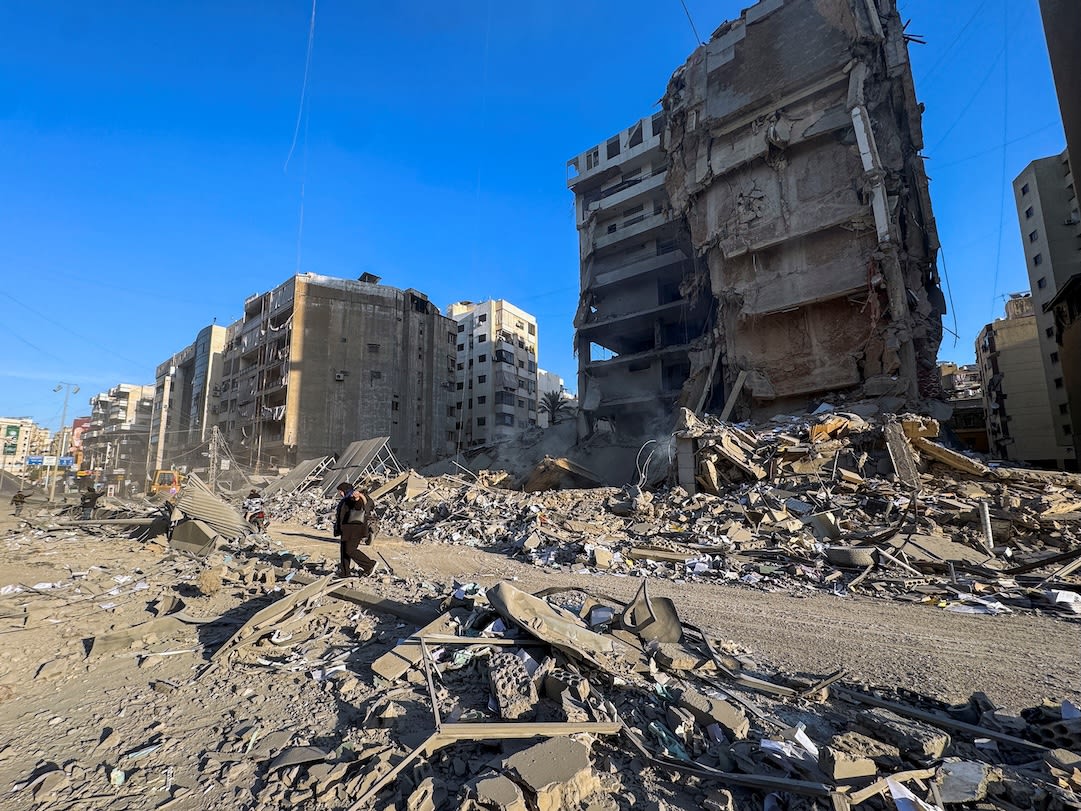
Israel launched heavy attacks on Beirut’s suburbs today, forcing thousands to flee as Lebanon’s prime minister appealed for international help to stop the military offensive. Israel says it is targeting Hezbollah after the group launched rockets at Israel in support of Iran. Ahead of the offensive, Israel issued an evacuation order yesterday for a swath of Beirut home to more than half a million people. Lebanon’s government has been working to disarm Hezbollah for months. French President Emmanuel Macron announced yesterday France would provide armed vehicles and humanitarian aid to Lebanon and appealed to Israel and Hezbollah to stand down. Across the Middle East, at least 230,000 people have been displaced in relation to the ongoing war, including more than 100,000 inside Lebanon, according to the United Nations.
The pace of air war. Iran’s daily missile launches have dropped overall since earlier this week, with U.S. and Israeli forces saying they struck and degraded many of the country’s launch sites. However, Iran’s continued strikes are still aimed at expansive geographic targets, and its military is increasingly relying on drones. Stateside, U.S. defense contractors are due to meet with administration officials at the White House today to discuss ramping up weapons production, Reuters reported.
The regime change question. Trump yesterday affirmed his ambition to shape Iran’s political destiny, telling Axios that he would like to play a role in picking the country’s next supreme leader. Yet the Iranian regime has not splintered after strikes killed former Supreme Leader Ayatollah Ali Khamenei Saturday, the Washington Post reported, citing European and Arab officials. Trump has spoken in recent days to Kurdish leaders who could attempt an opposition push against the regime. Iranian Foreign Minister Abbas Araghchi told NBC News in an interview that aired yesterday that Tehran is prepared to defend itself against a potential U.S. ground invasion.
Warnings of spillovers. Qatar’s energy minister issued a stark warning about the war’s impact on energy prices today, telling the Financial Times that continued war could force Gulf energy exporters to shut down production within days and drive oil prices to $150 per barrel. Meanwhile, the head of Europe’s police body said yesterday the war could have “immediate repercussions” in regard to terrorism, violent extremism, and cyberattacks. Trump, asked Wednesday whether Americans should worry about attacks at home, replied, “I guess.”
“The United States is in an unprecedented dangerous situation when the Iranian regime’s desire to retaliate for the war and the killing of Khamenei could surface now or at any time in the future. For the regime, revenge has always been a dish best served cold…But these past months, DHS’s budget and attention have been focused on immigration and not necessarily counterterrorism.”
Across the Globe
Trump swaps DHS chief. Trump announced on a social media yesterday that DHS Secretary Kristi Noem was leaving her post and being assigned a new role at a to-be-announced security initiative. Senator Markwayne Mullin (R-OK) will replace Noem, Trump said. He did not give a reason for the change, though Noem has been one of the most visible faces of Trump’s immigration enforcement crackdown.
U.S. sanctions waiver for Russian oil. The United States issued a thirty-day waiver yesterday that allows India to buy Russian oil already at sea amid market shocks caused by the Iran war. The United States had previously sanctioned Russian oil sales to the country in order to restrict Moscow’s resources for waging war in Ukraine. U.S. Treasury Secretary Scott Bessent wrote on social media that India is an “essential” U.S. partner and that the waiver would counter “Iran’s attempt to take global energy hostage.”
UK counter-terrorism probe. United Kingdom (UK) authorities arrested four men today suspected of assisting Iran’s intelligence service by spying on sites and people linked to London’s Jewish community, UK police said. One man is Iranian and three are Iranian-British nationals. The head of London’s counterterrorism policing asked the public to “remain vigilant” and report any concerning behavior.
Russia-Ukraine prisoner swap. The two countries exchanged five hundred prisoners each in a two-day swap that concluded today. Some of the Ukrainian men had been in Russian detention since 2022, Ukrainian President Volodymyr Zelenskyy wrote on social media. Though the two sides have been holding indirect peace talks for months, Zelenskyy said Wednesday that upcoming negotiations would be postponed due to war in the Middle East.
China’s climate target. China, the world’s largest greenhouse gas emitter, announced a cautious new climate target yesterday. Premier Li Qiang said China aims to reduce its carbon emissions per unit of GDP by 17 percent by 2030. China had an 18 percent reduction target for that same indicator between 2020 and 2025, but only achieved an estimated 12 percent reduction.
NATO stance on Iran war. NATO has increased its missile defense readiness following the Turkish interception of an incoming missile targeting the country Wednesday, an alliance spokesperson announced yesterday. Turkey accused Iran of firing the missile, while Iran’s air force denied doing so in a statement in Iranian media yesterday. NATO does not plan to trigger its Article 5 defense clause over the incident, Secretary-General Mark Rutte told Reuters yesterday.
U.S.-Venezuela diplomatic ties. The United States and Venezuela’s interim government are re-establishing diplomatic and consular relations, the U.S. State Department announced yesterday. Washington had previously cut off relations in 2019 during the first Trump administration. The restoration comes two months after the U.S. ouster of former President Nicolás Maduro. The State Department said the restoration would help “promote stability, support economic recovery, and advance political reconciliation.”
Indonesia’s social media limit. Indonesia’s government announced a new social media ban for children under sixteen, barring them from having accounts on platforms like Instagram, TikTok, and X. The country’s communication and digital affairs minister said the platforms expose children to threats, including pornography, cyberbullying, online fraud, and addiction. Implementation will begin in phases starting March 28.
What’s Next
Today, Canadian Prime Minister Mark Carney begins a visit to Japan.Today, the Winter Paralympics begin in Milan and Cortina, Italy.Tomorrow, Trump and Noem meet with several Latin American leaders regarding the Shield of the Americas security initiative in Florida.