
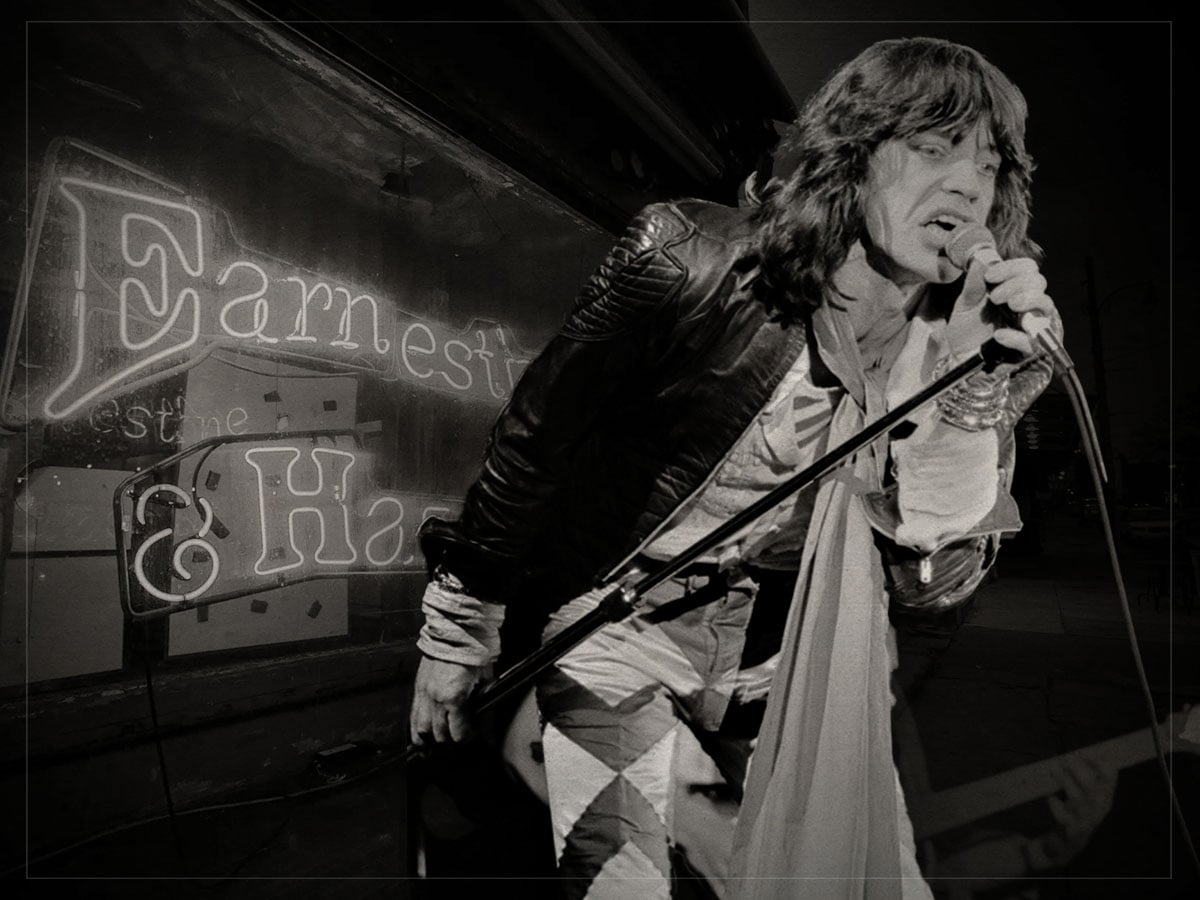
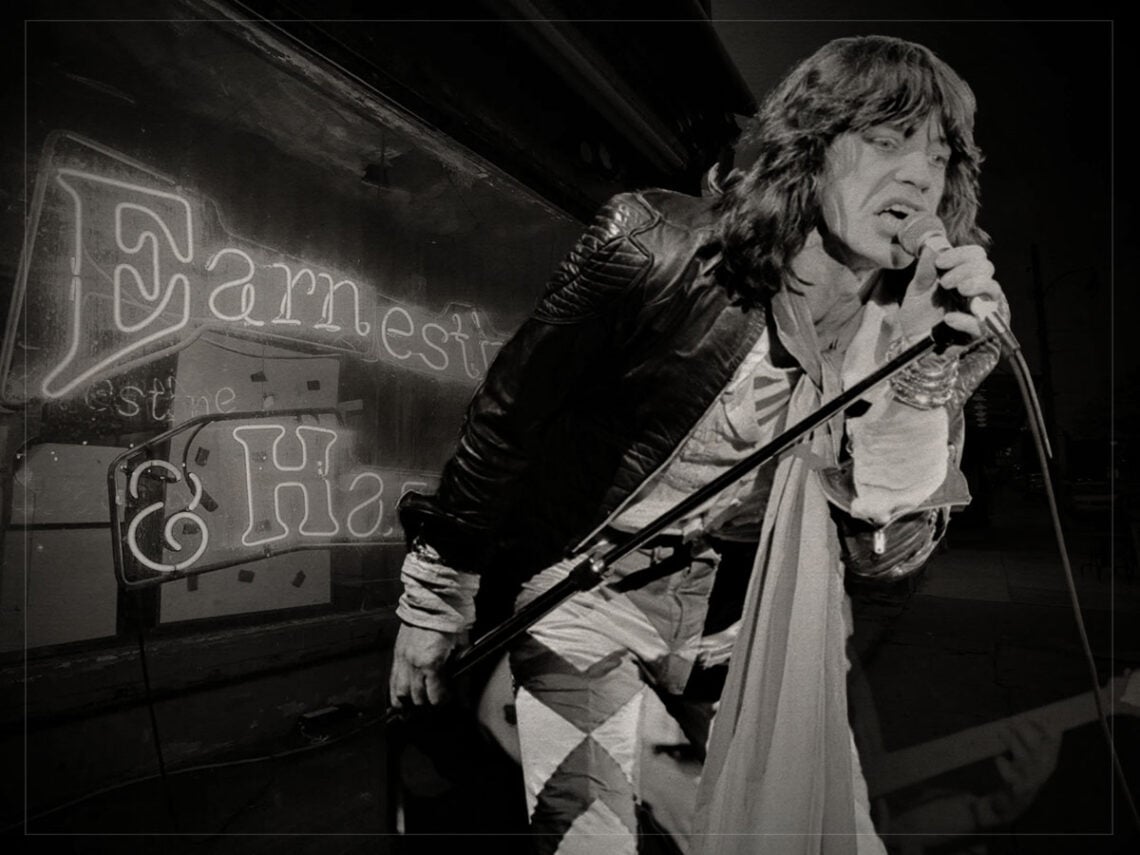
(Credits: Far Out / Bert Verhoeff)
Sat 7 March 2026 1:30, UK
The towns and cities across America form just as authentic a presence in The Rolling Stones’ songbook as any domestic talent amid the countercultural heyday.
It’s easy to forget that the band’s members include a Cheltonian and two Dartfordians. Such was the Stones’ love of the old blues and country tradition, the British invasion heavyweights grew to stand as American as Creedence Clearwater Revival or ZZ Top during their classic peak, be it ‘(I Can’t Get No) Satisfaction’s excoriation of US commercialism, ‘Tumbling Dice’s spiritual dwell in the Southern gospel sermons, or the symbolic death of the Woodstock idyll that hangs heavy in ‘Gimme Shelter’s apocalyptic thunder.
Up and down the country, from fringe New York motels to evangelical churches in Hollywood, the locales that dot the US landscape always seemed to provide potent inspiration for the Mick Jagger and Keith Richards lyrical pen. Memphis can confidently count itself as a key influence. Dreamed up in late 1968, one famed dive bar in the Tennessee city would prove instrumental in shaping one of the Stones’ biggest hits.
Holidaying in Brazil before the Let It Bleed sessions began in earnest, the many caipira folk who lived by Jagger and Richards’ ranch retreat in São Paulo’s Matão area offered some influence, but it was their time in Memphis that brought their country jam sketch to life. Inspired by the old Southern masters like Hank Williams and Jimmie Rodgers, ‘Country Honk’s ode to the South’s various drinking holes began to take shape.
It’s the chart topper that’s best remembered. Released four months ahead of Let It Bleed’s country version as a stand-alone single, ‘Honky Tonk Women’s sexed-up rock and roll rendition would make direct lyrical references “to a gin-soaked bar-room queen in Memphis”, with legends suggesting that the pair were reminiscing about a very real ‘juke joint’ nestled on the city’s South Main Street.
Opened by cousins Earnestine Mitchell and Hazel Jones at some point in the 1950s, their namesake Earnestine & Hazel’s bar offered sanctuary to working-class Black people amid the era’s Jim Crow segregation, offering a jazz café downstairs with a salon above, and other rooms serving as cheap accommodation for weary travellers. Notably, the upstairs shifted to a well-known brothel right up until the late 1980s.
A rock heritage began to coalesce around Earnestine & Hazel’s. Playing shows at the nearby Club Paradise, Chuck Berry, Little Richard, and Aretha Franklin allegedly would make their way to the juke joint after a show, attracted to the cheap abundance of alcohol and hog maw snacks on offer. At some point in the late 1960s, it was understood that Jagger and Richards had passed by the dive bar, sowing the seeds for both ‘Honky Tonk Women’ and 1971’s ‘Brown Sugar’.
Changing managerial hands in 1993, Earnestine & Hazel’s continues to serve as a late-night boozer for revellers eager to keep the night going. Local rumours abound of its supernatural activity, too. From reports of hearing voices to random jukebox plays, one bartender alleged a spooky single spin in the presence of a ‘ghost hunter’.
“Another time, a paranormal was in here talking about exorcism and stuff with Russell [George, the owner], and all of a sudden the song by The Rolling Stones, ‘Sympathy for the Devil’, started playing on its own, I swear,” Karen Brownlee told Vice in 2017. “I think the only time I really got scared was when I was standing at the jukebox, and it felt like somebody touched me.”