
MARQUETTE, Mich. – Two moose died during a wildlife research effort in Michigan’s Upper Peninsula last month, though officials say the project now has placed data-collecting tracking collars on 56 animals.
Scientists are studying the herd to determine why the population has remained stagnant – and even declined – rather than growing toward earlier projections of as many as 1,000 animals. Last month, wildlife crews spent four days capturing, collaring and releasing 41 moose, which is more than double the number handled in last year’s effort.
On the first day of the field work in mid-February, crews handled and released four moose. Two died while recovering from sedation, including a mature cow and a young bull.
“The work we do involves risks associated with wildlife capture, and we take great precautions to ensure those risks are minimized,” said Tyler Petroelje, Northern Michigan wildlife research specialist for the state Department of Natural Resources.
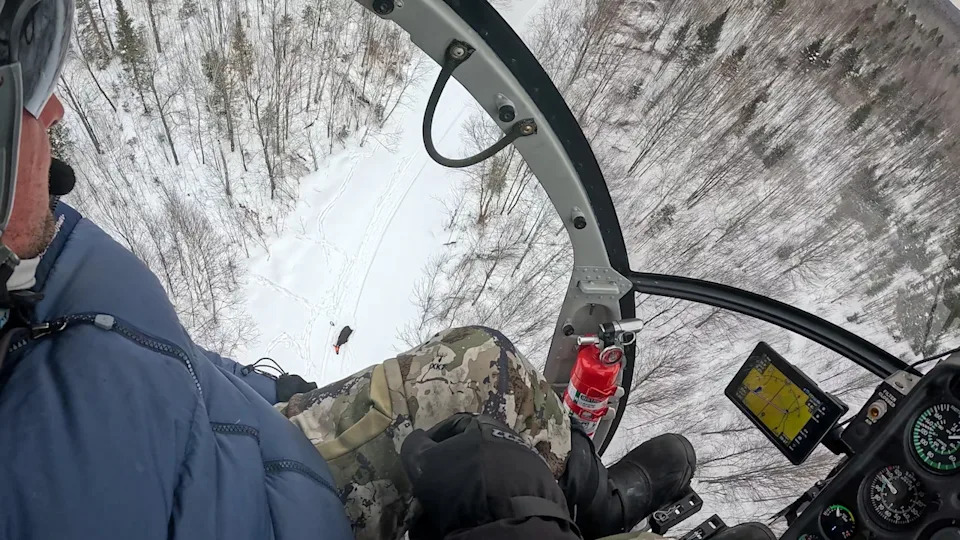
File photo of aerial moose population survey
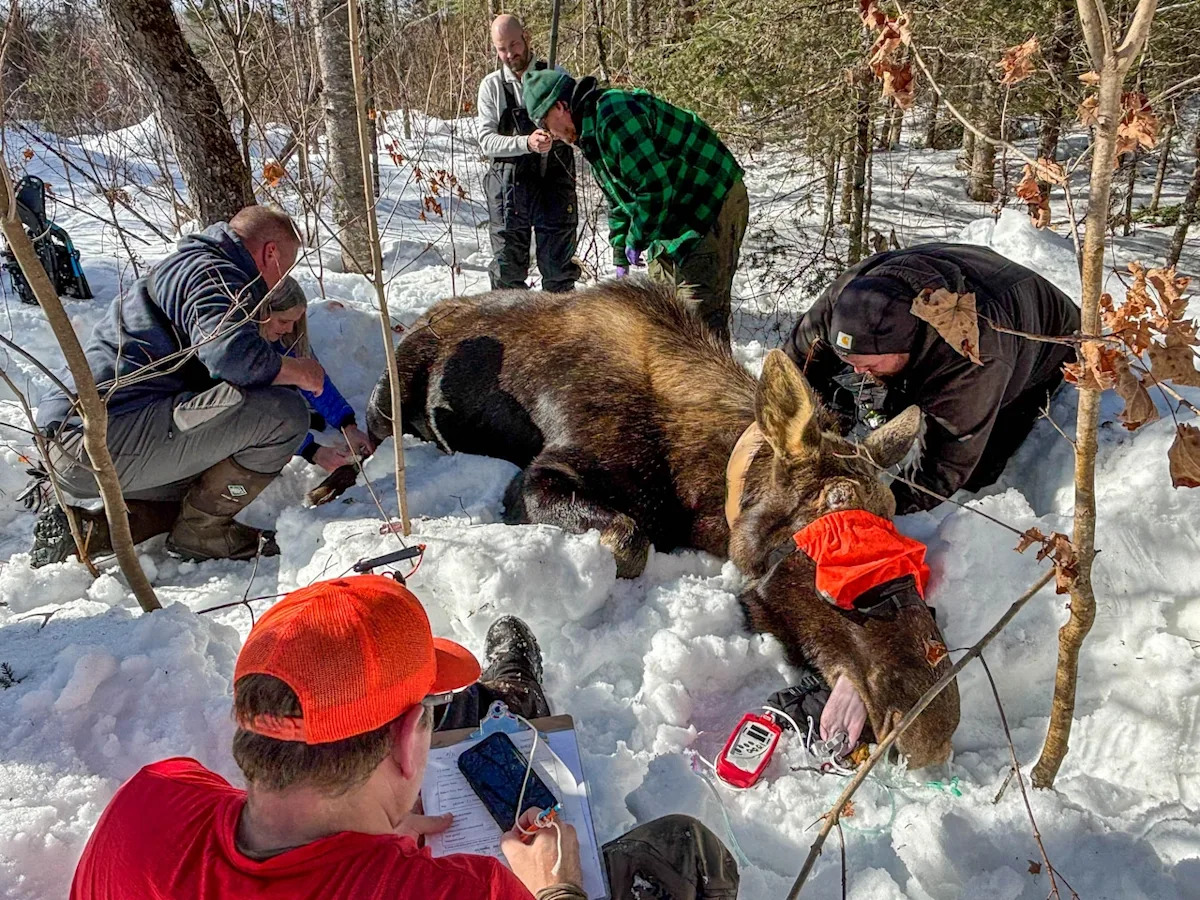
The process involves a helicopter crew flushing a moose from the woods and shooting it with a tranquilizer dart. A ground team collects biological samples, fastens a radio-collar around the animal’s neck, and then injects a drug that reverses the sedatives.
It typically takes about 45 minutes to complete the entire process.
“These moose, and the biological samples and collar data they provide, will be invaluable in helping us better understand survival and factors that are limiting population growth in the core moose herd,” Petroelje said.
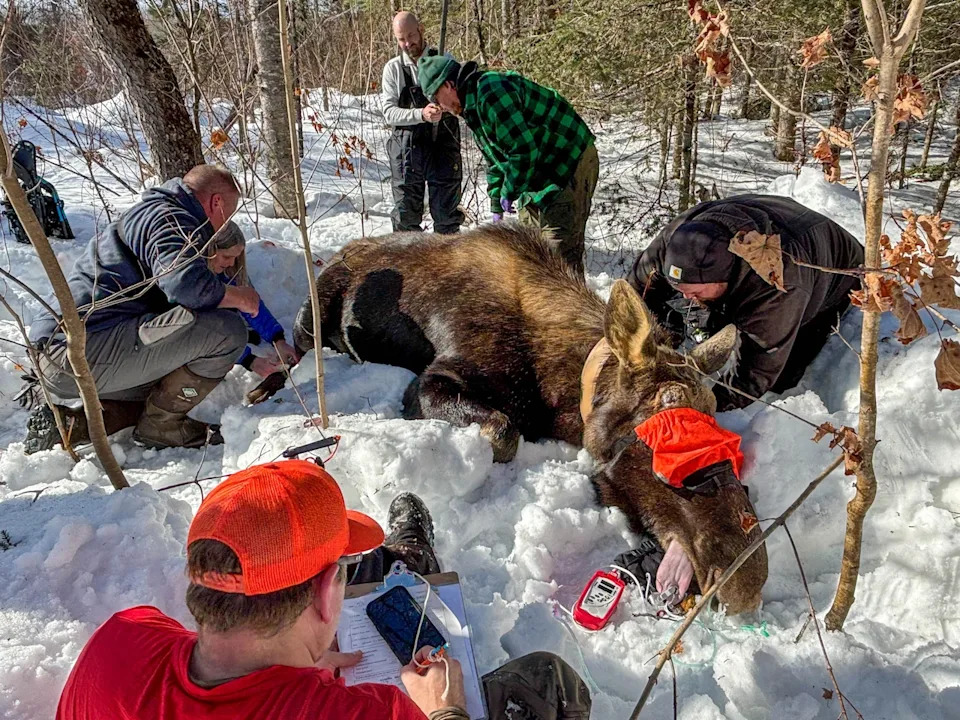
Field crew with sedated bull moose
Researchers have already collected 22,000 GPS locations from the newly collared moose, in addition to the more than 200,000 GPS locations gathered from the moose collared last year. The study began last year and has been funded through 2028.
“It will be exciting to see what additional information we can gather now that we have 56 collared moose on the landscape,” said Kyle Seppanen, wildlife coordinator for the Keweenaw Bay Indian Community.
Necropsies showed the young bull had no underlying disease. The cow, however, had significant lung and liver disease that likely complicated sedation and led to her death.
After the deaths, researchers changed their protocols to shorten how long each moose remains under anesthesia.
Related: Michigan’s mysterious moose decline has researchers looking for answers
Officials estimate the core moose herd at about 300 animals, based on the DNR’s 2025 aerial survey of the species’ range in Marquette, Baraga and Iron counties. The estimate represents a roughly 30% decline from the 426 moose counted in the survey two years prior.
Researchers want to determine whether the moose herd is declining, migrating away from historically surveyed areas, or a combination of both.
“Where are the moose going? What habitats are they using and when?” Seppanen said. “I am looking forward to confirming births this spring and tracking calf survival throughout the remainder of the year.”
Related: Wolf-Moose Foundation: Saving Michigan’s 68-year ecological research project
Known predators of moose in the Upper Peninsula include gray wolves and black bears, which primarily prey on calves and weakened adults.
Vehicle collisions also pose a significant risk. At least 60 moose have been killed by vehicles in Michigan over the past four years, officials said.
There’s yet another environmental factor.
Moose are also vulnerable to winter ticks. Field crews have documented individual animals carrying tens of thousands of ticks in a single season. The resulting blood loss, skin irritation and hair loss can be fatal, especially during freezing winter conditions.
Read the original article on mlive.com. Add mlive.com as a Preferred Source by clicking here.