
Deep in the woods of western Massachusetts, wildlife biologist Dave Wattles is living out a lifelong dream — working with black bears.“It was always a dream of mine to study and work with bears,” says Wattles, lead black bear biologist for the Massachusetts Division of Fisheries and Wildlife.His job is to monitor the state’s growing bear population. Over the past 40 years, black bears have steadily returned to much of Massachusetts, expanding far beyond their historic stronghold in the Berkshires.“We now have bears living inside the Interstate 495 corridor in eastern Massachusetts,” Wattles says. “There are probably around 5,000 bears in the entire state.”Each spring, Wattles and his team visit bear dens to study survival, reproduction, and behavior. On this particular day, they approach a den where a female bear — first tagged by MassWildlife in 2019 — has been hibernating since November.Carefully and quietly, the team immobilizes the mother bear so they can work safely. Then comes the surprise inside the den.Three cubs emerge.“Generally speaking, two to three cubs is what we anticipate,” Wattles says, smiling as the tiny animals wriggle in the snow. “They’re basically like little teddy bears.”At six to eight weeks old, the cubs weigh just a few pounds and rely entirely on their mother’s milk. Within a year, they’ll disperse on their own, learning how to survive in the forest.For now, researchers move quickly. They weigh the cubs and download data from the mother’s tracking collar, which records her movements. Past data shows this bear has crossed the Massachusetts Turnpike more than a dozen times — a risky journey.“Vehicle collisions are a major source of mortality,” Wattles says.Bears are highly adaptable, capable of thriving in forests and suburbs alike. But that adaptability can create challenges when bears find food in neighborhoods.“If you feed birds and a bear is coming to your feeder, please stop,” Wattles advises. “We want them using natural foods and the natural landscape.”After about two hours, the work is done. The cubs are tucked back beside their mother, who will soon wake up, unaware anything happened.Find out more about bears in the wild and what to do if you encounter one here.
CHICOPEE, Mass. —
Deep in the woods of western Massachusetts, wildlife biologist Dave Wattles is living out a lifelong dream — working with black bears.
“It was always a dream of mine to study and work with bears,” says Wattles, lead black bear biologist for the Massachusetts Division of Fisheries and Wildlife.
His job is to monitor the state’s growing bear population. Over the past 40 years, black bears have steadily returned to much of Massachusetts, expanding far beyond their historic stronghold in the Berkshires.
“We now have bears living inside the Interstate 495 corridor in eastern Massachusetts,” Wattles says. “There are probably around 5,000 bears in the entire state.”
Each spring, Wattles and his team visit bear dens to study survival, reproduction, and behavior. On this particular day, they approach a den where a female bear — first tagged by MassWildlife in 2019 — has been hibernating since November.
Carefully and quietly, the team immobilizes the mother bear so they can work safely. Then comes the surprise inside the den.
Three cubs emerge.
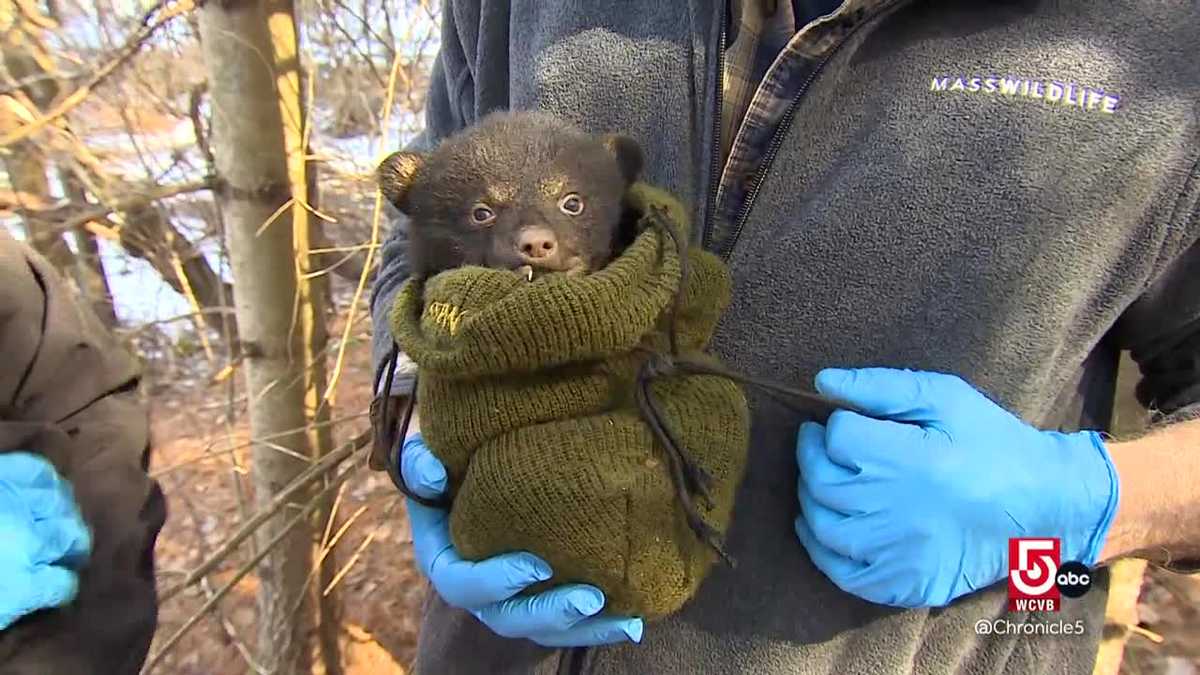
“Generally speaking, two to three cubs is what we anticipate,” Wattles says, smiling as the tiny animals wriggle in the snow. “They’re basically like little teddy bears.”
At six to eight weeks old, the cubs weigh just a few pounds and rely entirely on their mother’s milk. Within a year, they’ll disperse on their own, learning how to survive in the forest.
For now, researchers move quickly. They weigh the cubs and download data from the mother’s tracking collar, which records her movements. Past data shows this bear has crossed the Massachusetts Turnpike more than a dozen times — a risky journey.
“Vehicle collisions are a major source of mortality,” Wattles says.
Bears are highly adaptable, capable of thriving in forests and suburbs alike. But that adaptability can create challenges when bears find food in neighborhoods.
“If you feed birds and a bear is coming to your feeder, please stop,” Wattles advises. “We want them using natural foods and the natural landscape.”
After about two hours, the work is done. The cubs are tucked back beside their mother, who will soon wake up, unaware anything happened.
Find out more about bears in the wild and what to do if you encounter one here.