
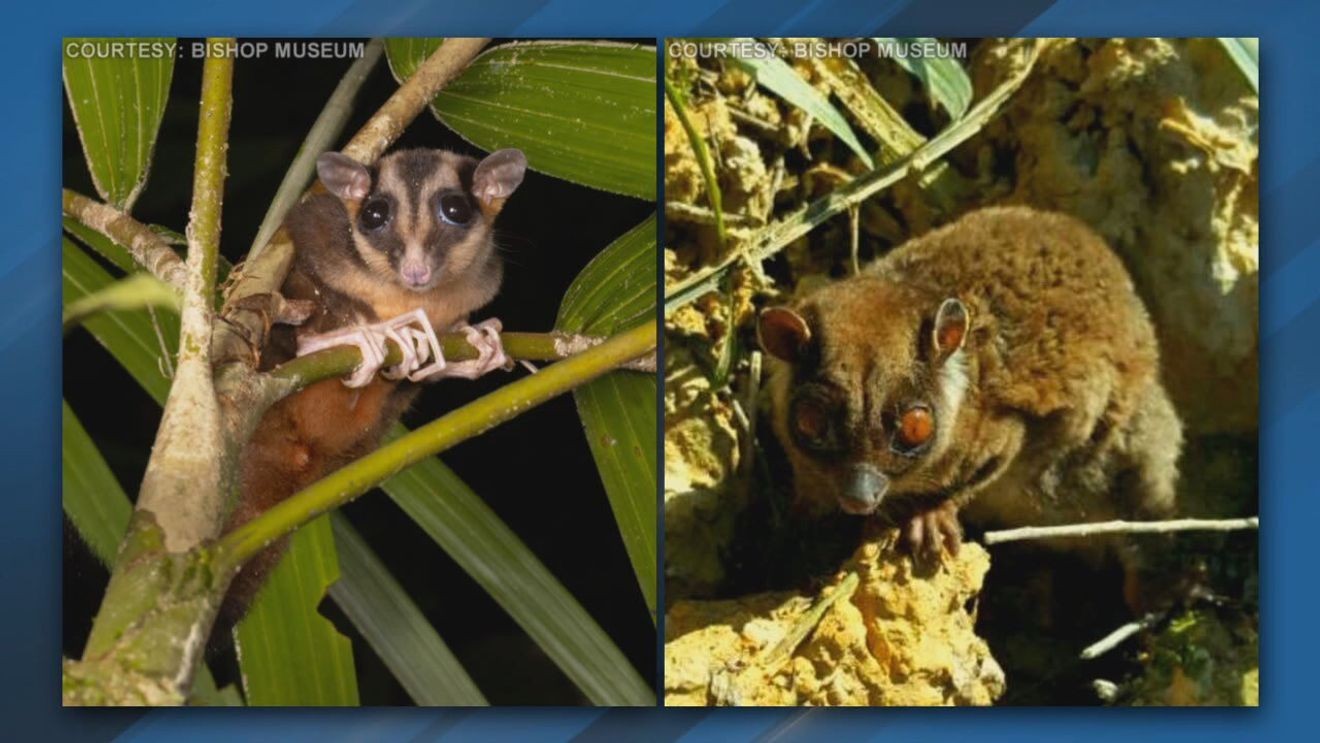
PORTLAND, Ore. (KATU) — Scientists have found two species thought to have been extinct for 7,000 years alive in New Guinea.
The announcement came Thursday from the Bishop Museum in Hawaii.
One is the pygmy long-fingered possum. The other is a ring-tailed glider.
Both animals are marsupials, meaning they have pouches to carry their young.
Before this, both animals were known only from fossils. The fossils were discovered in a cave in the 1990s.
The researchers say the live animals’ rediscovery came through a collaboration between scientists, citizen scientists, and indigenous communities.
The two animals have been added to a category dubbed “Lazarus species,” a scientific term used to describe organisms that reappear after being thought to be extinct.
“These species are found only in fairly specific pockets of the western part of New Guinea, so I think that’s part of why it’s taken us so long as scientists to understand that they are still there,” said Kristofer Helgen, president and CEO of Bishop Museum, from Hawaii. “The forests where they are found, the only places they are found today, are fairly tall forests like really big, beautiful forests, but they are those types that are most threatened by logging, deforestation. These animals being beautiful, they’re very cut creatures, are also potentially affected by the wildlife trafficking.”
Because of that, they are not revealing the exact locations where the animals were found.
Comment with Bubbles
JOIN THE CONVERSATION (1)
Helgen says they don’t have enough information yet to say how big the populations of the animals are, but they do plan to learn as much as they can.