

For a lot of us, working out is mostly about the short-term benefits. We want to be fitter, faster and stronger, and if you train all those things consistently, they will happen in the space of a few weeks or months.
However, the long-term benefits of regular training are even more important, especially when you hit midlife and want to both maintain your fitness and protect your health for the years ahead. Getting your training right in your 40s and 50s is almost like paying into a fitness pension, says fitness expert Joe Warner.
“You pay into a pension with your money, why wouldn’t you do it with your health?” Says Warner. “It’s never too late, but you have to start doing it because it’s not exactly like your pension, where you might be able to suddenly make a massive deposit at 70 — it’s accruing all the time.”
You may like
 Joe Warner
Social Links Navigation
I spoke to Warner to get his advice on the things people should be doing to pay into their fitness pension and set themselves up for better health in later years, and these are the five key takeaways on how you should set up your training.
1. Start small and park the ego

(Image credit: Getty Images)
“Anything is better than nothing,” says Warner. “If you’ve not done any training before, you need to focus on baby steps. It can be as simple as walking more or using an exercise bike. Anything that’s not going to impact your joints too much, especially if you’re carrying a bit of extra weight.”
Starting at a sustainable pace will help you maintain training consistently, even if it means walking more than running, or lifting much lighter weights than you did as a 20-year-old.
“You’ve got to really park the ego when it comes to this, because this is a long-term project,” says Warner. “It’s not about the next 45 minutes, it’s about the next 45 years.”
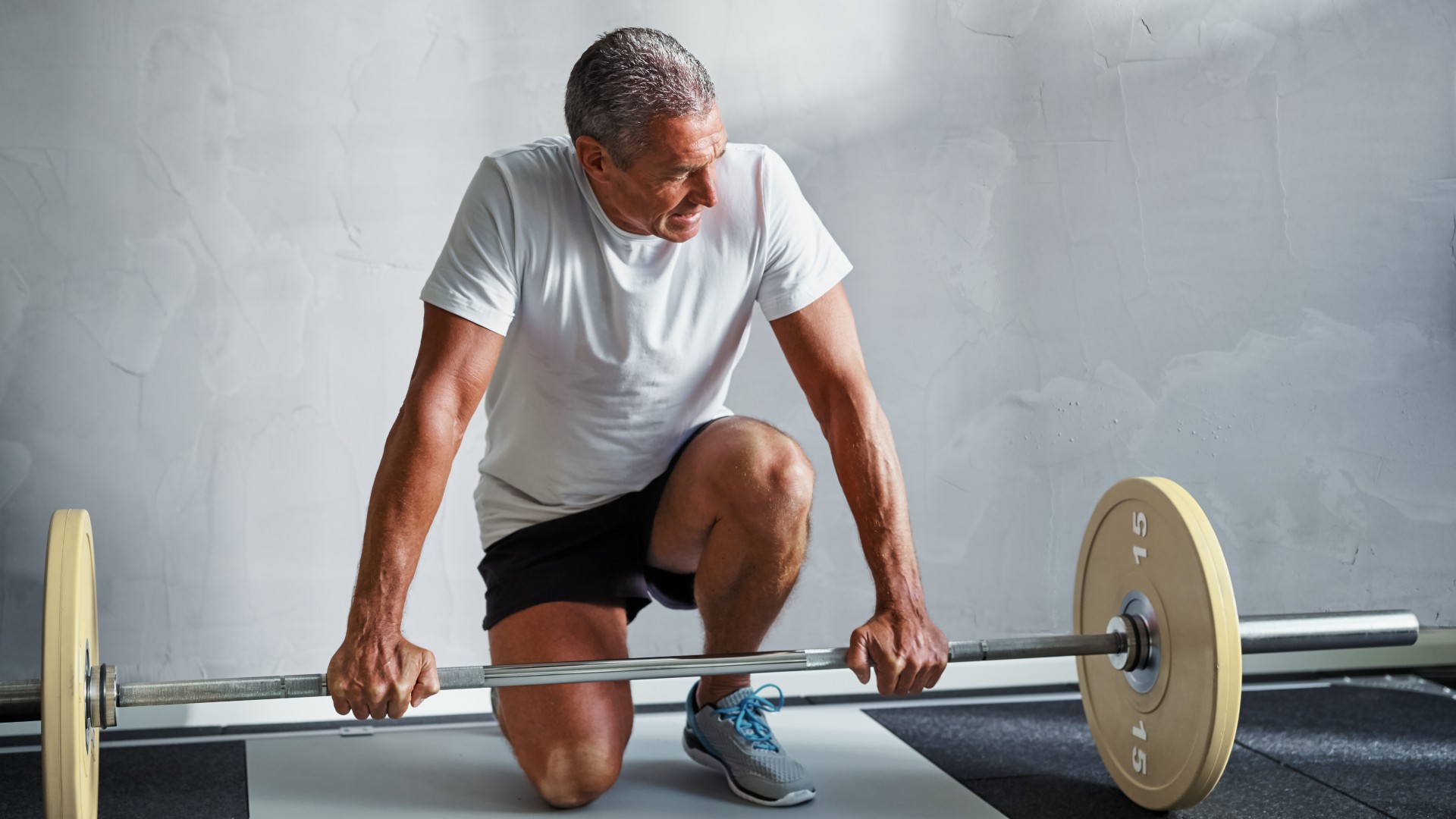
2. Strength training is essential
(Image credit: Getty Images)
“If you’ve got a relatively decent training history and fitness level already, strength training should be absolutely front and center,” says Warner.
“It’s even more important for women just because they’re losing muscle mass and bone density through menopause, but for men it’s really important as well because you do naturally lose muscle.
“Strength training will maintain or build muscle mass. It’s going to fire up your central nervous system, sending signals to the muscles and back. There’s lots of research around how hormones and compounds released after weight training can benefit brain health.
What to read next
“I could go on and on about the benefits — insulin sensitivity, metabolic flexibility — but everything you can think of essentially is going to benefit from lifting weights.”
You don’t need to be hitting the gym every day for hours at a time, either, or lift super heavy weights. Warner suggests a couple of full-body weight sessions a week, hitting the upper and lower body.
“You don’t even need to be getting a sweat on,” says Warner. “You can rest between sets. It’s more about really making sure your muscles are moving.”
3. Mix up your cardio

(Image credit: Getty Images)
“It’s also really important to get cardio training,” says Warner. “I think this is where a lot of people are still caught in that mindset of you need to do hours and hours of cardio, where it’s about hitting the sweet spot.
“You want to have one long, slow, LISS (low-intensity steady state) session, but then also some high-intensity stuff. That’s going to cover all the bases.
“So that can be a combination of a long hike, a long, slow, steady run, a long bike ride, and then some slightly higher intensity stuff. It could be a circuit training class.”
4. When you’re ready, be explosive

(Image credit: Getty images)
Strength and cardio are the key aspects of your training, and once you’ve established a routine with them, you can also look at some more explosive workouts to build power.
“This is like the cherry on the top of the cake when you’re doing all the other stuff,” says Warner. “You don’t want to go straight into this, but add some plyometrics like box jumps, skipping. Anything like that is making your muscles fire quickly. There’s a lot of research showing it can be really helpful in preventing muscle loss.”
5. Work on your mobility and flexibility

(Image credit: Shutterstock)
If you can develop a consistent training routine covering the above bases, you’re almost all the way there.
“Strength training will maintain muscle mass and strengthen bones and tendons,” says Warner. “The long, slow cardio is amazing for cardiovascular health. The HIIT is going to really help in terms of calorie burn and heart health, and then the power work is going to keep everything firing and make you feel alive, essentially.”
One last thing to work on that makes a huge difference is mobility and flexibility work, which will not only help you move better in later life but can help with your workouts in the here and now and reduce the aches and pains that become more common in midlife.
“A lot of people think ‘I’m getting weaker’ and quite often it’s actually their tendons getting tighter,” says Warner. “There’s a lot of tightness because we’re very sedentary now, so a lot of those muscle aches are probably joint or mobility issues.”
This 10-minute mobility routine is a good place to start; try adding it to your morning each day, and you’ll notice the benefits in no time.

Follow Tom’s Guide on Google News and add us as a preferred source to get our up-to-date news, analysis, and reviews in your feeds.
More from Tom’s Guide