
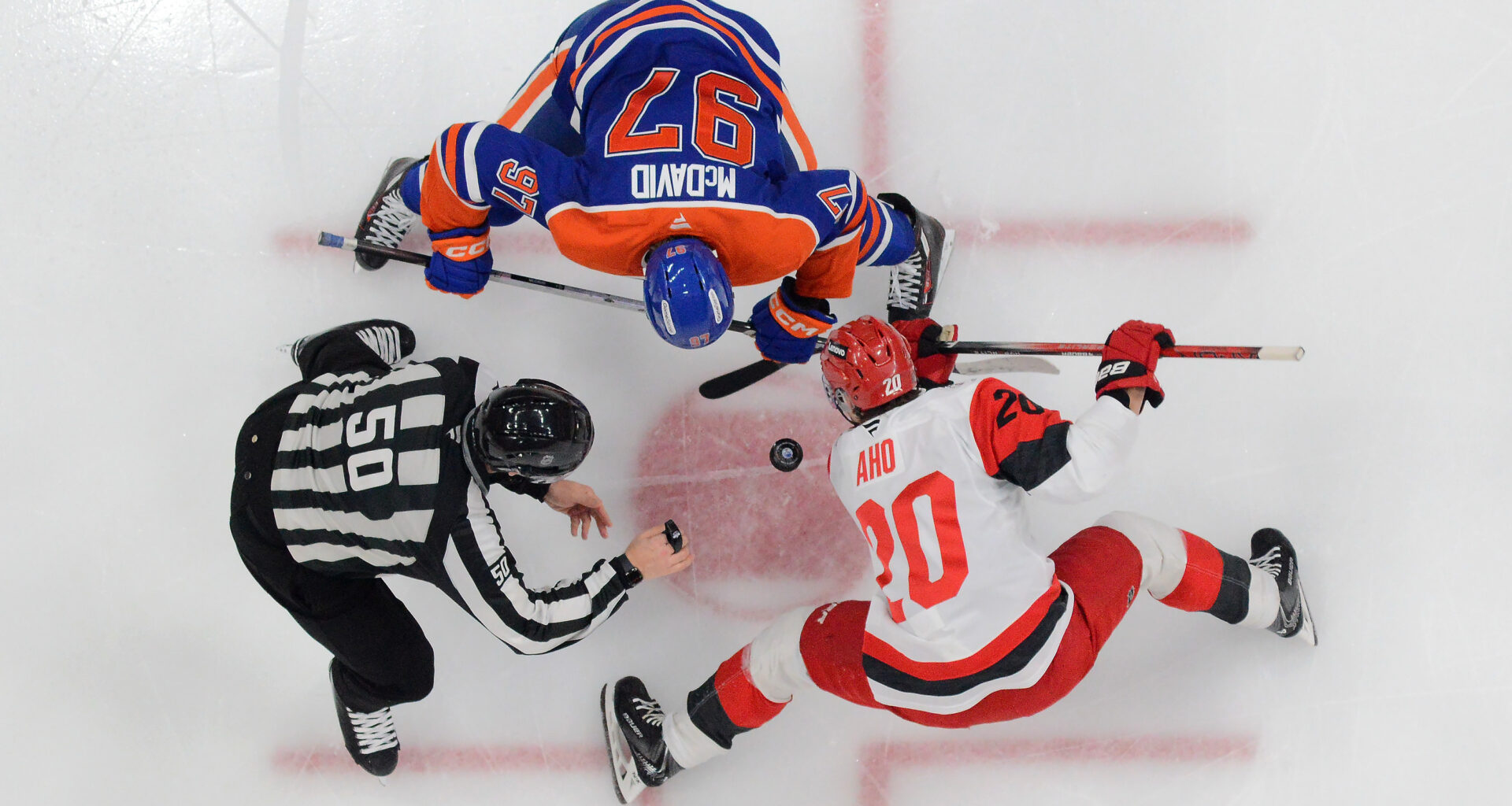
EDMONTON, Alberta — While fans of the Calgary Flames are steeling themselves to say goodbye to the Saddledome at the end of the 2026–27 season, their rivals to the north are worried about a different kind of countdown. Connor McDavid, the franchise center who’s piloted the Edmonton Oilers to back-to-back Stanley Cup Finals, may or may not leave town when the extension he signed before this season expires in the summer of 2028. Either way, by god does this city want to celebrate a Cup before his era eventually comes to a close.
The 29-year-old has already earned a trophy case full of individual awards that attest to his greatness, and he can exhibit them in his unspeakably chilling home if he so wishes. But the NHL’s assists and points leader (yet again) is special in a more tactile sense when you see him live. Hockey is kind of strange for the way it cloaks the vast majority of its players in anonymity. Even serious attendees paying attention to the action would be hard pressed to rattle off the names of all the guys on the ice at a given moment, because the game is very fast and no one stays on the ice for long and the skaters all look basically the same from far away. But in the four games I’ve seen McDavid play live—three on the road and one, on Friday, at home—he stands out, in part because the folks in the seats seem primed to exclaim his name as soon as he touches the puck. I noticed it again as the Oilers took on the Carolina Hurricanes: He calmly moved through the neutral zone with possession as two voices on opposite sides of my section shouted “McDavid!” In opposing venues, some goofuses might be more likely to yelp “McJesus!”, but that counts too.
They do it because special things tend to happen when the puck is on McDavid’s stick. He is extraordinarily fast. He contains amusement-park spin moves. He expertly plays the role of Knife opposite the defense’s Butter. And sometimes he is just magic personified.
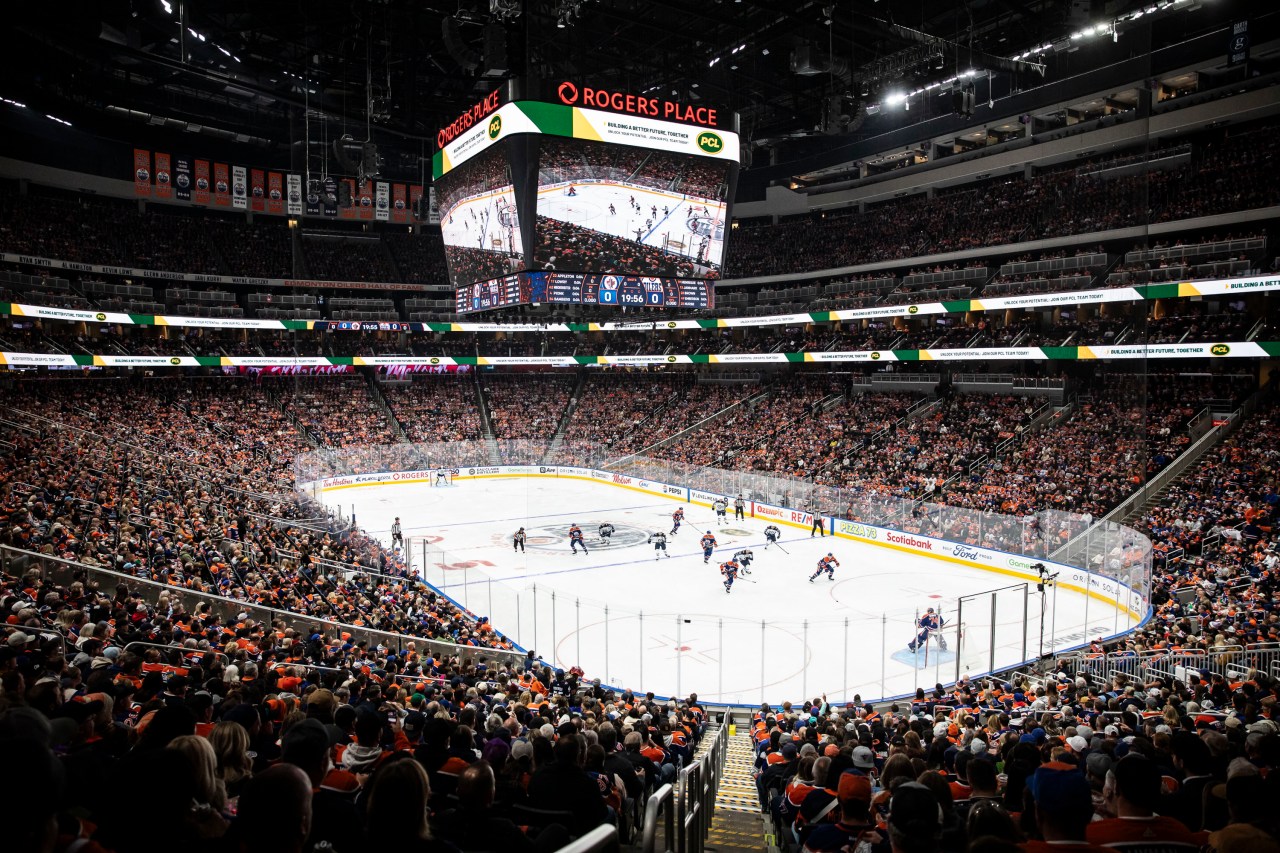
It almost feels like the Oilers’ arena, opened in 2016, is a palace built specifically to house McDavid’s royal talents. It was definitely a trip to experience it just 24 hours and one (very smooth!) bus ride after visiting the Saddledome, which feels like a family sitting room (complimentary) in contrast to its much-younger sibling up north. The blandly named Rogers Place is utterly gargantuan, even if you compare it to other recent NHL construction projects in Detroit and on Long Island. It is an alien spaceship that has landed in the middle of Edmonton’s downtown, with an unbelievable amount of square footage to walk through inside before you even have to scan your ticket. Taking the escalators up to the 200 level—in practice something like the third deck or higher because of the suites and a loge level—it feels like you’re about to bump your head on the sky. A lot of buildings in the NHL boast a higher capacity, but I’ve never been in a hockey arena as mind-blowingly massive.
 Codie McLachlan/Getty Images
I had a better time at the Saddledome, largely because for all their fancy design work the Rogers Place masterminds couldn’t figure out a way to stop the guy in front of me from blocking my view of the near-side net. But the overstimulating extravaganza of lights, noise, and hype videos better fits what the Oilers are doing right now than the unassuming, quirky little Saddle that the spiraling Flames are ready to replace. Edmonton’s been the second-best team in the NHL for two years running, and the superduo of Draisaitl and McDavid remains at the peak of their powers. The only problem, and it’s an old one, is that they’re 0-for-4 when it comes to trying No. 1 goalies this season; none of them has been any good.
The result? Overstimulation. The guys up top put the puck in the net, and the guy in the back lets it in. Tristan Jarry, Edmonton’s starting goalie on Friday, got a sarcastic “You made a save!” cheer at one point during this game, like when Patrick Roy’s time was up in Montreal. The Oilers’ deadline moves were of the self-conscious “We’ve gotta get more gritty” variety, because they don’t have a ton of pieces to trade and because they already made their move in the crease when they traded for Jarry in December. His contract runs as long as McDavid’s, so I guess they’re riding with him. But he really needs to be better if they’re going to avoid slipping off the playoff bubble.
Canes-Oilers was a fun match-up because they’re different kinds of good teams with the same fundamental problem. The Canes don’t roster any skaters quite like the stars that the Oilers do, and their relatively underwhelming headliners are one reason why they haven’t been able to pass the East’s toughest tests in the later stages of the playoffs. But the Canes have put together a streak of great regular seasons thanks to incredible coaching from Rod Brind’Amour that motivates his boys to outshoot and outwork the opposition, playing the odds by keeping the puck as close to the other team’s net as they can. It’s how Brandon Bussi, who’s been nothing special with a save percentage of .901, looks like a world-beater with a 25-3-1 record on the year.
Frederik Andersen, who’s been terrible all season, got the start for Carolina on Friday, and he let in the first goal of the night when Zach Hyman took a long McDavid pass beyond the defense and finished his breakaway. It was a wonderful pass by any player’s standards, but to be totally honest, I was feeling greedy. I’d yet to see a McDavid goal in my three previous Oilers games, and I wanted one of Those Moments—the kind where I could send people the highlight clip and say, “I was there.”
The Canes responded immediately to the Hyman goal with a one-timer where Jarry was way too slow to move to his left, and followed up with a deflection through traffic that held for a 2-1 lead at intermission. The teams traded goals in the second—the Canes with the kind of softie that comes to you sometimes when you keep the puck in the most fruitful areas, the Oilers with one off a turnover on the boards that actually did display the tangible value of grit—but at the end of the second, Carolina held a booming shots advantage of 26-12. In the third they scored first, and even though Draisaitl delivered a pretty sick assist from a drive into the corner on another Hyman goal to keep the contest close for a while, the final score was a gnarly 6-3 Hurricanes.
This may sound rude, but in my anticipation of a show-stopping goal from McDavid, I couldn’t help but catalog the moments in my brain where he came up short. There he was, getting stripped of the puck. There he was, being denied on a zone entry. There he was, getting whistled for an interference penalty. His audience on this night didn’t get That Thing. If I took away anything new from watching his shifts from my vantage point, it was only, perhaps, a slightly better understanding of when to go full throttle at an important moment and when to toggle the switch to conserve energy.
Don’t mark me down as ungrateful, however. Hours later, I’m still thinking about a sequence that the visiting team put together in the latter stages of the first period, when they trapped the Oilers in their own defensive zone and wouldn’t let them get the puck out until they had to ice it. The hustle on display in the minute-plus that this torment lasted was second-to-none. They swarmed Edmonton, and they disrupted all of their attempts to regroup, and even though they weren’t setting up an organized attack, the Canes were still just a bounce away from another goal. They’re like Ichiro, I thought to myself as I watched this unfold. Their primary goal, in baseball terms, is that of a contact hitter: wait for your pitch, foul off the ones you can’t do anything with, and put the onus on opponents not to screw up. It’s an exhausting effort to have to face down in the heart of the regular season’s grind, and the Hurricanes occupy a soft spot in my heart for their commitment to this style. I know it makes me sound like a nerd, but this brand of tilted-ice hockey exhilarates me. Here’s a taste:
I learned, thanks to the Hurricanes’ persistence on Friday, that there is exactly one thing that the Saddledome and Rogers Place have in common: When the road team gets that empty netter, both crowds clear out in a flash.
Recommended