
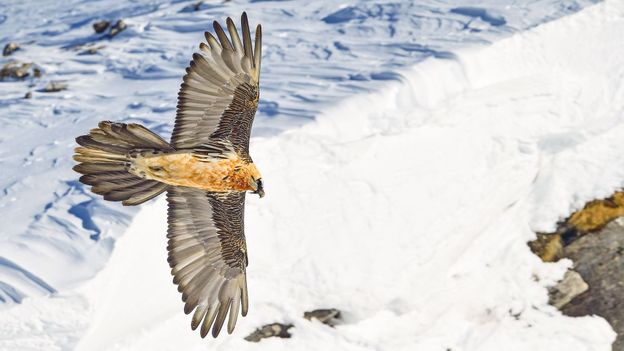
Perhaps most importantly, bearded vultures are now a protected species in Europe and hunting them is banned (though there have been some illegal killings). As other species such as ibex and chamois have rebounded, thanks to wider conservation measures, there is more food for the vultures to scavenge. Protected areas in the Alps, which can be less disturbed by humans and more abundant in wildlife than other areas, have also helped the vultures’ breeding success.
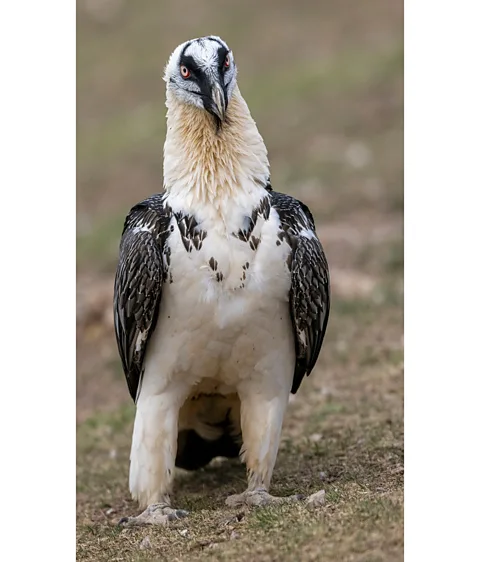 weyrichfoto/ VCFBearded vultures were once reviled, but they are an important part of the Alpine ecosystem (Credit: weyrichfoto/ VCF)

There are also individual factors. Vultures can live very long lives – 37 years and counting, in Balthazar’s case. Over that lifespan, they gain experience, which is especially important when it comes to parenting. Bearded vultures start breeding when they are about eight years old and continue to reproduce into their 20s or even 30s, giving them plenty of time to learn and improve.
As a result, when it comes to raising their chicks to adulthood, “older birds are better than younger ones because they have acquired more experience,” says Terraube, based on his team’s analysis. “The longer the breeding pair has been together, the better they were as parents, and the higher their breeding success,” he explains.
That’s because raising chicks in the high mountains, at 2,000m (6,562ft) above sea level, requires many skills, he says: where to build a sheltered, safe nest in high cliffs, in a space that’s protected from rain and snow; where to find food for the growing chick; and how to defend it against predators such as ravens. Given that the chicks hatch around March and don’t fly from the nest until July or August, the nest needs to serve them for a very long time, Terraube adds.