
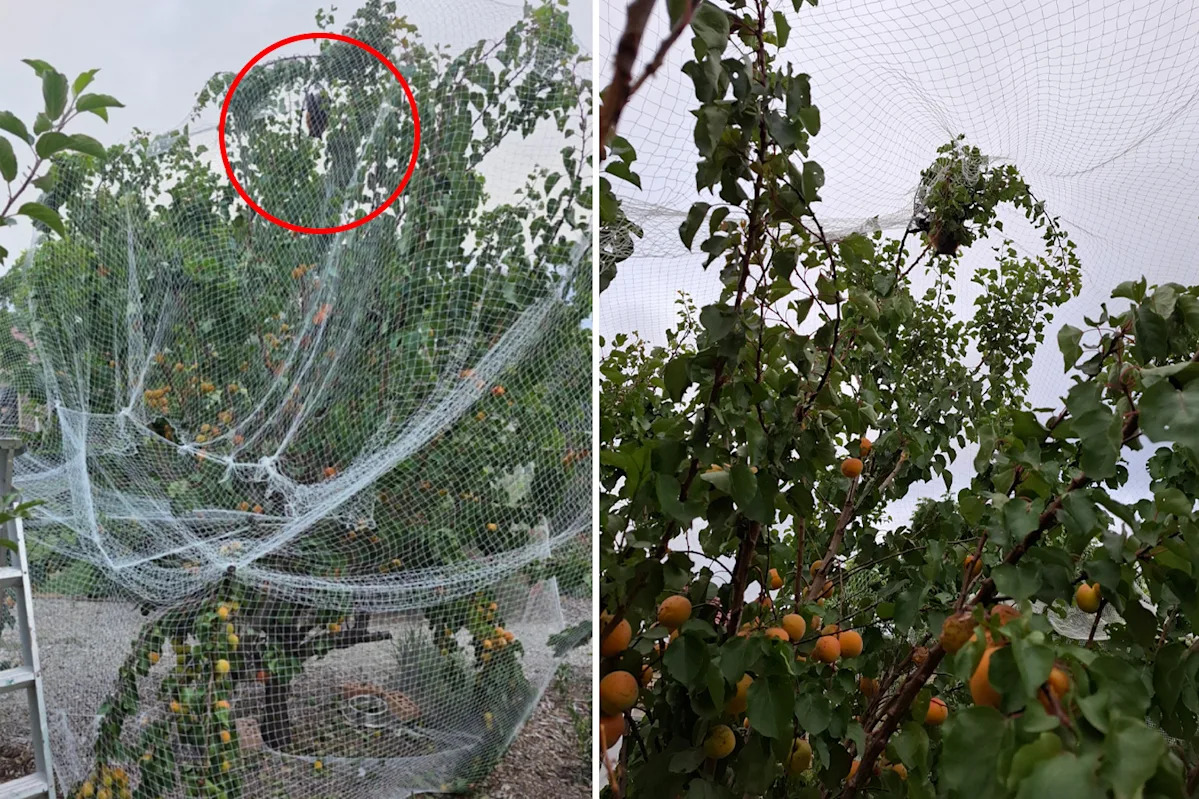
Green-thumbed Aussies lucky enough to have a fruit tree in their yard have been reminded about the dangers of using nets. While designed to protect the fruit from curious and hungry wildlife, some can be extremely hazardous and even life-threatening.
Wildlife rescuer Meaghan Scott is regularly called out to rescue injured and entangled wildlife, often possums and flying foxes that have attempted to swipe the fruit from trees across Victoria.
“It happens quite a lot,” she told Yahoo News Australia. “Flying foxes are struggling right now due to netting entanglements, heat stress and starvation, leading to many pups being abandoned.”
Last month, she received a call from a concerned Wallan man who discovered a grey-headed flying fox entangled in his apricot tree netting.
“When I arrived, the flying fox was badly entangled high up and deep in the centre of the tree, making access difficult,” she explained.
“After cutting away some branches and netting to position the ladder, I was able to reach her, carefully contain her, and begin removing the netting piece by piece.”
Do you have a story about hazards to Australian wildlife? Contact newsroomau@yahoonews.com
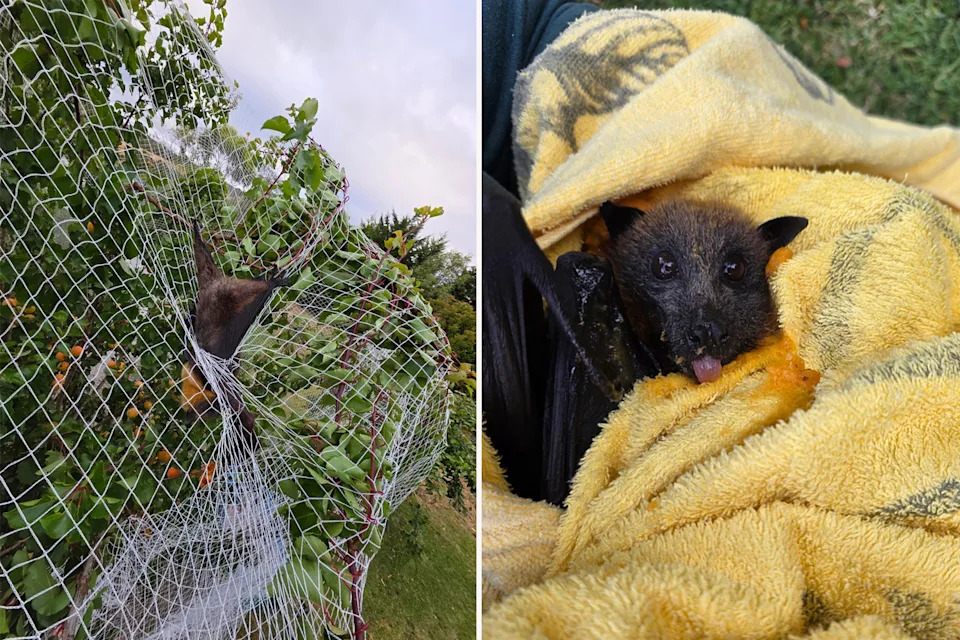
A flying fox was rescued from a property in Wallan, Victoria last month. Source: Supplied by Meaghan Scott
Fines for using incorrect fruit tree netting
Illegal netting is the reason for most of Meaghan’s rescues, she explained.
In Victoria, it is illegal to use, sell, or advertise household fruit netting with a mesh size larger than 5mm x 5mm at full stretch to protect backyard fruit trees.
Wildlife officers can issue on-the-spot fines of $395, with offenders facing a maximum penalty of $2,964 if prosecuted in court.
Those in NSW face fines of up to $800 if caught using illegal nets, and in the ACT maximum penalties of $1,100 can be enforced.
In this case, the Wallan property owner found the netting in the shed, left behind by previous owners.
“They’d only netted one [of 12 fruit trees]. But he didn’t realise some types of netting are illegal and incredibly dangerous for wildlife,” Meghan explained.
“Thankfully, they were responsible and checked it every day — that’s when they discovered her”.
The animal, aptly named Apricot by a local, was taken to a wildlife centre, where she remains until her injuries have healed.
Online retailers blamed for selling illegal netting
The problem of netting is a wide-reaching one, although Victoria has some of the toughest regulations across the country.
The sale of cheap netting through various online retailers means people have access to products that do not meet the correct requirements.
eBay, Amazon and Temu have previously been called out for selling and shipping illegal netting, with Temu removing the entire search term “fruit tree netting” after being contacted by Yahoo.
Big W last year apologised for sending a banned item to a customer.
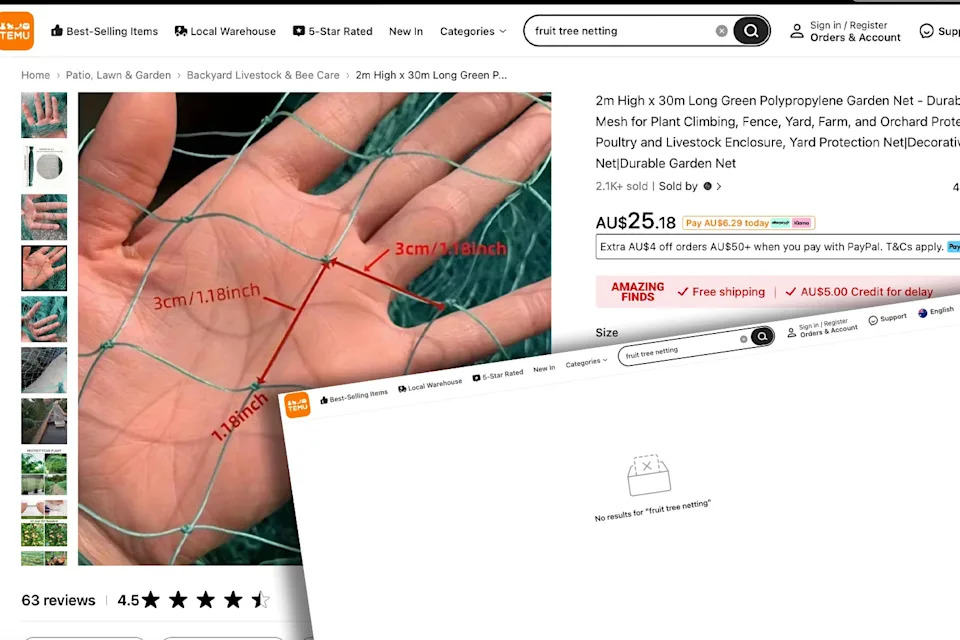
Temu removed the search term “fruit tree netting” from its Australian site after being contacted by Yahoo. Source: Temu
Desperate plea to help save wildlife
Flying foxes across the east coast “urgently need help”, Meaghan said. But the netting also impacts snakes, birds and other wildlife.
“If you or someone you know uses fruit tree netting, please ensure it is wildlife-friendly and check it every morning, and [if you find anything entangled], don’t try to free them. Call a local wildlife rescue group straight away,” Meghan advised.
Speaking of the matter previously, Kate Gavens, Chief Conservation Regulator of Victoria, urged “all household fruit growers to ensure they understand the law and have compliant fruit netting that protects both native wildlife and your household fruit trees”.
“A small change to your netting can make a big difference to the welfare of animals like grey-headed flying foxes,” she said.
Do you have a story tip? Email: newsroomau@yahoonews.com.
You can also follow us on Facebook, Instagram, TikTok, Twitter and YouTube.