
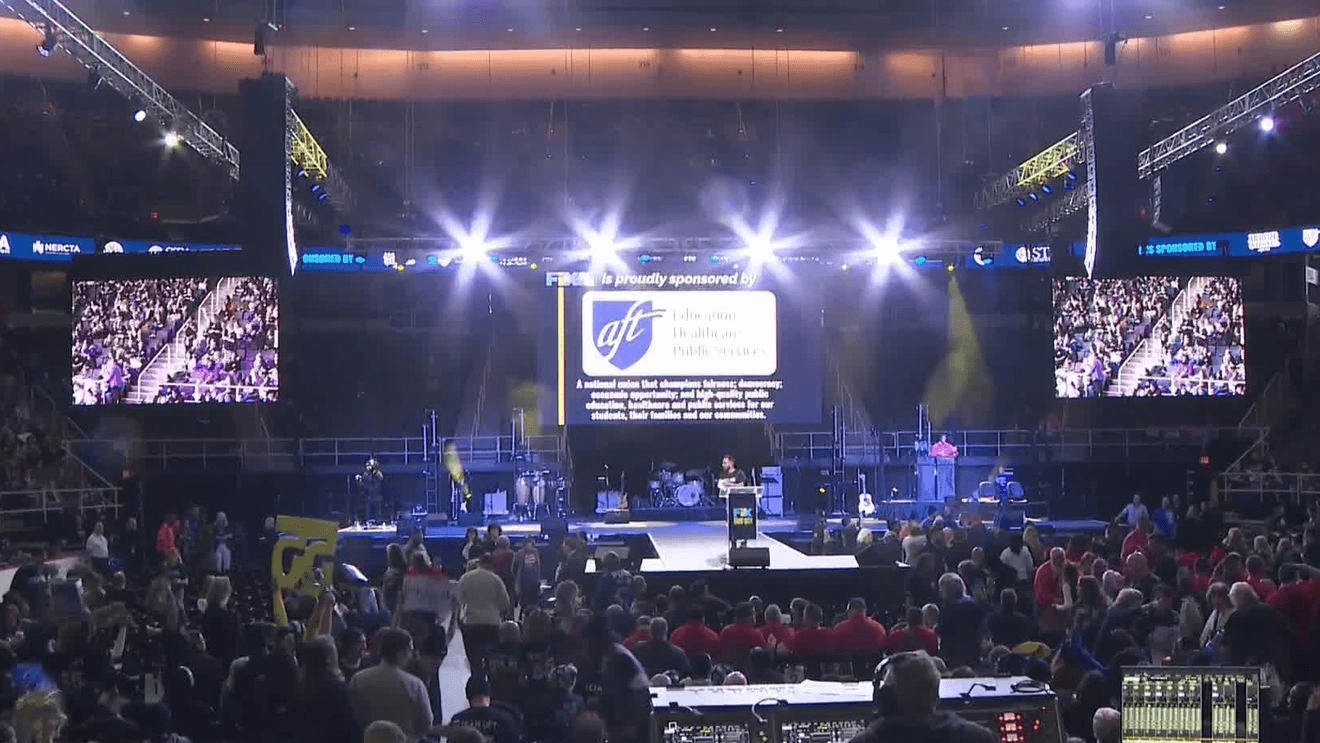
ALBANY, NY (WRGB)- Thousands of New York state public workers gathered at MVP Arena on Sunday, urging lawmakers to change the Tier 6 retirement system that affects employees who started work after April 1, 2012.
The New York State Teachers Union says roughly 780,000 employees are impacted by Tier 6. Under the system, workers put more of their salary toward their pension, including overtime and cost-of-living adjustments. They also retire later and receive fewer benefits than workers in the other five tiers.
Tier 6 was implemented under former Gov. Andrew Cuomo during what a teachers union representative described as a fiscal crisis, with the goal of reducing long-term employer costs. It applies to state workers, county workers, police officers, firefighters and teachers in the New York state retirement system.
The system includes “contribution bands” that require workers to pay 3% to 6% of their salaries. The New York state comptroller’s office says most people must work until age 63 to receive full benefits. Workers can retire as early as 55, but face permanent benefit reductions for retiring early.
Firefighters from across the state were among those calling for changes. “At least 65 percent of our members right now are tier six, they are separate from our tier two, tier four, tier five members,” said Sam Fresina, president of the New York State Professional Firefighters’ Association. He says they all fight the same fires and put their lives on the line alongside one other.
Gov. Kathy Hochul spoke at the rally and said she is fighting for a stronger pension system. Hochul said the state will reduce the vesting period — the timeframe an employee can work before earning contributions — from 10 years to five years.
Workers in Tier 6 also warned that if the system is not changed, the state could be headed toward a larger staffing crisis.
Teachers also pushed for changes, with American Federation of Teachers President Randi Weingarten calling for fairness in the system. “Any social studies teacher teaches there should be fundamental fairness, that there should be a social contract both in the state and this nation, that if you worked hard and played by the rules, you and your family would be okay,” Weingarten said.