
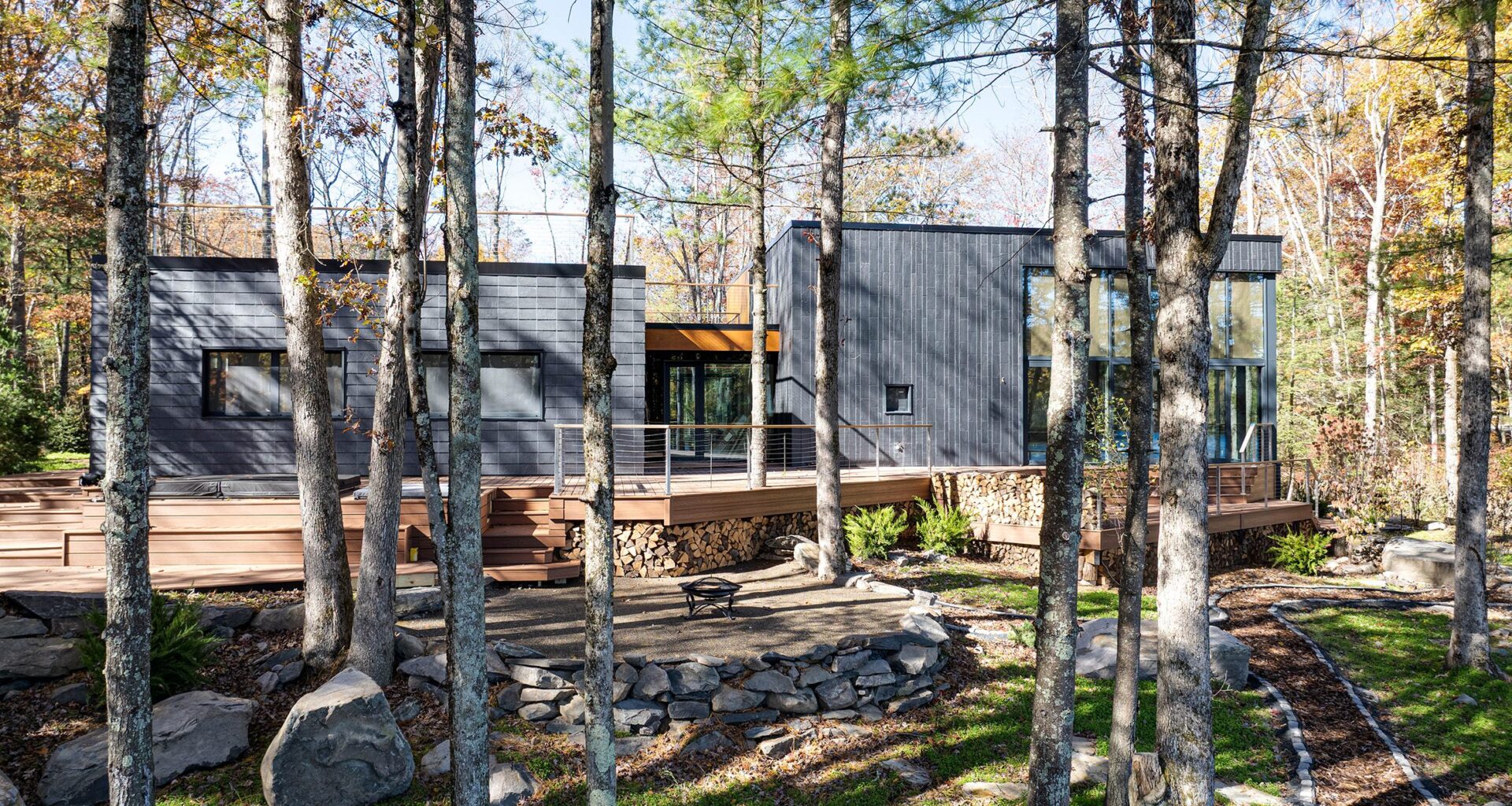
Promotion: Spanish brand Cupa Pizarras‘ Cupaclad slate-based cladding system features in four different patterns across the facade of this home, designed by architects EMAKI to harmonise with the natural surroundings of the US Pocono Mountains.
The Mountain Home in Hawley, Pennsylvania, is located within a forest and serves as a year-round residence for the client, who is a friend of EMAKI founders Adham Kasem and Evgeni McSimoff.
The architects sought a rainscreen cladding system for the project that would withstand the sometimes harsh mountain climate, and chose Cupaclad because of its natural composition – it is 100 per cent slate – beauty and sustainable credentials.
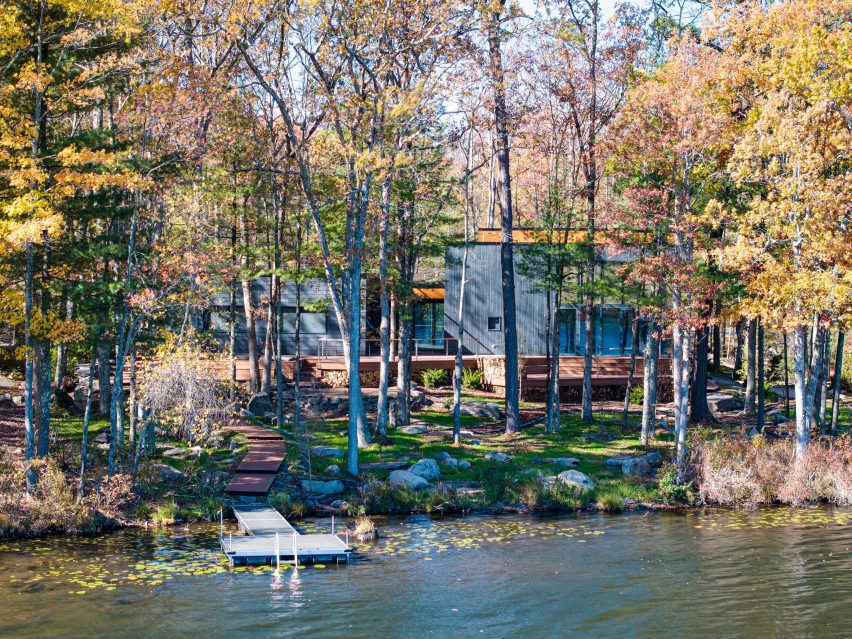 The Mountain Home in Hawley is located in the Pocono Mountains
The slate was also chosen to blend well into the wild setting at the north-eastern tip of Lake Wallenpaupack with its mix of rocky outcroppings, forest and water.
To add visual interest, EMAKI utilised four different cladding patterns in a first of its kind for projects using the Cupaclad material.
Each cladding pattern corresponds to one of four different volumes with its own proportions and programmatic function, creating a natural division.
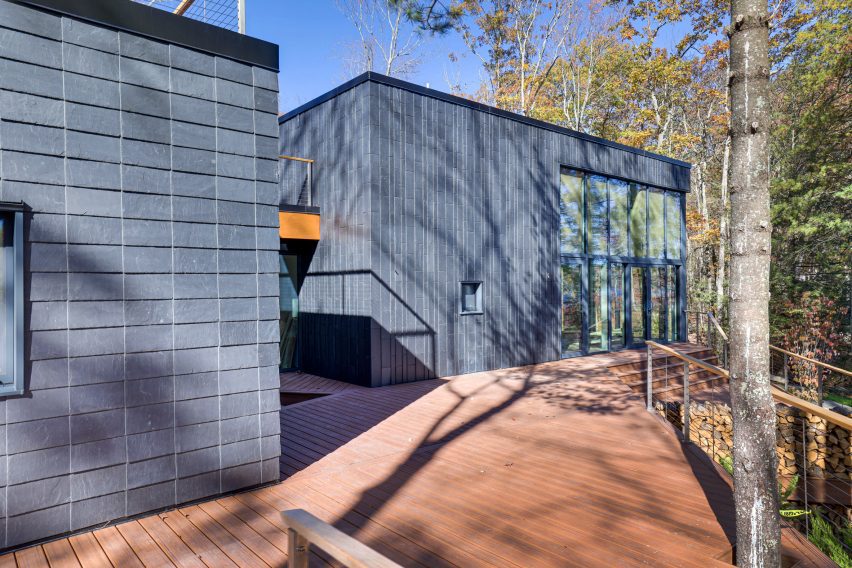 The architects used four patterns of Cupaclad slate cladding across the residence
“We aimed to give each volume a distinct identity, using patterns that provide variety while maintaining a homogeneous look,” said Kasem.
Two of the volumes feature Cupaclad’s Random cladding pattern: one in the vertical, waterfall-inspired variation and the other in a horizontal orientation to reference the nearby stream.
The Random pattern incorporates a slate of different sizes to create a dynamic composition, which Cupa Pizarras says gives the illusion of flowing water.
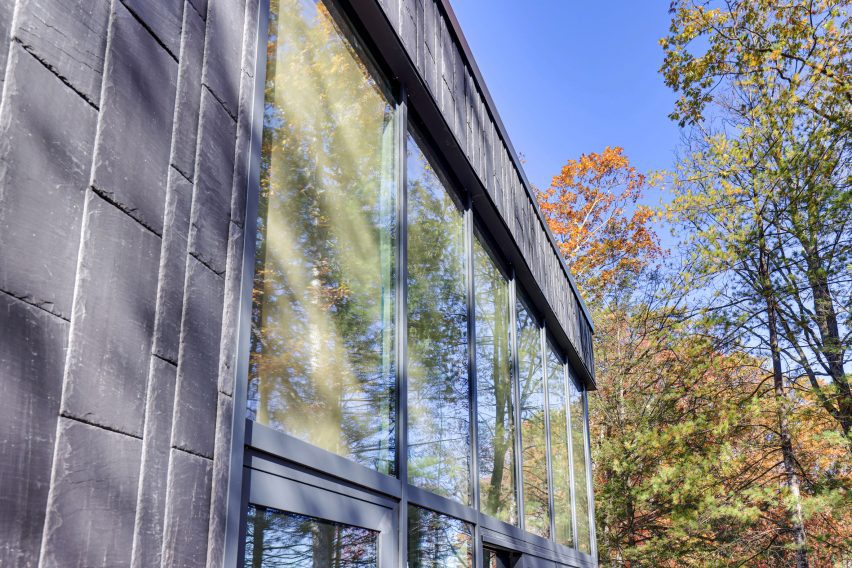 The Random pattern in a vertical waterfall-style installation has a dynamic quality
Another volume features the Parallel pattern, which is more uniform and regular, allowing the slate’s surface texture to take centre stage. The fourth pattern, Logic, featuring more brick-like proportions, is featured in the interior garden.
EMAKI made use of Cupaclad’s 101 series, which is installed without visible fixings. Cupa Pizarras’ representatives worked with the team to guide them through installation and the various patterns.
A 201 series is also available, offering visible fixings and a faster installation process.
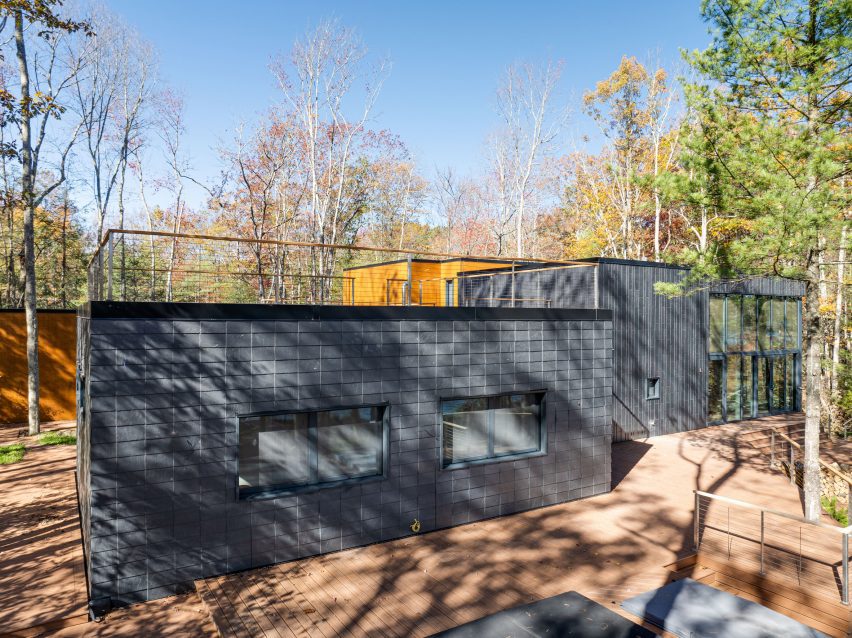 The Parallel pattern is regular and uniform
“Slate cladding worked well for this home because of its aesthetic appeal and the reassurance that we made an environmentally sound choice – benefiting both the homeowner and the surrounding environment/climate,” said McSimoff.
Cupaclad is made with no chemical products or additional treatments and is non-combustible and impact-resistant. Cupa Pizarras highlights that in Life Cycle Analysis (LCA), natural slate outperforms all other mainstream cladding materials.
“Each slate used in Cupaclad systems is carefully selected for its technical properties and natural beauty, ensuring an outstanding finish for any project,” said Cupa Pizarras.
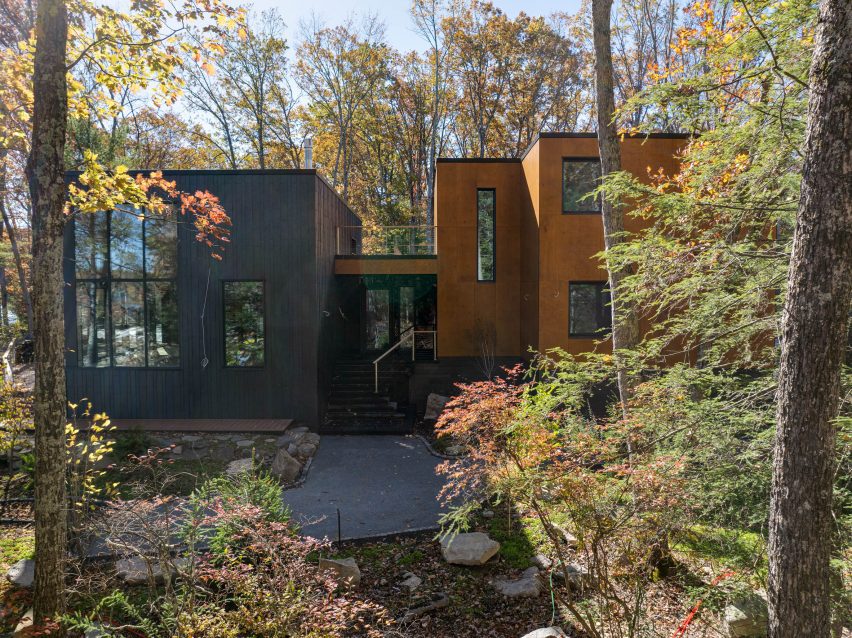 Cupaclad was chosen to blend with the natural setting
“Slate is a completely natural product with unbeatable technical properties that provide considerable added value to any facade project,” the brand continued.
Cupa Pizarras’ products have been used in projects across five continents and 60 countries. The brand has offices in locations including the UK, USA, France and Denmark.
For more information on Cupa Pizarras, visit its website.
Partnership content
This article was written by Dezeen for Cupa Pizarras as part of a partnership. Find out more about Dezeen partnership content here.