
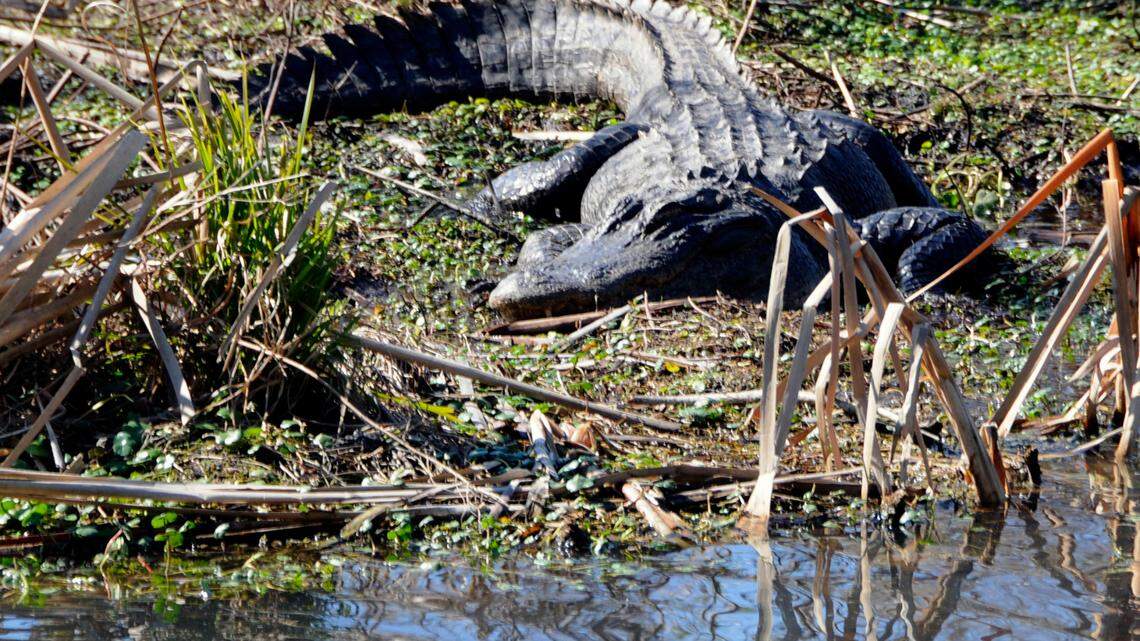
The alligators are back.
Native to South Carolina, there are plenty of places to see them in Horry and Georgetown counties, especially now that the temperatures are warming.
Joe Cannon, Huntington Beach State Park volunteer, said they have already made their appearance along the marshes and ponds in the state park.
Alligators typically come out of brumation, a semi-hibernation, when the temperature reaches above 55 degrees, Cannon said. During colder months their metabolism slows, and they dig themselves into mud, occasionally feeding and basking in the sun.
Cannon said alligators nest in fresh water and hunt in brackish water, a mixture of fresh water and seawater.
Huntington Beach State Park’s unique layout of salt marshes, fresh water ponds and brackish water ponds makes the environment suitable to alligators and could attract them more than other areas that don’t have the combination of the three, Cannon said.
Visitors can also see the reptiles along the park’s Straight Road, also known as Alligator Alley, where alligators cross to get to and from the water.
Alligators are also commonly seen near the Waccamaw River and various golf course and retention ponds.
What do alligators do each season?
According to the South Carolina Department of Natural Resource’s website, alligators are most active in the spring and summer.
After brumation, alligators begin breeding. They will “bellow,” a deep growling sound that lets other alligators know they are ready to mate. They also bellow when defending their territory.
Adult alligators are frequently feeding and basking in the spring, while juveniles are likely moving into retention ponds. Females begin nesting in the summer.
Beginning in August, alligators hatch from their nests and chirp for females. Males begin putting on fat for the winter while females are guarding the nests. Once temperatures drop, all ages enter brumation, and the cycle repeats.
How to stay safe while viewing wild alligators
Last May, South Carolina joined 10 other states in The GatorWise project, an effort to promote realistic perceptions of alligators and to provide guidance to minimize conflict between people and alligators.
The GatorWise basics inform residents and visitors to always assume alligators are present, never feed them, don’t dispose of fish or food scraps in water, never harass or handle an alligator, be responsible for people and pets in your care and to maintain awareness when you are near water.
Nuisance alligators, or an alligator that has lost its fear of humans often due to feeding, can cause harm to people or property. If they are trapped in an area they are not supposed to be, they are considered a nuisance.
If you live within an HOA or Property Management group, contact them about nuisance alligators first. There is also a nuisance alligator coordinator. Call Operation Game Thief at 1-800-922-5431 if you have an alligator-related emergency.
Alligators are not always considered nuisance if you see them in an unexpected area. If left alone they will often move on, according to SCDNR.
More tips to stay safe from alligators in South Carolina can be found here.
This story was originally published March 10, 2026 at 11:57 AM.