

Ron Wood’s open-heart surgery at The University of Kansas Hospital to replace an aortic valve in 2019 couldn’t have gone better.
“It went fantastic,” said his wife, Thelma. “He felt just as good as he’s felt in any day of his life … he could really walk a long way without getting out of breath or having any kind of complications.”
One evening, she said, he ventured out into their Olathe neighborhood and was gone for so long that she had to call the police to help find him.
 Ron and Thelma Wood a week after Ron’s open-heart surgery at The University of Kansas Hospital in 2019. Ron later was diagnosed with M. chimaera infection and died in 2022. Provided by Thelma Wood
But in early 2021, he started losing weight, Thelma Wood said. At first, he was excited, proud of himself for “getting in shape.” But at the next doctor’s appointment, he’d shed more pounds. And by the third checkup, she said, he’d dropped more weight and had started walking with a cane.
Before long, he was down 60 pounds and was so weak he had to use a walker to get around.
His condition continued to deteriorate, she said, and after a multitude of visits to medical providers, Wood finally got a diagnosis in September 2021. He had a serious — sometimes deadly — infection caused by a bacteria called M. chimaera.
The brutal infection literally sucked the life out of him, Thelma Wood said. He died on Jan. 5, 2022, at 71.
“It’s just wrecked my world,” she said. “Not a day goes by that I don’t think of him.
“Nobody should hurt like this. Nobody. Just for something that could have been avoided.”
Ron Wood’s case was far from isolated. The Star found 31 lawsuits filed in Wyandotte County District Court alleging that 25 patients at The University of Kansas Hospital contracted the infection after undergoing open-heart surgery involving a device that hadn’t been properly disinfected. In those cases, 11 of the patients died and others are living with life-altering health problems, according to the lawsuits.
The lawsuits name The University of Kansas Hospital Authority and LivaNova USA Inc., the company that manufactured the devices, as defendants.
More than a dozen of the cases have resulted in confidential settlements with KU, court documents show, and one case in which the patient died was dismissed on the grounds that it was filed past the deadline. The first of the pending cases is scheduled to go to trial on April 13.
An additional lawsuit was filed in January in federal court in Kansas City, Kansas, against LivaNova and an employee at The University of Kansas Hospital called a perfusionist who was in charge of the heater-cooler device during the surgery of a patient who later died.
Thelma Wood and Kristy Schroll are among those who have filed lawsuits against The University of Kansas Hospital Authority and LivaNova. The Shamberg, Johnson & Bergman law firm in Kansas City is representing them and several other families and individuals in pending M. chimaera cases.
“It was devastating, because we were so blessed to have someone like my dad in my life,” said Kristy Schroll, whose father, Darrell Schroll, died July 26, 2023, from the infection. “We feel like time was stolen.
“He had a terrible end to his life, a terrible death filled with fear and anxiety and pain. And we feel that this was so preventable. It was just such an egregious death. And we’re angry. We’re really angry.”
 Kristy Schroll’s father, Darrell Schroll, of Manhattan, Kansas, died of M. chimaera infection that a lawsuit alleges he contracted from a contaminated heater-cooler device used during his open-heart surgery at The University of Kansas Hospital. Emily Curiel ecuriel@kcstar.com KU and LivaNova respond
Dan Peters, general counsel for The University of Kansas Health System, told The Star in a statement that “given this matter is the subject of ongoing litigation, we are limited in what we can share.”
“The University of Kansas Health System provides care to patients with complex needs,” he said. “Our culture and decisions are focused on how best to meet those needs. Based on the information we had at the time, we took the steps we believed were necessary to keep patients safe, while continuing to provide life-saving surgical interventions that otherwise would not have been available without this critical medical device.”
Peters said in the statement that “when we learned about potential impacts of these devices, we proactively reached out to patients who may have been affected to support their needs.”
“Today, the health system has all new devices with a design change that eliminated the previous condition that created the potential for infection,” he said.
LivaNova issued a response to The Star’s questions about the lawsuits in an email from one of its attorneys.
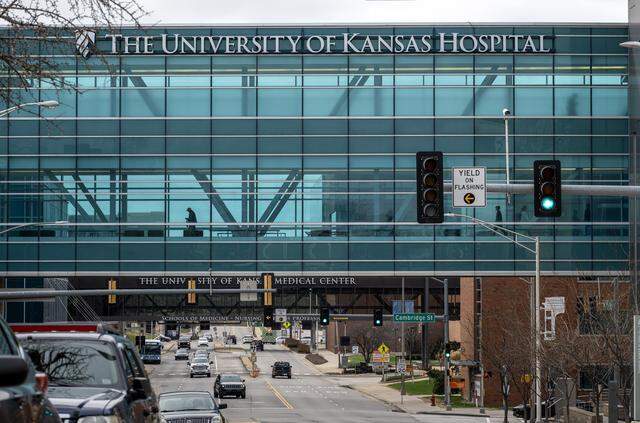 The University of Kansas Hospital in Kansas City, Kansas. Emily Curiel ecuriel@kcstar.com
“At LivaNova, patient care and product quality remain central to everything we do,” it said. “The Company stands firmly behind the 3T™ Heater-Cooler device, having worked closely with global regulators to mitigate risk and ensure continued clinician access to this critical technology for lifesaving cardiac surgery.
“While we do not comment on the specifics of ongoing litigation, we are vigorously defending the product and company actions in these cases.”
What is M. chimaera?
Mycobacterium chimaera, or M. chimaera, is a slow-growing bacteria found in soil and water. Though rare, it has been associated with a global outbreak of infections among patients who have undergone open-heart surgery that involved the use of heater-cooler devices. These devices contain pumps that circulate water during bypass procedures to regulate a patient’s temperature.
The units are used in conjunction with a heart-lung machine, which takes over the function of the heart and lungs during heart surgery. Studies found that in contaminated heater-cooler devices, the aerosolized vapor is pushed out of the water tanks by exhaust fans, spreading bacteria through the air in the operating room. That bacteria can then enter a patient’s open cavity, leading to infection.
Diagnosis can be challenging. Because the infections develop slowly, it can take from weeks to several years for symptoms to surface. And the symptoms — including fatigue, swelling, persistent cough, high fever, nausea, shortness of breath and muscle pain — are non-specific, meaning they could also be signs of other health issues.
In October 2015, the Food and Drug Administration issued a safety communication to medical facilities and health care providers to raise awareness about infections associated with heater-cooler devices and provide steps to take to reduce risks to patients.
In 2016, LivaNova implemented a program that allowed hospitals to switch out their heater-cooler units with new “loaner” ones that were considered safer.
On July 14, 2017, the Kansas Department of Health and Environment notified the Centers for Disease Control and Prevention of M. chimaera infections in two patients who were exposed to the heater-cooler devices at what it referred to as “hospital A” from April to June 2017, according to a report published in 2021. “Hospital A” was a reference to The University of Kansas Hospital.
The report, “Mycobacterium chimaera infections among cardiothoracic surgery patients associated with heater-cooler devices — Kansas and California, 2019,” was published by Cambridge University Press. It said that in response to the infections, on July 1, 2017, the hospital had replaced its five units with five new loaner units from LivaNova that were said to have a lower risk of contamination.
Despite that action, the report said, KDHE later notified the CDC of 11 additional patients with M. chimaera infections associated with heart surgeries from February to December 2019. On Dec. 3, 2019, a CDC team joined KDHE and hospital staff to investigate the cause of the infections.
The team discovered that in October 2018, hospital staff began draining the water tanks every day and stopped the daily monitoring of hydrogen peroxide concentration and disinfection of the water circuits every 14 days as recommended by the manufacturer.
The assumption, the report said, was that the daily draining of the water tanks would reduce the risk of bacteria growth and eliminate the need for regular disinfection. But it said that the tubing in the heater-cooler units and their water basins retain water despite draining, which promotes bacterial growth.
The team also found that only one of the hospital’s heater-cooler units had been upgraded as recommended by the manufacturer in 2018 to reduce the risk of exposure to M. chimaera. And during one of the surgeries they observed, the report said, the unit was positioned toward the surgical area as the patient was intubated and also during the skin closure.
 The University of Kansas Medical Center is pictured on Saturday, March 7, 2026, in Kansas City, Kansas. Emily Curiel ecuriel@kcstar.com
Investigators also noticed that the filling and draining of the heater-cooler devices was being done inside the operating room, and water was seen on the operating room floor due to overflow of the units or to the change in tubing.
Almost all of the patients in the pending Wyandotte County lawsuits who contracted M. chimaera had heart surgery in 2019, during the time frame when the units weren’t being disinfected according to the manufacturer’s instructions.
What do the lawsuits allege?
In his statement to The Star, the hospital’s general counsel did not respond to questions about how many lawsuits had been filed in regard to the heater-cooler devices or how many had been settled. The settlements have been confidential.
The Star found 10 lawsuits pending in Wyandotte County District Court. The cases were filed between October 2020 and February 2024, records show.
The lawsuits allege that the hospital failed to follow the specific recommendations to minimize or eliminate the risk of airborne M. chimaera transmission from the heater-cooler devices used during the open-heart surgeries.
That included failing to properly disinfect the units before using them and failing to isolate the equipment from the operating rooms during the surgeries. The failures led to M. chimaera infection and, in some cases, death, the lawsuits allege.
The lawsuits also allege that LivaNova failed to use reasonable care to design and provide proper instructions for the safe use of the heater-cooler devices in open-heart surgeries.
According to the lawsuits, the units were “defectively manufactured” in a way that allowed a biofilm to develop that contained M. chimaera. Then, when the aerosolized vapor was “set loose” from the devices in the operating room during the surgeries, the lawsuits say, the M. chimaera in the vapor settled on or into the patients’ open surgical wounds, “seeding” their infections.
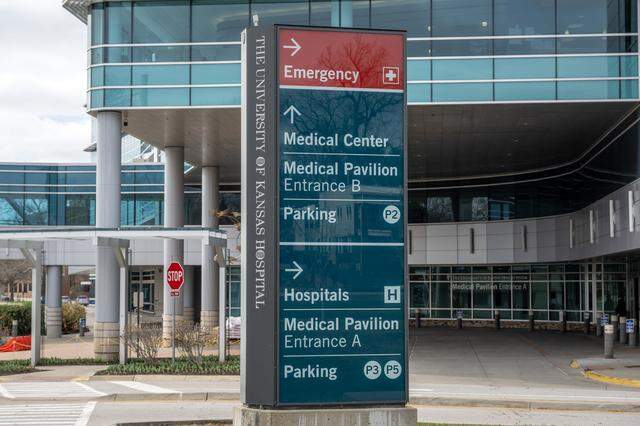 The University of Kansas Health System, Medical Pavilion at 2000 Olathe Blvd., is pictured on Saturday, March 7, 2026, in Kansas City, Kansas. Emily Curiel ecuriel@kcstar.com
LivaNova was further negligent, the lawsuits say, in that its warnings and directions for use were insufficient to protect patients from M. chimaera infections.
The first of the pending lawsuits to go to trial is the case of Stephen Nolte, of Raytown, who died July 8, 2020, at 71. The lawsuit was filed Jan. 26, 2021, by his wife and son.
Nolte underwent an aortic valve replacement at The University of Kansas Hospital on March 6, 2019, the lawsuit says.
“As a direct and proximate result of Defendants’ conduct,” it says, “Stephen W. Nolte developed disseminated M. chimaera infection causing him to endure pain, suffering, disability, mental anguish and the loss of enjoyment of life from fatigue, lethargy, liver disease, cirrhosis of the liver, acute kidney injury, pancytopenia, thyroiditis, shortness of breath, heart failure, sepsis, encephalopathy, and chorioretinitis” from the day of his surgery to his death.
Lawsuits have been filed against LivaNova in other states as well.
In March 2019, LivaNova PLC announced an agreement to settle about 75% of the personal injury lawsuits that were pending in federal and state courts across the United States involving the company’s heater-cooler devices. The agreement called for up to $225 million to resolve the claims, the announcement said.
And a November 2023 document filed by LivaNova in one of the Wyandotte County cases said there had been “hundreds of lawsuits filed in state and federal courts” involving the 3T Heater-Cooler system.
‘I feel like I’m dying’
In early 2019, Manhattan business owner Darrell Schroll noticed he was getting increasingly short of breath and fatigued — unusual symptoms for the Vietnam veteran who was always on the go. His doctor thought perhaps his asthma was getting a bit worse, so he tried a different inhaler.
Then one morning, while participating in a bass fishing tournament in Texas, he woke up with extremely swollen legs and was having difficulty breathing.
 Darrell Schroll, of Manhattan, contracted a serious infection caused by a bacteria called M. chimaera after having open-heart surgery in 2019 at The University of Kansas Hospital. He died on July 26, 2023, at 74. A series of lawsuits allege that the bacteria was spread from contaminated heater-cooler devices used during the surgeries. Provided by Kristy Schroll
Schroll got in his pickup and drove 12 hours back to Manhattan, pulling his boat behind. He went straight to the ER and was immediately transferred to The University of Kansas Hospital.
“And I still remember the doctor coming in after running a series of tests and saying, ‘You’re in end-stage heart failure, and you maybe have a week or two to live,’” his daughter, Kristy, told The Star. “We had no idea. No idea whatsoever.”
They learned that her father had a gene mutation that affects the body’s ability to make heart muscle, Kristy Schroll said. He was offered a procedure to install a Left Ventricular Assistive Device, or LVAD, in his chest. The mechanical device helps the left ventricle of the heart pump blood to the rest of the body.
On March 26, 2019, Schroll, then 70, underwent an open-chest cardiac surgical procedure at The University of Kansas Hospital for placement of the LVAD.
“He was a very healthy, very active person,” said Kristy Schroll, a physician assistant who lives in Johnson County. “He was an exemplary patient. He was up the next day, walking circles around the nurses on the cardiac floor.”
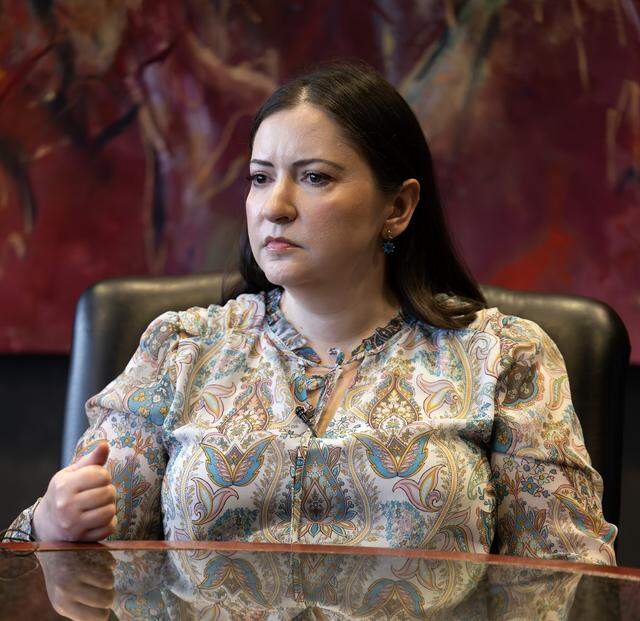 Kristy Schroll talks about her father, Darrell Schroll, of Manhattan, Kansas, who died of M. chimaera infection on July 26, 2023. The family has filed a lawsuit alleging that he contracted the infection from a contaminated heater-cooler device used during his open-heart surgery in 2019 at The University of Kansas Hospital. Emily Curiel ecuriel@kcstar.com
Her dad did great the next few years, Kristy said, going fishing and taking daily walks in the country.
“For him, an important measure of health is my mom, who he was married to for 50 years,” she said. “She is disabled, and so he was her driver and her caregiver. And so for him to be well enough to be able to provide that care was really important.”
In January 2023, Schroll began losing weight and feeling weak.
“He was an avid reader, and he started having trouble reading and seeing, concentrating,” Kristy said. “At one point, he used the words, ‘I feel like I’m dying.’ When patients have a sense of doom, you kind of take that seriously.”
His doctor was stumped about what was causing the problems. That May, Kristy said, a large cyst formed on his surgical scar. He returned to The University of Kansas Hospital.
“They took him into surgery, and they thought they would try to cut out all the infected tissue they could,” Kristy said. “After the surgery, the doctor pulled me into the family consultation room, and he said, ‘You know, we’ve taken probably about at least a two-inch circumference round piece of tissue, and probably two inches deep.’
“And he said, ‘I couldn’t keep cutting.’ And it was obvious that the infection went far beyond this. He said, ‘I can tell it’s probably in his heart. It’s in his LVAD.’ And he goes, ‘It might be this M. chimaera stuff.’ And he goes, ‘Yeah, you know, there’s no treatment for it.’ And then he left.”
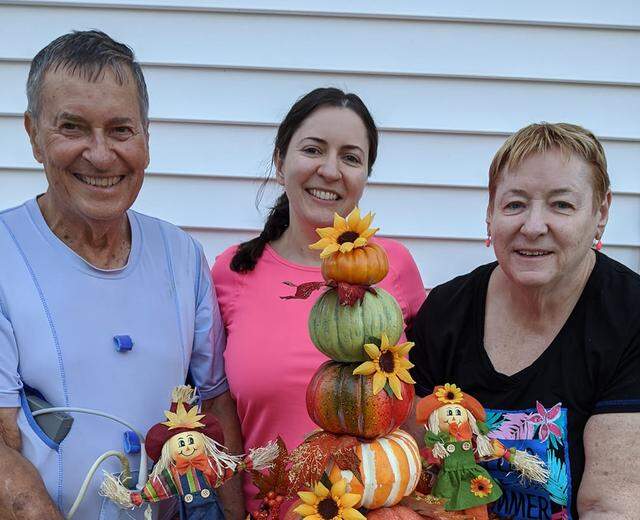 Darrell Schroll, pictured with his daughter, Kristy, and wife, Janet, contracted a serious infection caused by a bacteria called M. chimaera after having open-heart surgery in 2019 at The University of Kansas Hospital. He died on July 26, 2023, at 74. A series of lawsuits allege that the bacteria was spread from contaminated heater-cooler devices used during the surgeries. Provided by Kristy Schroll
Kristy was confused.
“Mycobacterium chimaera is such a rare source of infection, I couldn’t understand,” she said. “How could my dad have even been exposed to this? I had heard of chimaera, but again, it’s not something that I ever expected to encounter in my career.”
Defeated, angry and scared
Darrell Schroll continued to lose weight and get weaker.
“The infectious disease doctor let us know that they could see the infection was in one of his eyes,” Kristy said. “They suspected it was in his brain. It was in his heart, his lungs, his LVAD, his liver. It had fully disseminated at that point, and they brought palliative care in to start consulting.”
At that point, she said, he’d become too weak to get out of a chair or turn himself over in bed.
“He was in a lot of pain, because he was skin and bones,” she said. “Just lying in that hospital bed was painful. He wouldn’t sleep. He would cough all night. He couldn’t read at that point. He couldn’t watch TV, he couldn’t eat. He was suffering.”
The palliative care experts told them that he would need to be on a multiantibiotic regimen for a long time. The medications would put him at a high risk of losing his vision and hearing and further damage his kidneys, they said, and he would continue to be nauseous.
He asked if he would ever get well enough to keep caring for his wife.
“This is what breaks my heart,” Kristy said, struggling to keep her composure. “And they said, ‘We really don’t think you’ll ever get to that point.’
“And he said at that point, ‘I don’t think I can do this anymore.’ And my dad was the most stoic, tough, brave person. He was a Vietnam War vet, and had been like through torture training, and it was so important for him to be brave. And when he said that, I realized he had been suffering more than we knew and more than he had told us.”
After consulting with the palliative care team and his team of specialists, Kristy said, “It was decided the most humane decision would be to unplug the battery from his LVAD, which would then, of course, make his heart take over the pumping. And they knew that he would not be able to sustain life at that point.”
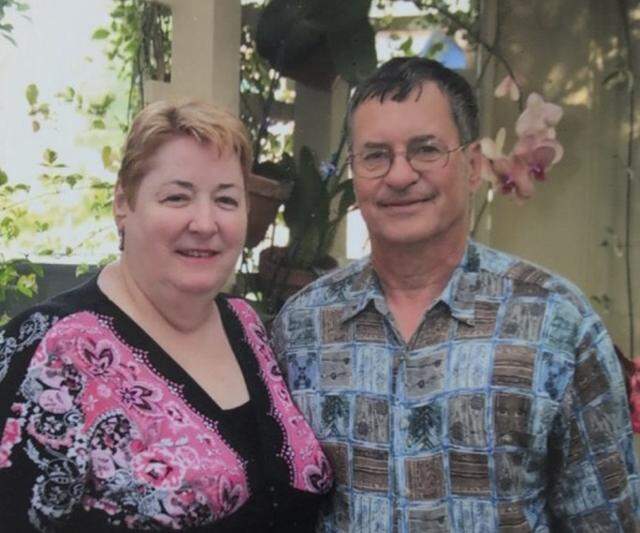 Darrell Schroll, pictured here with his wife, Janet, contracted a serious infection caused by a bacteria called M. chimaera after having open-heart surgery in 2019 at The University of Kansas Hospital. He died on July 26, 2023, at 74. A series of lawsuits allege that the bacteria was spread from contaminated heater-cooler devices used during the surgeries. Provided by Kristy Schroll
It was during Schroll’s final hospitalization, Kristy said, that the family got solid confirmation that he had M. chimaera infection.
“One of the infectious disease doctors came in and said, ‘You know, this is clearly M. chimaera, and we’ve had other patients before your father be diagnosed with this,’” she said. “And he said that ‘we believe that the heater-cooler units that we were given were contaminated with M. chimaera.’”
Schroll died on July 26, 2023, three days shy of his 51st wedding anniversary. He was 74.
“We feel like time was stolen,” Kristy said. “He was the kind of person that led by example. He was the rock of the family. He was the person you could call any hour for anything … And I watched him feel defeated and angry and scared. He was very proud, and he felt towards the end that he had little dignity left.”
She hopes the lawsuits will serve several purposes.
“I want the public to be made aware of what I feel is such clear negligence leading to all of these poor families and the victims of this who either have died or are now burdened with a catastrophic infection that I think will affect the rest of their life and their quality of life,” she said.
“And I want KU to be held accountable. I feel like there were so many missed opportunities along the way, especially once the infections started coming, to try to investigate on their own and figure out why are these infections happening? And I am hopeful for myself, for the other families and victims of this, that there’s some sense of justice in educating the public.”
‘To me, he was everything’
The pain of losing Ronnie is still too much at times for Thelma Wood.
“Man, I said I was gonna get through it,” she said, fighting back tears as she talked about her husband, a retired city bus driver, and their 27 years together.
“To me, he was everything. Very supportive of his family, and he took good care of me. Jack of all trades, he could fix anything around the house, the plumbing, the electricity, the garden, and he could do all that. He was just a great, great guy.”
Throughout 2020, she said, he was “just doing fantastic,” continuing to get along well after his April 2019 open-heart surgery.
“And then that stopped. He got to feeling very weak. But he didn’t know what was going on.”
.jpg "Screenshot_20260305_145302_Gallery (1).jpg") Ron Wood enjoys some time with his wife, Thelma. Wood, of Olathe, contracted a serious infection caused by a bacteria called M. chimaera after having open-heart surgery in 2019 at The University of Kansas Hospital. He died on Jan. 5, 2022, at 71. A series of lawsuits allege that the bacteria was spread from contaminated heater-cooler devices used during the surgeries. Provided by Thelma Wood
Ron Wood enjoys some time with his wife, Thelma. Wood, of Olathe, contracted a serious infection caused by a bacteria called M. chimaera after having open-heart surgery in 2019 at The University of Kansas Hospital. He died on Jan. 5, 2022, at 71. A series of lawsuits allege that the bacteria was spread from contaminated heater-cooler devices used during the surgeries. Provided by Thelma Wood
On Feb. 19, 2021, Ron Wood saw his primary care provider. He’d gone from 259 pounds to 241 pounds in three months and was having swelling and pain in his right wrist.
Wood saw his doctor again on May 7, 2021, this time for a persistent cough. The doctor diagnosed him with pneumonia and put him on an antibiotic. His weight had dropped to 222 pounds. Twelve days later, he was back at his doctor’s with fatigue, a cough and more weight loss.
The decline continued. Wood was diagnosed with liver disease and continued to lose weight and experience severe fatigue and brain fogginess. Even so, Thelma Wood said, his heart surgeon didn’t seem concerned at an appointment in August 2021, giving them “two thumbs up” and telling them he was “doing great” from a cardiac standpoint.
By early September, Wood could no longer walk or bathe himself and had lost 80 pounds. For months, he’d been to various specialists — kidney, lungs, liver — to try and figure out what was happening to him. And the frustration mounted with every visit.
“He was too weak to go to these appointments,” Thelma Wood said. “And I keep saying, ‘Why are you sending him? Can’t you just see what’s wrong with him? Can’t you tell me something?’”
‘He just plain didn’t recover’
Finally, she said, a pulmonary doctor noticed the tears behind her face mask and asked what was wrong.
“And I said, ‘We need help. Nobody’s helping us. This is a sick man, and nobody is doing anything but sending us to a doctor, doctor, doctor. And he’s not able to get in and out of the car.’ And he said, ‘You want me to put him in the hospital?’ I said, ‘Please.’ So he called downstairs, and that’s how we got to the hospital.”
After a few days, Thelma said, an infectious disease doctor told them that Ron’s lab results showed he had M. chimaera infection. He was hospitalized for seven weeks. During that time, she said, he underwent another open-heart surgery to try to remove the infected areas.
.jpg "Screenshot_20260305_151304_Gallery (1).jpg") Ron Wood, of Olathe, contracted a serious infection caused by a bacteria called M. chimaera after having open-heart surgery in 2019 at The University of Kansas Hospital. After losing 80 pounds, he died on Jan. 5, 2022, at 71. A series of lawsuits allege that the bacteria was spread from contaminated heater-cooler devices used during the surgeries. Provided by Thelma Wood
Ron Wood, of Olathe, contracted a serious infection caused by a bacteria called M. chimaera after having open-heart surgery in 2019 at The University of Kansas Hospital. After losing 80 pounds, he died on Jan. 5, 2022, at 71. A series of lawsuits allege that the bacteria was spread from contaminated heater-cooler devices used during the surgeries. Provided by Thelma Wood
After he went home, Wood had to go back to the hospital to change his medication, because it wasn’t working. Once he was back home again, Thelma said, “he just plain didn’t recover.”
In January 2022, she said, one of his caretakers came to the house to help him exercise. But he’d been throwing up all morning and was so weak he couldn’t even lift his legs.
“And he looked up at me, and he said, ‘Call the paramedics.’ And I knew then that something was wrong, because he would not let you call them for being ill or anything.”
They took him out on a stretcher, she said, and that was the last time she ever spoke to him.
“He was sedated at the hospital,” she said. “I was there day and night.”
On the third morning, Thelma said, she was told it was time to make a decision. She had a FaceTime call with Ron’s family members, and they all said their goodbyes. And on Jan. 5, 2022, he was taken off life support.
“And that was it,” she said, wiping away the tears. “It just breaks my heart.”
Thelma Wood didn’t know at the time about the contamination problem with the heater-cooler devices used in her husband’s surgery. But the hospital had known about it for two years, her lawsuit alleges.
“By January 2020,” it says, “Defendant KUHA and The University of Kansas Hospital were aware of at least nine of their cardiothoracic surgery patients having positive M. chimaera cultures between February 2019 and December 2019.”
Thelma Wood said the experience has left her devastated and confused.
“How could you not clean a machine when you’re given instructions on what to do?” she said. “Even after they knew, they still did open-heart surgeries on other people. I’m so disappointed that they would let something like this affect this many families. And I don’t understand why.
“You know, that was just a small step they could have taken to just ensure that families could have had a fuller life. Of course, he’s going to die eventually. Of course, I’m going to die eventually. But we could have had more years together — many more years together.”
Loading…
This story was originally published March 10, 2026 at 5:30 AM.

The Kansas City Star
Judy L. Thomas joined The Kansas City Star in 1995 and focuses on investigative and watchdog journalism. Over three decades, she has covered domestic terrorism, clergy sex abuse and government accountability. Her stories have received numerous national honors.