
1 / 2
Show Caption +
Hide Caption –
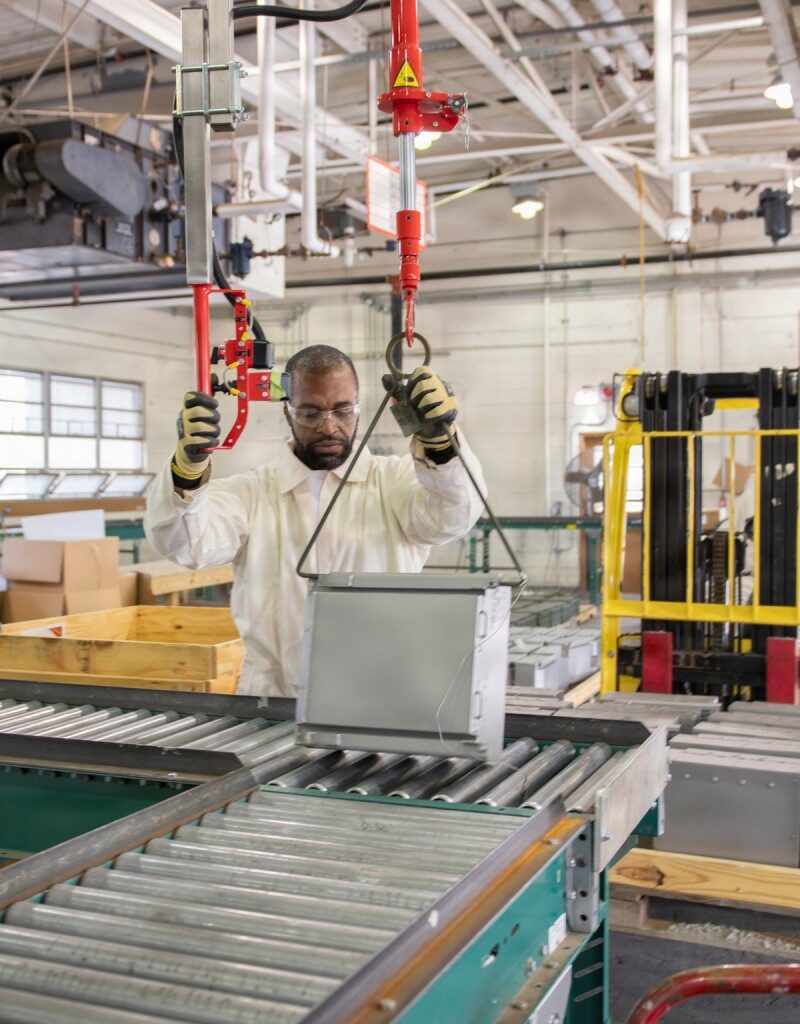
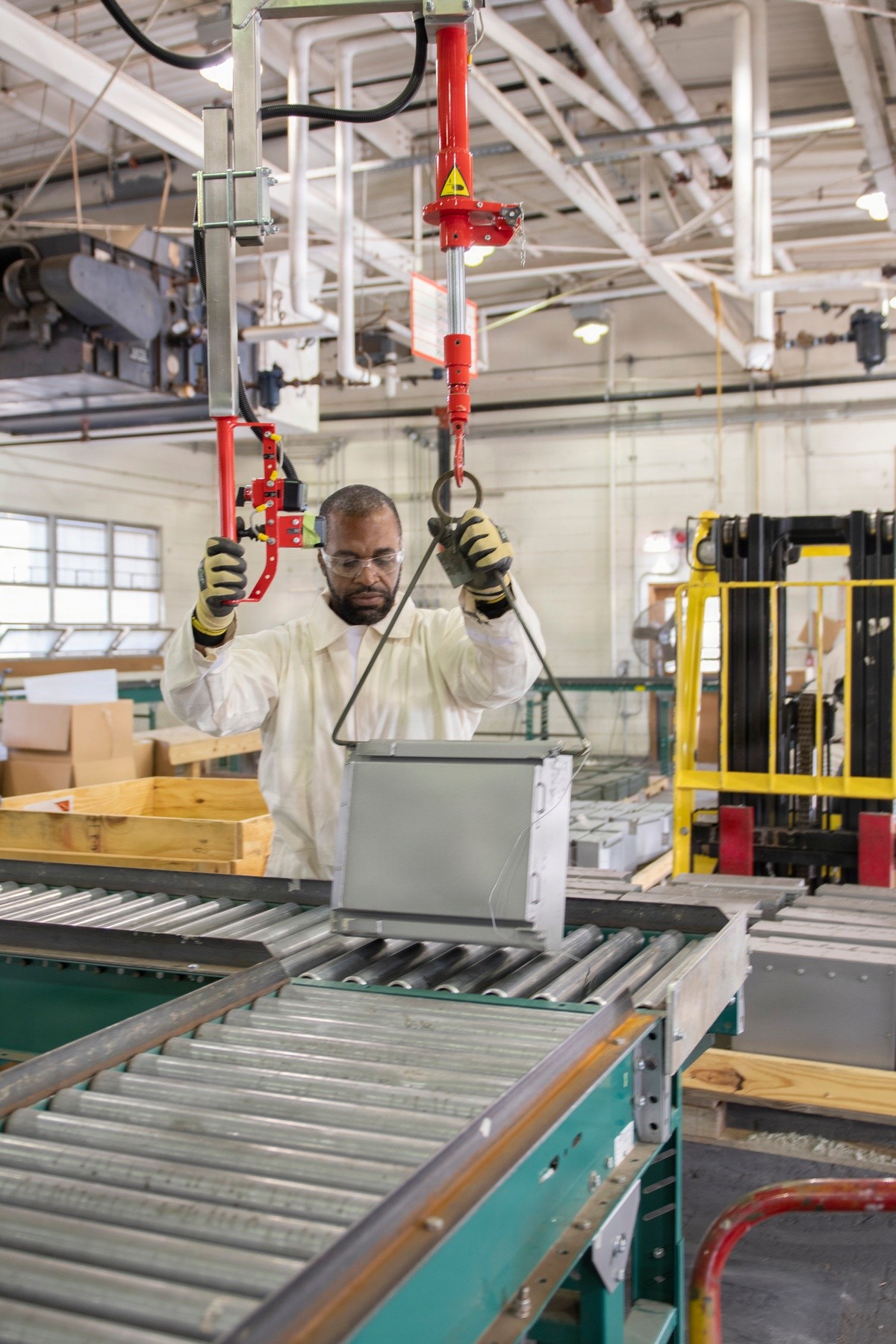
A member of the Anniston Munitions Center’s workforce prepares a reactive armor tile for a fresh coat of paint.
(Photo Credit: Courtesy)
2 / 2
Show Caption +
Hide Caption –
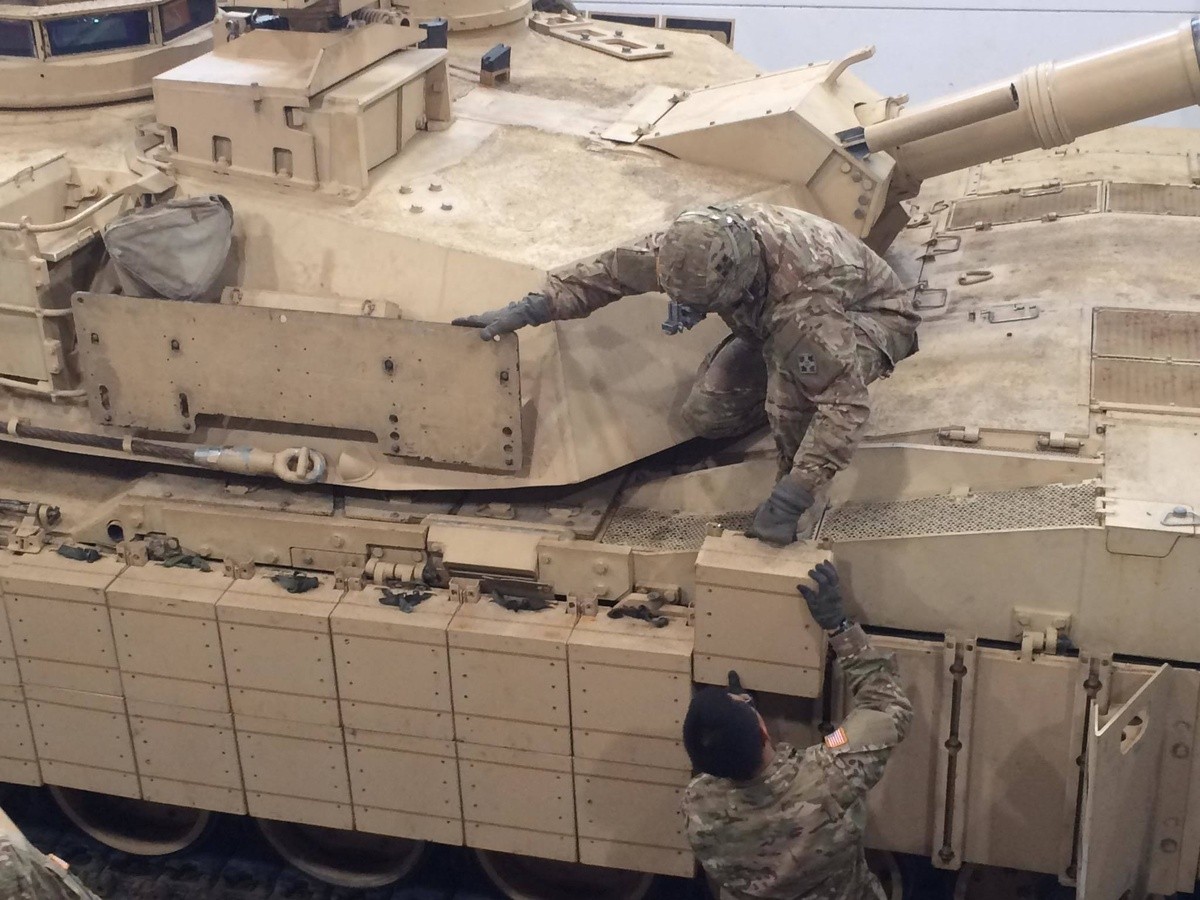
Tank and maintenance crews with 1st Battalion, 66th Armor Regiment, 3rd Armored Brigade Combat Team, 4th Infantry Division, install M1A2 Sep V2 Abrams tank reactive armor tiles (ARAT) at the 7th Army Training Command’s Grafenwoehr Training Area, Germany, Feb. 28, 2017. The installation of the ARAT will enhance the tank’s defensive capabilities, providing a greater deterrent against aggression as the 3rd ABCT maintains a persistent presence in central and eastern Europe as the rotational ABCT for Atlantic Resolve. (U.S. Army photo by Capt. Malcolm Rios)
(Photo Credit: Capt. Scott Walters)
ANNISTON, Ala. — The Anniston Munitions Center has completed an almost decade‑long mission to refurbish three types of reactive armor tiles (RATs) for combat vehicles.
RATs play a vital role on a wide range of Army wheeled and tracked platforms, providing essential protection against credible enemy threats and safeguarding the Soldiers who operate them.
Typically, ANMC, a government-owned, government-operated facility, and a subordinate installation of the Joint Munitions Command, provides timely and accurate receipt, storage, surveillance, inventory, maintenance, issue, and demilitarization of missiles and conventional ammunition in support of joint warfighters.
The armor tile maintenance mission reflects ANMC’s technical capability and its ability to take on complex sustainment work beyond its traditional munitions focus. The project required workers to receive, clean, inspect, repair and repaint over 100,000 RATs. As the workload expanded, ANMC refined its processes and developed new efficiencies that improved both speed and quality.
“Every year, our people got better, faster and more confident in what they were doing,” said Eric O’Barr, ANMC’s director of ammunitions operations. “You could see their skills sharpen with every batch of tiles that moved through the line.”
The RATs mission, which represented a sustained commitment to readiness and cost‑effective sustainment, provided challenges to ANMC’s personnel. However, they adapted to shifting requirements, production surges and evolving technical standards while maintaining strict safety and quality controls.
Completing the refurbishment in-house generated substantial savings for the Army. By restoring existing RATs rather than purchasing new ones, millions of dollars in procurement costs were saved. The refurbished tiles helped alleviate shortages and maintain production schedules.
“Every tile we returned to service meant one less the Army had to buy, and that adds up quickly. It’s a direct example of how smart sustainment decisions can preserve resources without sacrificing capability,” O’Barr said. “Our team understood the importance of that balance, and it drove them to deliver consistent, reliable results.”