
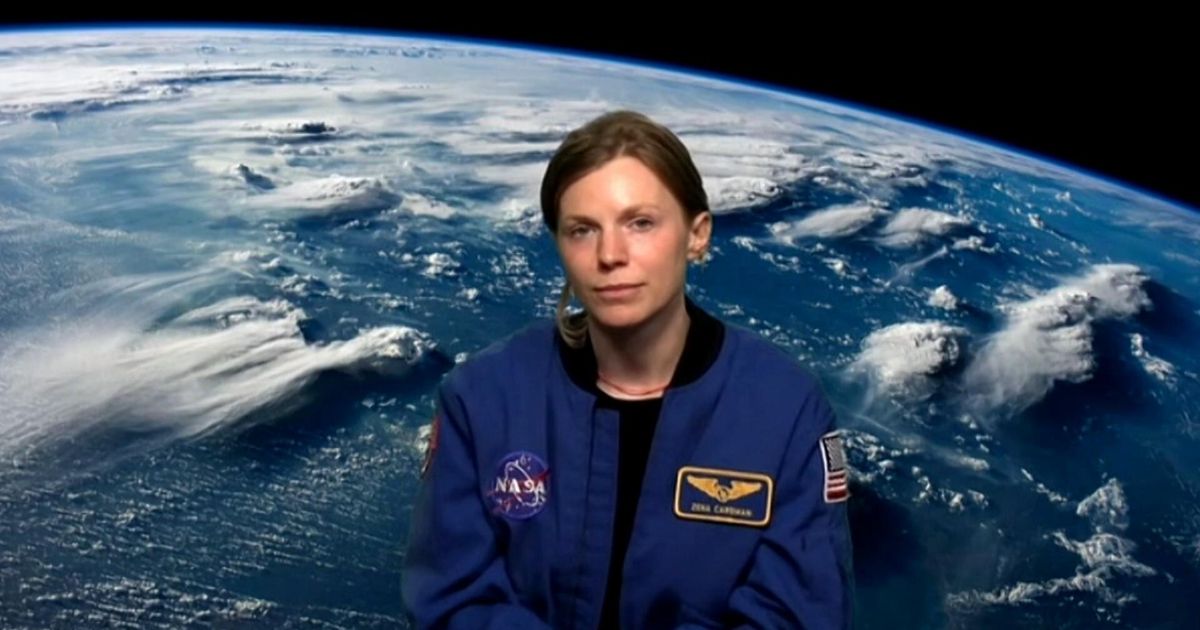
NASA astronaut Zena Cardman said there is not a typical day
in space.
The University of North Carolina at Chapel Hill graduate concluded
a five-month mission at the International Space Station [ISS] after she and the
Crew-11 team safely returned to Earth on Jan. 15, 2026, splashing down in the
Pacific Ocean near San Diego.
“It was, I think, overall, an easier transition than I
expected it to be, but I miss being on the International Space Station every
day,” Cardman said. “Living and working in that orbiting laboratory was just a
dream come true.”
Cardman said ISS duties can vary from mechanical repairs, biological
research and research on the human body.
“I really miss being part of that incredible, collaborative,
international laboratory research and just the fun aspects of being weightless
and floating around all day,” Cardman said.
Cardman and crew members had to cut their mission short due
to an astronaut whose medical condition promoted the space agency’s first medical
evacuation. NASA’s Mike
Fincke identified himself in February as the astronaut who was affected.
Officials initially refused to identify the astronaut who
developed the health problem last week or explain what happened, citing
medical privacy.
“The most important thing is we were able to prioritize safety
of the crew member while also balancing that with risks to our spacecraft and risks
to the overall mission of the International Space Station,” Cardman said.
Cardman said it took a lot of teamwork to safely land. She
said astronauts undergo training for many different outcomes.
WRAL News asked Cardman if she plans to return to outer
space in the future.
“I sure hope so,” Cardman said. “I’ll go back as soon as
they let me.”
Cardman said she must undergo medical evaluation and rehabilitation.
“It’s really difficult adjusting back to this 1g environment
here,” Cardman said of Earth.
Cardman said the ISS has great exercise equipment to
maintain astronauts’ big muscle groups, using hydraulic resistance. It includes
squats, bench pressing and deadlifting.
“It’s those small stabilizer muscles that we really have a
hard time maintaining while we’re on orbit,” Cardman said.