
Many unlicensed herbal formulations contain heavy metals such as lead, arsenic and mercury, which can accumulate in the kidneys.

Published Mar 12, 2026 | 7:00 AM ⚊ Updated Mar 12, 2026 | 7:00 AM

Share
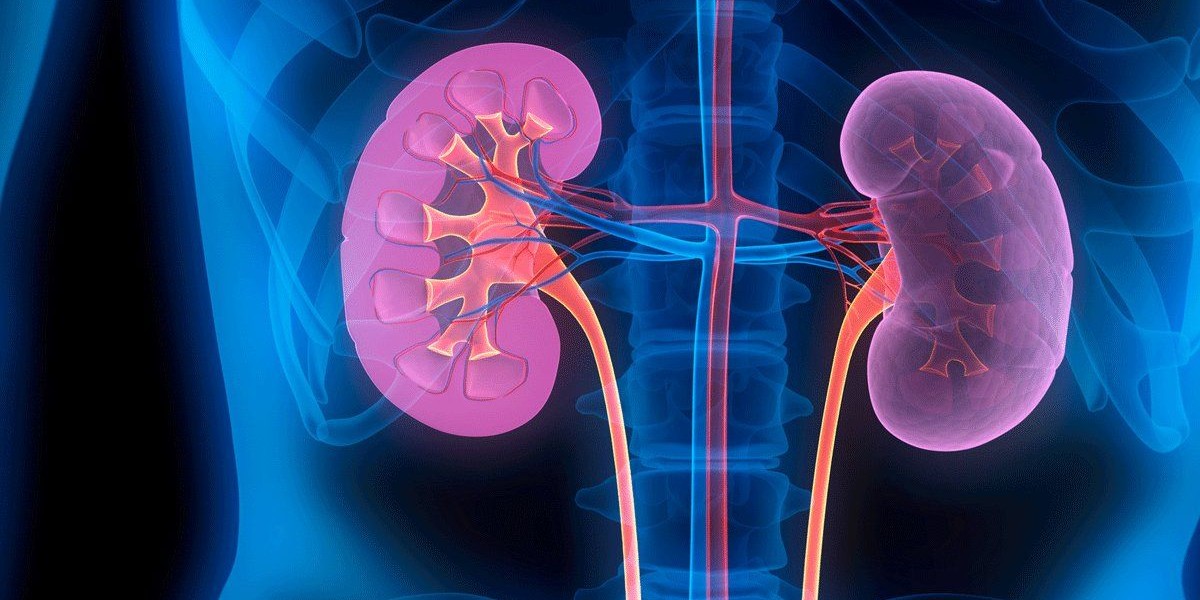
Kidneys. (iStock)
Synopsis: A study at Osmania General Hospital found that 40 percent of patients with chronic kidney disease of unknown origin had a history of taking unlicensed alternative medicines such as powders and bhasmas. Doctors say some of these formulations may contain heavy metals that silently damage the kidneys over several years, with symptoms appearing only after most kidney function is lost. Researchers have warned people to avoid unsupervised medicines and to seek treatment only from registered practitioners.
A man in his early 40s walks into a local practitioner’s shop in Hyderabad. His knees ache. Someone in the neighbourhood recommended a powder, a bhasma, something natural. The practitioner hands it over. No prescription changes hands. No registered doctor signs off. The man takes it home, stirs it into water, and swallows it every morning for the next three years.
By the time he reaches Osmania General Hospital, his kidneys filter blood at a fraction of what they should. The damage has built up quietly, in silence, over the years. He belongs to no obvious risk group. He does not farm. He does not drink heavily. He trusted something labelled natural.
He is not alone.
Also Read: How a diet change kept one man’s type 2 diabetes in remission for 10 years without medication
The powder nobody questioned
A study published in the Indian Journal of Nephrology tracked 75 patients at Osmania General Hospital between March 2021 and November 2022. All carried a diagnosis of chronic kidney disease of unknown origin, a condition researchers call CKDu. None had diabetes. None had hypertension severe enough to explain the damage inside their kidneys.
What 40 percent of them had in common was a history of consuming unlicensed alternative medicines. Powders. Liquids. Bhasmas. Tablets. Preparations passed from neighbour to neighbour, recommended by practitioners who carry no medical registration and issue no prescriptions.
“When we asked for prescriptions or proof that the medicines were prescribed by registered doctors, there were none,” said Dr Manisha Sahay, the lead researcher and nephrologist at Osmania General Hospital.
The patients came for joint pain, infertility, haemorrhoids. They left with something they believed would heal them. Some took it for months. Others took it for years.
“People must avoid unlicensed or unsupervised medicines. Taking unknown powders, bhasmas, or liquids recommended by friends or relatives without medical supervision is unsafe,” Dr Manisha Sahay told South First.
Also Read: Centre’s tax relief on health insurance yet to reach policyholders, survey finds
What happens inside the kidney
Picture a kidney the size of a fist. Inside it, roughly one million microscopic units called nephrons filter your blood, remove waste, and produce urine. Each nephron contains a tiny knot of blood vessels called the glomerulus, connected to tubules that carry filtered fluid towards the bladder.
Many unlicensed herbal formulations contain heavy metals. Lead. Arsenic. Mercury. Cadmium. These metals pass through the bloodstream and reach the tubules, where they accumulate and destroy tissue in a process called toxic tubular necrosis.
“They go and directly shoot the nephron. They directly kill the nephron,” said Dr Mohammad Jahangir, Assistant Professor at Osmania Medical College, told South First. “These herbal medicines do not go through clinical trials. They are just marketed, labelled, and sold. Even the person selling them does not know what they contain.”
The kidney absorbs this damage without complaint. It does not produce pain. It does not issue warnings. By the time a person notices something is wrong, up to 90 percent of kidney function can be gone. Symptoms like swelling of the feet, persistent fatigue, or loss of appetite appear only at that late stage.
Kidney biopsies from the Osmania study confirmed the mechanism. Thirty-five patients consented to tissue samples. Every single biopsy showed chronic tubulointerstitial nephritis, meaning the interior compartment of the kidney had sustained deep, structural damage. More than half showed global glomerulosclerosis, a medical term for scarring so extensive it cannot be reversed.
“The kidney biopsies in our patients showed global glomerulosclerosis, meaning scarring and permanent kidney damage,” Dr Manisha Sahay explained. “That is why CKD occurs. The kidney tissue is already damaged. What is causing that damage is what we are trying to find out.”
Also Read: This 22-year-old Bengaluru student googled ‘fix for irregular periods’, suffered a stroke
A mystery that crosses borders
CKDu does not stay within Telangana. Researchers have documented the same pattern of kidney injury across Sri Lanka, Central America, Tamil Nadu, Puducherry, and Goa. Young people with no history of diabetes or significant hypertension develop scarred, shrunken kidneys. In Sri Lanka and Central America, the suspected causes point towards contaminated water or the heat and dehydration that agricultural workers endure. In Telangana, the study found that most patients did not farm at all.
“In some regions, it is common among agricultural workers. But our study revealed that most patients were not from agricultural backgrounds,” Dr Manisha Sahay said. “Interestingly, the same type of kidney injury appears in young people across the world, even among those who have never taken alternative medicines. It is not just an Indian problem.”
The researchers found that 77 percent of their patients drank groundwater. Fluoride and silica levels in the water samples fell within acceptable ranges. Drinking water, in this cohort, did not emerge as the clear villain. The herbal medicines did.
Dr Manisha Sahay noted that scientists across institutions are now working towards a larger answer.
“After all this research from different parts of the world is published, scientists will conduct meta-analyses combining results from many smaller studies to identify common factors. Each research group reports what they observe in their own population. Over time, when enough studies collect, statistical tools will help pinpoint the leading cause.”
Also Read: From teens to techies: How screen time is bending your spine
The delay that costs everything
Dr Manjusha Yadla of Gandhi Medical College and Hospital described how alternative medicine shapes patient behaviour in ways that compound the damage. Patients take something for symptom relief. The symptoms ease. They assume the underlying disease has retreated. They do not check their kidney function.
“Alternative systems may provide temporary relief from symptoms, but they do not address the underlying kidney disease. They do not focus on improving parameters such as the glomerular filtration rate or reducing proteinuria, which are critical indicators of kidney function,” she told South First. “When symptoms disappear, patients assume their kidneys function normally, which may not be the case.”
This gap between perceived health and actual kidney function represents the central danger. Chronic kidney disease accumulates damage over the years. Patients arrive at hospitals when the disease has already consumed most of their kidney capacity. Treatment options at that stage narrow to dialysis or transplant.
Dr Mohammad Jahangir observed that patients who take supplements for years can reach end-stage kidney disease without a single alarming symptom along the way.
“Some medications have toxins that directly damage the kidney within weeks. Others work slowly, over three to five years. When 90 percent of the kidneys get damaged, then only the symptoms start.”
Also Read: The kitchen story: How gendered division of labour hurts unborn babies
What protects the kidney
Dr Manjusha Yadla described eight evidence-based steps that reduce the risk of kidney disease. Alongside the list, she offered a clear central message: the kidneys absorb damage silently, and small daily decisions determine how much damage they accumulate over a lifetime.
Eight steps to protect your kidneys:
Avoid smoking and alcohol
Reduce salt intake to below 2 to 2.5 grams per day
Choose a plant-dominated diet over one that relies heavily on animal foods
Exercise regularly, at least 150 minutes per week
Drink roughly eight glasses of water a day
Say no to unnecessary painkillers
Refuse unlicensed or unsupervised medicines, including powders, bhasmas, and herbal supplements not prescribed by a registered practitioner
People with diabetes, hypertension, or a family history of kidney disease should screen annually
The Osmania study carries limitations. It drew from a single centre. Biopsy was not possible for every patient because many arrived with kidneys already too scarred to sample safely. The late presentation of most patients meant the early stages of the disease went undocumented. Researchers acknowledged that some cases could stem from causes that the available evidence could not identify.
The authors called for long-term studies across multiple centres, combining demographic data, genomics, metabolomics, and kidney biopsies with electron microscopy. The International Society of Nephrology now runs a consortium on CKDu. Genetic studies remain ongoing.
Until the full picture emerges, Dr Manisha Sahay offered a principle that does not require a research grant to understand.
“We should always know what we are taking and do it under expert guidance,” she said. “Even if they come from an AYUSH system, the practitioner must be registered and the medicine prescribed.”
