

When breaking news hits, you face an impossible choice: publish fast to meet audience expectations or verify thoroughly to maintain trust. Research shows that audiences prioritise accuracy and speed, creating immense pressure on journalists. This guide walks you through proven strategies to prepare your newsroom, execute coverage with precision, and verify information quickly without sacrificing credibility in 2026’s fast-paced media landscape.
Table of Contents
Key takeaways
| Point | Details |
|——-|———||
| Verification builds trust | Cross-checking facts with multiple sources boosts audience trust by approximately 20% in breaking news coverage. |
| Context drives engagement | Providing background information and explaining significance increases audience engagement by 15% compared to raw reporting. |
| Transparency maintains credibility | Openly acknowledging what’s unknown and updating information as stories develop strengthens long-term audience relationships. |
| Visual verification prevents errors | Authenticating photos and videos before publication protects newsrooms from spreading misinformation and reputational damage. |
| Continuous learning is essential | Adapting to new technologies and platforms helps journalists stay ahead in the evolving digital landscape. |
Understand the challenges of breaking news coverage
The pressure to publish first creates unique obstacles that distinguish breaking news from regular reporting. Mistakes happen frequently when journalists rush to meet deadlines, damaging credibility that takes years to rebuild. You’re navigating a minefield where every second counts, yet one unverified fact can undermine your entire story.
Misinformation spreads exponentially faster than corrections. Social media amplifies false claims within minutes, forcing you to compete against unverified sources that face no accountability. Your audience expects immediate updates, but values accuracy above all, creating tension between speed and reliability that defines modern journalism.

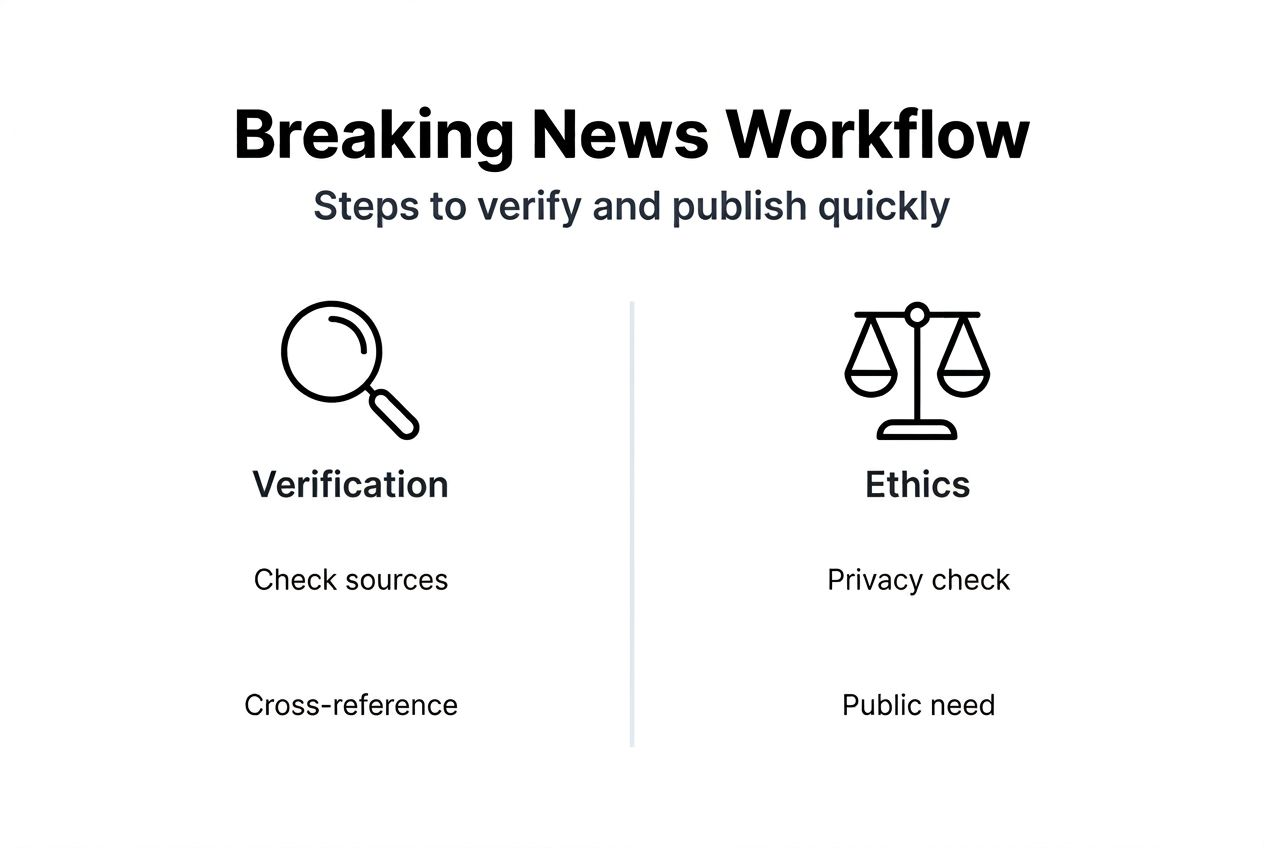
Ethical dilemmas emerge constantly during breaking news. You must balance public interest against individual privacy, decide when graphic content serves the story, and resist sensationalising tragedy for clicks. These decisions happen under extreme time pressure with incomplete information, testing your professional judgement and organisational values.
Pro Tip: Establish clear editorial thresholds before news breaks. Define what constitutes
Recommended