
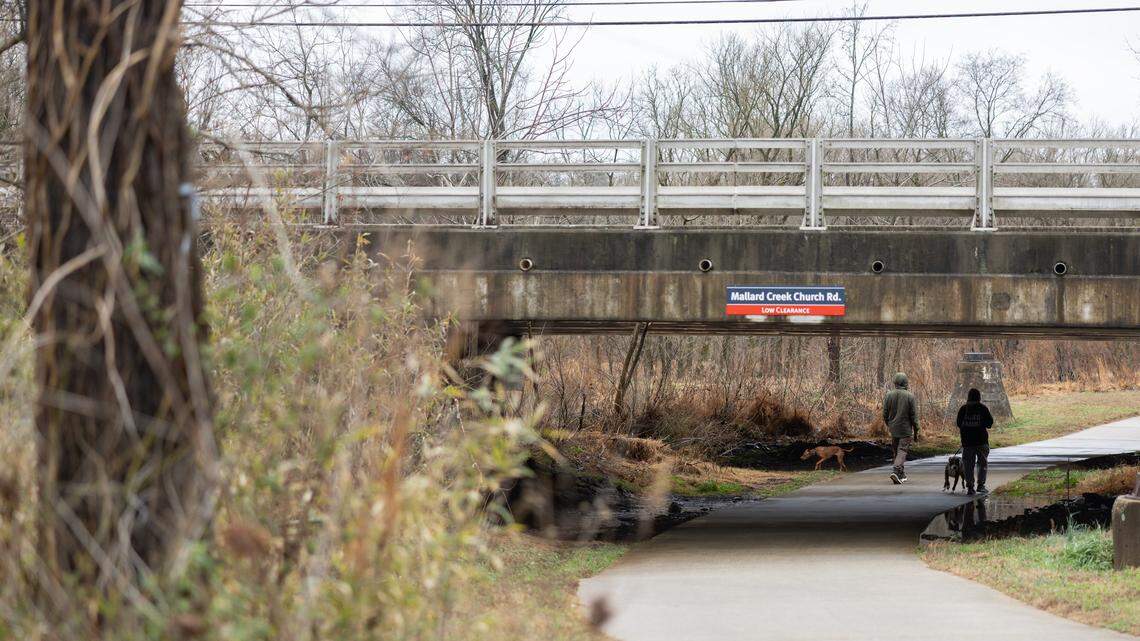
Streams didn’t always cut through Mecklenburg County in straight lines.
But a century of development reshaped the region’s waterways to make building farms, roads and neighborhoods easier — and now local officials are spending millions to bend them back toward nature.
Visitors to the Mallard Creek Greenway will soon see construction equipment along the northeastern Charlotte trail as Mecklenburg County begins a more than $6.2 million stream restoration project. It’s one of several planned for 2026 and should take about a year to complete. Charlotte is also adding a new section to the Rail Trail in South End that could temporarily close parts of the walking path this spring.
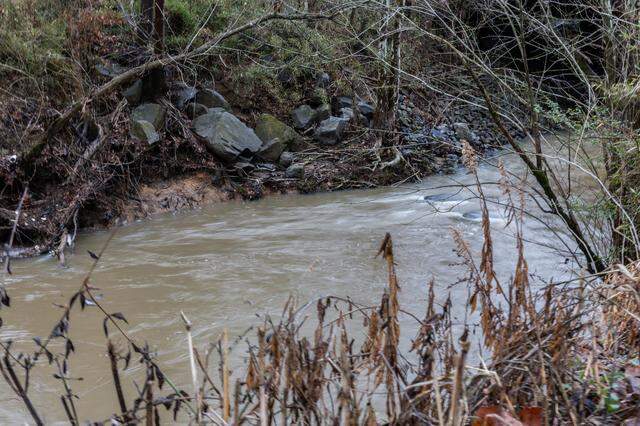 Mallard Creek in Charlotte. The creek will undergo a restoration project, where crews will work to restore the flow of a degraded stream. KHADEJEH NIKOUYEH Knikouyeh@charlotteobserver.com
Officials flagged Mallard Creek after an assessment found the urban stream was heavily degraded, according to Corinne Rizzo, spokesperson for Charlotte-Mecklenburg Storm Water Services.
A short walk from the Kirk Farm parking lot off North Tryon Street offers visual cues to the creek’s condition. Soil is exposed along the bank, which drops off about 10 feet to the water, and toppled trees are scattered along the cloudy brown stream.
“This is a creek that needs some help,” Rizzo said.
Mallard Creek’s problems are human-made. We can fix them, too. 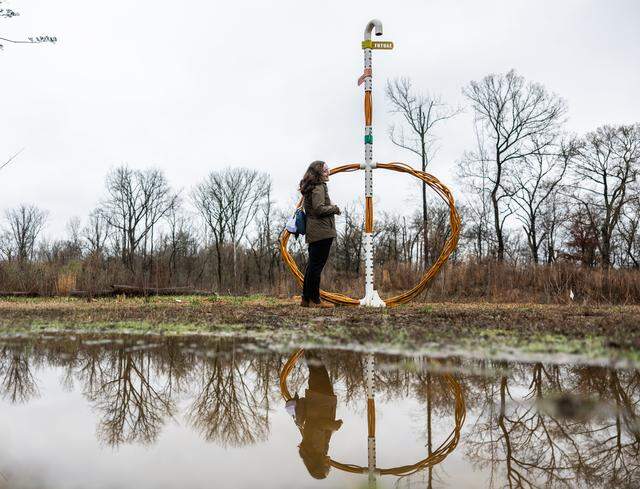 Corinne Rizzo, spokesperson for Charlotte-Mecklenburg Storm Water Services, stands next to “Diver, A Flood Marker” a sculpture that signifies flood risks, by Charlotte artist Marek Ranis, along Mallard Creek in Charlotte. KHADEJEH NIKOUYEH Knikouyeh@charlotteobserver.com
In the early 1900s, Mallard Creek followed the familiar pattern of most natural waterways: It meandered with curves and bends like a snake moving through the surrounding landscape.
Growing cities like Charlotte began straightening out streams to make them easier to manage, which caused compounding harm over the years.
“It’s like rolling a marble down a chute. It’s going straight, and it’s going fast. But if you put curves into that chute, the marble’s going to slow down a little bit,” Rizzo said. “Those things are going to help slow down the water naturally.”
Mallard Creek’s unnatural speed causes it to shear soil off of banks and overflow prematurely, Rizzo said. That’s contributed to the number one pollutant in North Carolina waterways: sediment.
“A plant is considered a weed when it’s where it’s not supposed to be. Dirt is the same way,” said Brian Sikes, the construction project manager. “When soil is somewhere it’s not supposed to be, it’s called sediment.”
Sediment coats the bottoms of streams, killing off life at the base of the food chain and making it “impossible” for fish hatcheries to thrive. A healthy creek habitat has clear water and a rocky bottom. Mallard Creek has neither.
Why is Mecklenburg County restoring Mallard Creek? 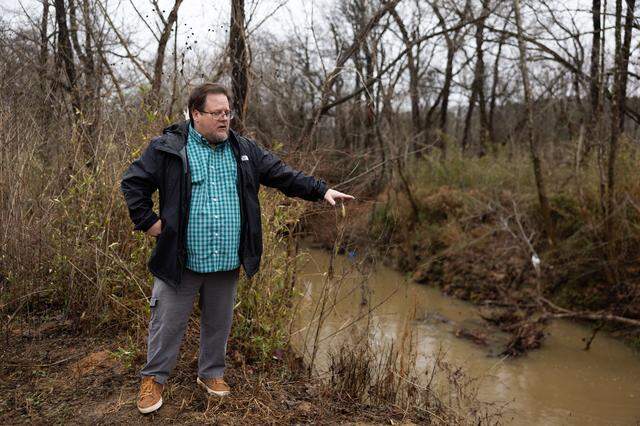 Brian Sikes, construction project manager for the upcoming Mallard Creek restoration project, points to issues the project will resolve along the creek. KHADEJEH NIKOUYEH Knikouyeh@charlotteobserver.com
A 2022 assessment gave Mallard Creek a health score of 155 out of 300 points under the county’s stream restoration ranking system. The system assigns scores to prioritize restoration projects and measures characteristics such as organism diversity, stream pattern and vegetation growth.
Mallard Creek is one of the largest watersheds in the county. The restoration will increase its health score to at least 230, Rizzo said.
That matters beyond the well-being of wildlife, Sikes said.
For one, there is an intake facility used for drinking water downstream. The project will reduce sediment washing into that supply, keeping drinking water cleaner, Sikes said.
And once a stream erodes its banks, flooding can encroach on nearby infrastructure like bridges or homes.
The project will shore up banks and restore native vegetation along the creek. Then, floodplains will play a critical role in absorbing runoff and pollutants.
Construction shouldn’t be too disruptive for visitors. If crews need to close a portion of the greenway due to a public safety risk, Rizzo said residents will know in advance.
In addition to planting vegetation and shaping a sloped flood plain, the county will do what it can to restore Mallard Creek’s flow to a more natural pattern with curves. The stream is hemmed in by the greenway, streets and developments that didn’t exist one hundred years ago.
But the work is crucial to a healthy Charlotte ecosystem, Rizzo said.
“It all starts here. The implications of having decreased water quality is that those very basic bottom rung food chain elements start disappearing,” Rizzo said. “By creating more natural conditions for them, they will be here, and things will thrive a little bit more.”
This story was originally published March 11, 2026 at 5:00 AM.
Related Stories from Charlotte Observer

The Charlotte Observer
Nick Sullivan covers city government for The Charlotte Observer. He studied journalism at the University of South Carolina, and he previously covered education for The Arizona Republic and The Colorado Springs Gazette.