
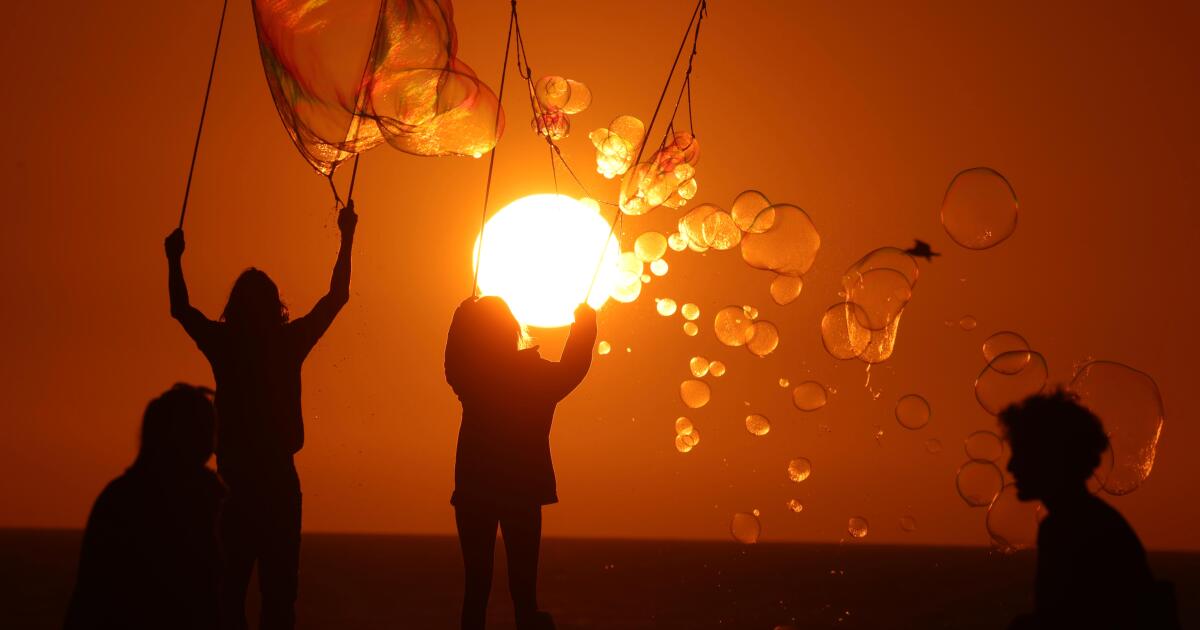
A major heat wave hit Southern California on Thursday, with temperatures soaring far above normal for this time of year, smashing records across the region and bringing a high risk of heat-related illness.
A heat advisory remains in effect through 8 p.m. Friday along a stretch of coastal Southern California from San Diego County to San Luis Obispo County.
The unseasonable heat will linger into Friday, weaken slightly over the weekend and then dial up to scalding again next week, according to the National Weather Service.
“Given the unprecedented length and magnitude of this extreme heat wave, heat stress will be increasing each day, especially in areas that aren’t used to the heat, like the coastal areas, where people may not have methods to cool off their homes,” the weather service warned Wednesday. “Try to complete outdoor activities early in the day or in the evening, and don’t leave people or pets in cars.”
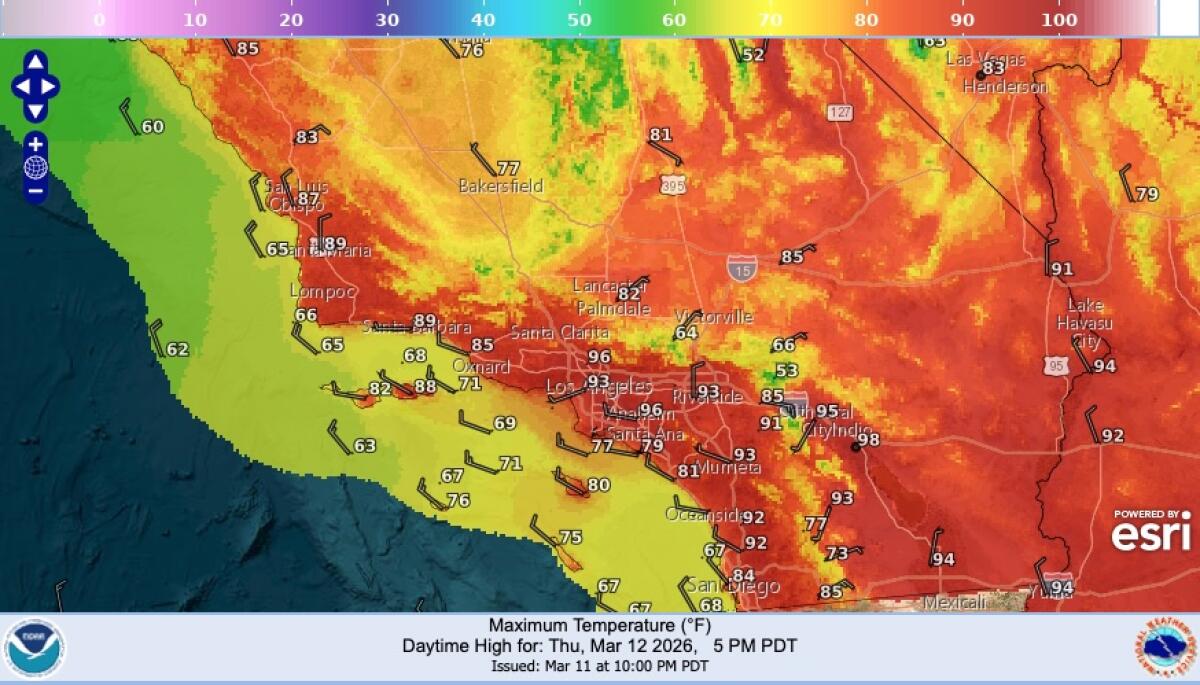
Afternoon temperatures were expected to tie or break records across the Los Angeles region. By Thursday afternoon, highs were climbing to 15 to 25 degrees above normal.
By 3 p.m., Oxnard had reached 94 degrees, significantly passing the 86-degree record set in 2015, while Camarillo had reached 93 degrees, breaking the 89-degree record set in the same year, according to the weather service.
(National Weather Service)
A lack of meaningful onshore wind flow means the heat will persist for several days — and that people will not be able to find much relief from toasty temperatures along the coastline.
Though people may be eager to jump in the ocean in the coming days, the Los Angeles County Department of Public Health issued a warning Wednesday telling people to avoid the water at several beaches due to high bacteria levels.
Affected areas include the Santa Monica Pier; Mothers Beach in Marina del Rey; near the creek and the Pulga Canyon storm drain at Will Rogers State Beach; near the restrooms at Leo Carrillo State Beach; near the Pico-Kenter storm drain at Santa Monica Beach; and near the Castlerock storm drain at Topanga County Beach.
Public health officials are also warning people to seek medical help for signs of heatstroke or heat exhaustion, such as dizziness, nausea, rapid heartbeat, confusion or passing out.
“Heat causes more deaths in the U.S. annually than floods, storms, and lightning combined,” Muntu Davis, Los Angeles County’s health officer, said in a statement. “Those most likely to get ill during the heat include older adults, young children, outdoor workers, athletes, and individuals with chronic medical conditions.”
Temperatures will cool slightly along the coastline on Friday but remain high inland, and most areas of Los Angeles can expect temperatures in the 80s to mid-90s. Weak onshore flows will then return Saturday, which, combined with a weakening high pressure system, are expected to bring five to 10 degrees of cooling to the coasts and valleys but little change across interior sections, according to the weather service.
Temperatures will start to tick up again Sunday, and forecasters said heat advisories may be needed for some coastal valley areas.
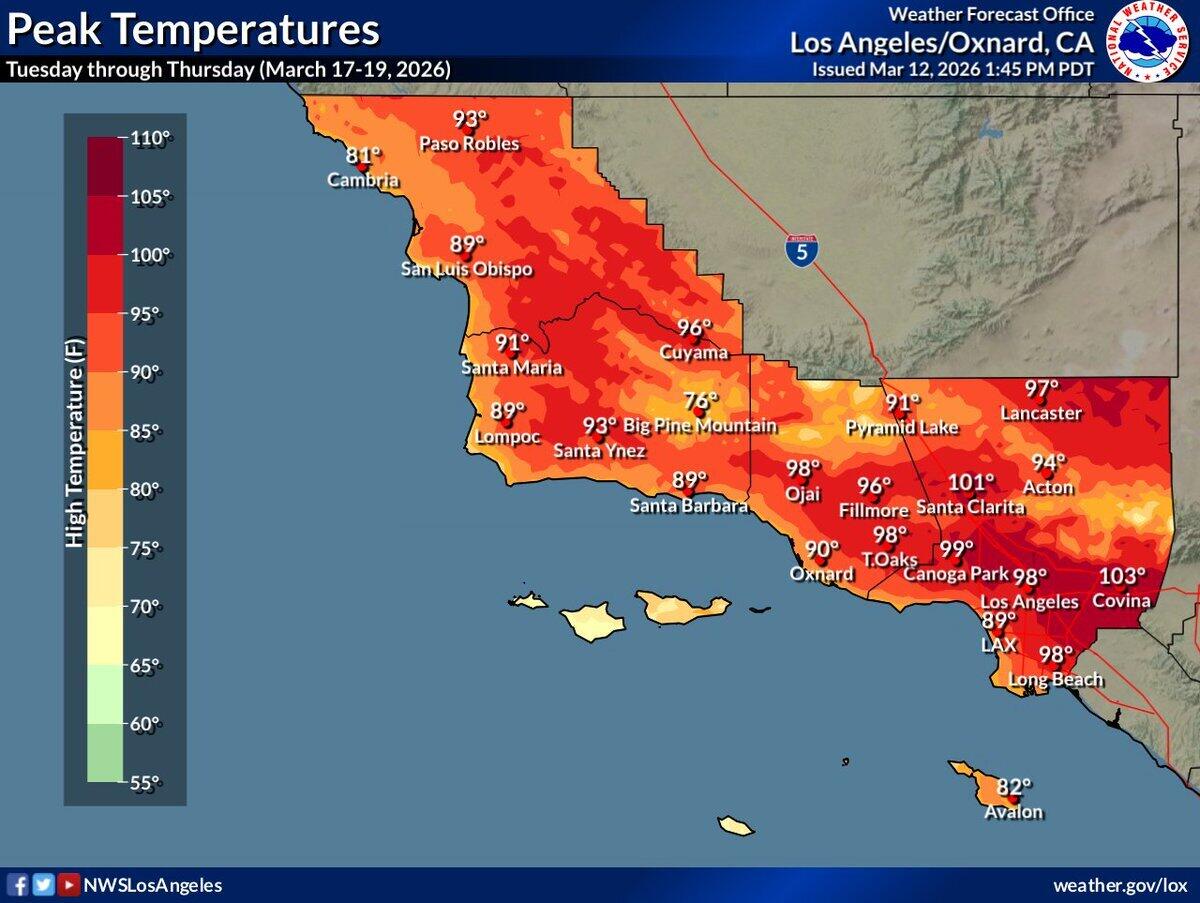
Then, a fresh round of very hot conditions will sweep into Southern California next week, peaking on Tuesday and Wednesday, when the weather service anticipates issuing additional heat advisories from Tuesday through Thursday, and possibly excessive heat warnings in some areas.
(National Weather Service)
Once again, temperatures are expected to be at least 15 to 25 degrees above normal, with warm overnight lows and more daily temperatures broken.
Next week’s heat wave will not only strike the Southland, but also extend across much of California and the Southwest, with temperatures above 100 degrees possible in desert areas of Southern California and Nevada, according to the weather service.
This second sizzling week may even put monthly temperature records in jeopardy — particularly in Sacramento, San Jose, Phoenix and Las Vegas.
The persistent heat will dry out vegetation and increase the chance of fires in grass-dominated areas that greened up after the plentiful rains this winter. Fortunately, the hot spell will not come with a widespread risk of fire weather thanks to the record-breaking soaking the Southland endured over the holiday season and the lack of significant winds.
However, if similar warm, dry periods continue throughout the summer with no more rainfall, it could set the stage for an active fire season come fall, according to the weather service.
Times staff writer Grace Toohey contributed to this report.