
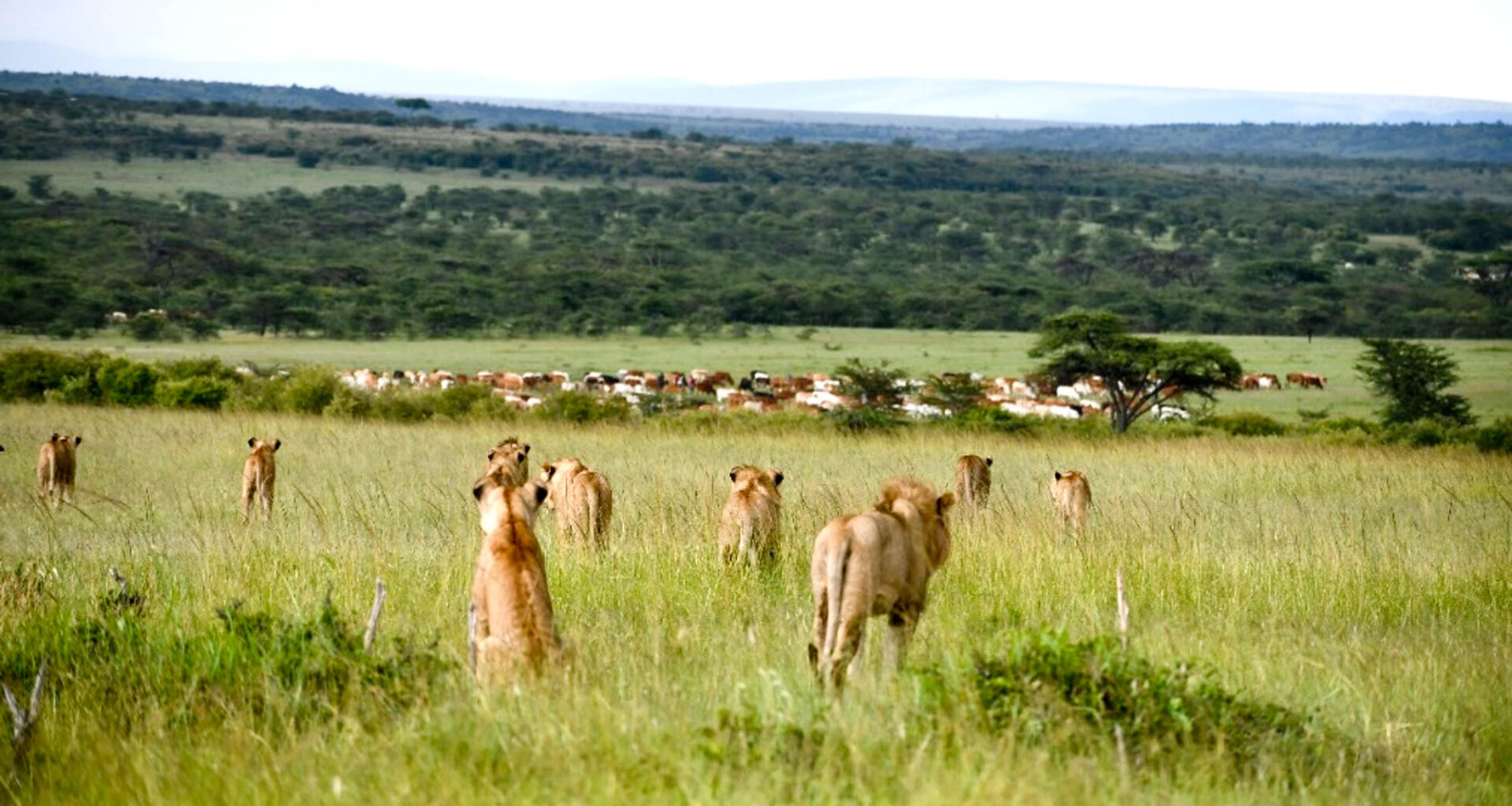
A new study in Kenya’s Mara conservancies finds lions increasingly avoiding areas used by Maasai livestock, even after the animals have moved on.Researchers suggest lions are responding not just to immediate encounters with herders but to past grazing pressure and perceived long-term risk.The findings raise questions about how livestock grazing may reshape predator behavior and wildlife use of shared landscapes.Experts say any grazing limits must balance conservation goals with Maasai livelihoods that depend heavily on livestock.
See All Key Ideas
Lions, Africa’s largest predators, are a near-universal source of fear for the continent’s wildlife. But in Kenya, it’s the king of the jungle that’s now becoming fearful — of domestic livestock.
In Kenya, most wildlife is found outside formally protected areas. The lions, zebras and elephants that attract tourists mostly live in pastoralist rangeland. For farmers and herders, this can be both a curse — coexistence is hard work where predators sometimes attack livestock and cattle compete with wild herbivores for grass — and a blessing — many community-owned conservancies profitably lease portions of their land to tourism operators for safaris and lodges, generating revenue for their members.
In most conservancies’ grazing plans, herders can make use of the entire landscape. This allows grazing pressure to be more evenly distributed, but it also assumes that when herders and their livestock aren’t present in an area, other herbivores and the predators that hunt them make free use of the space. Niels Mogensen, a biologist with the Mara Predator Conservation Program, a Kenya Wildlife Trust initiative aimed at preserving large carnivores, says no one had actually checked to see if this was true before now.
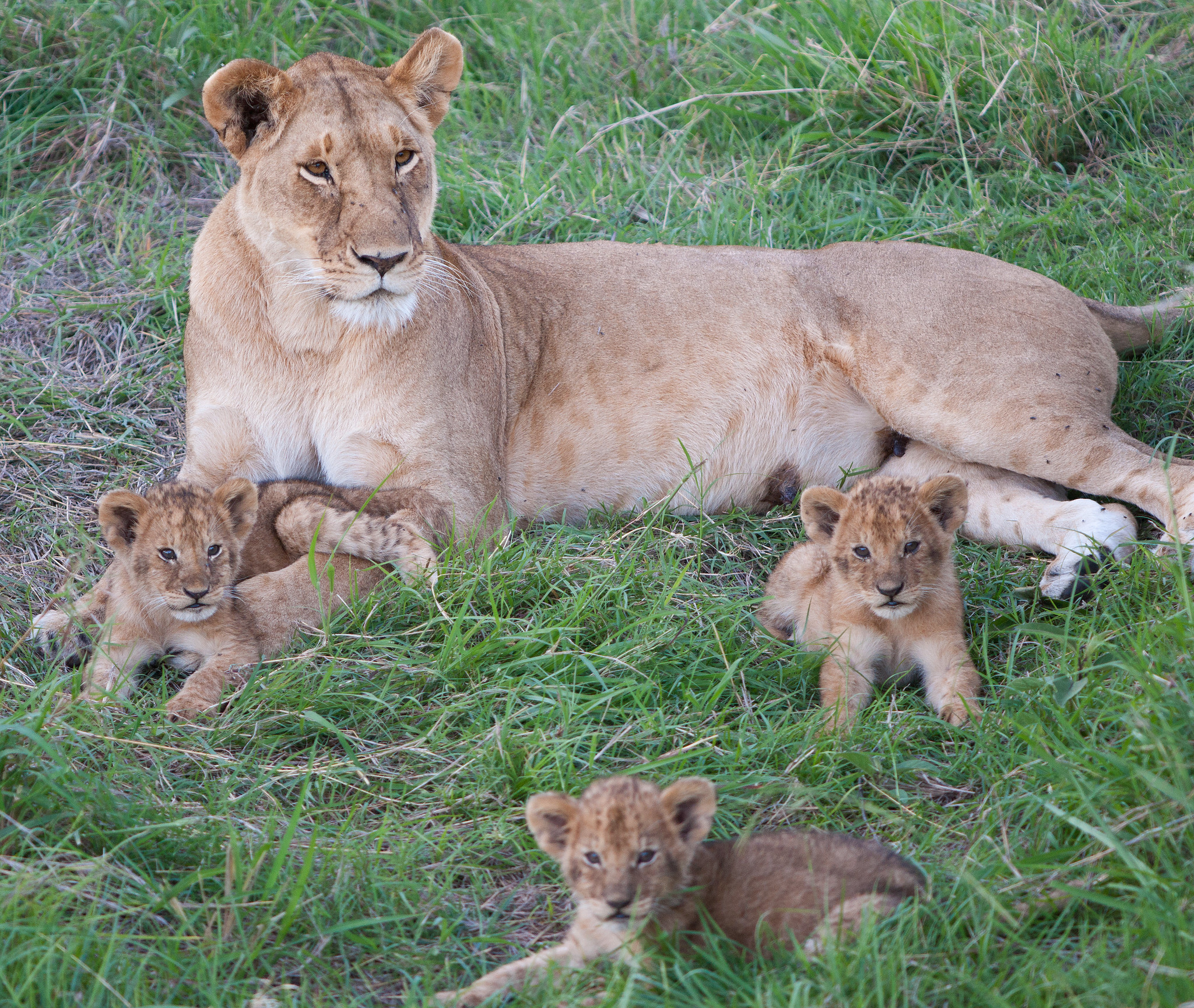 A lioness with cubs, Mara Conservancy, Kenya. Image by Ross Pollack via Flickr (CC BY-NC-SA 2.0).
Between 2015 and 2023, he and his colleagues carried out surveys at seven community-owned wildlife conservancies in the Mara ecosystem. They covered nearly 69,000 kilometers (43,000 miles) in total, collecting data about the presence of lions, and wild and domestic herbivores.
They weren’t surprised to find that lions avoided livestock herders. But they also found that the lions avoided parts of the conservancies where cattle had been herded even after they had moved on.
“Perhaps the most striking result [of the study] was that lions continued to avoid areas with a history of high cattle use even when cattle were not present at the time,” Mogensen says.
Mogesen’s team did not explicitly model how lion sightings related to grazing management practices on the conservancies they studied, but he noted that moves to restrict access to grazing would be sensitive. Livestock are central to Maasai livelihoods and culture: restrictions could be perceived as threatening household security or prioritizing wildlife over people.
“Addressing this requires collaborative approaches rather than top-down enforcement,” Mogensen says.
“This can include spatial zoning that protects key wildlife areas while retaining grazing access elsewhere, seasonal rather than permanent restrictions, and transparent benefit-sharing so that landowners clearly see how conservation outcomes link to economic returns from conservancies.”
Peter Kilani is a herder on the Mosiro Conservancy, to the east of the seven covered by Mogensen’s data. He says only a few Maasai conservancies have taken the approach of reserving parts of their land exclusively for wildlife.
“This only happens in some conservancies like Maasai Mara and Imbikirani, where the community have offered their own pieces of land for wildlife and they are paid in return. It’s big business for them,” he tells Mongabay by phone.
The more common practice is managing access to all available rangeland. “We are doing this comfortably in my community in Mosiro in Kajiado [county]. We have done it since time immemorial,” Kilani says.
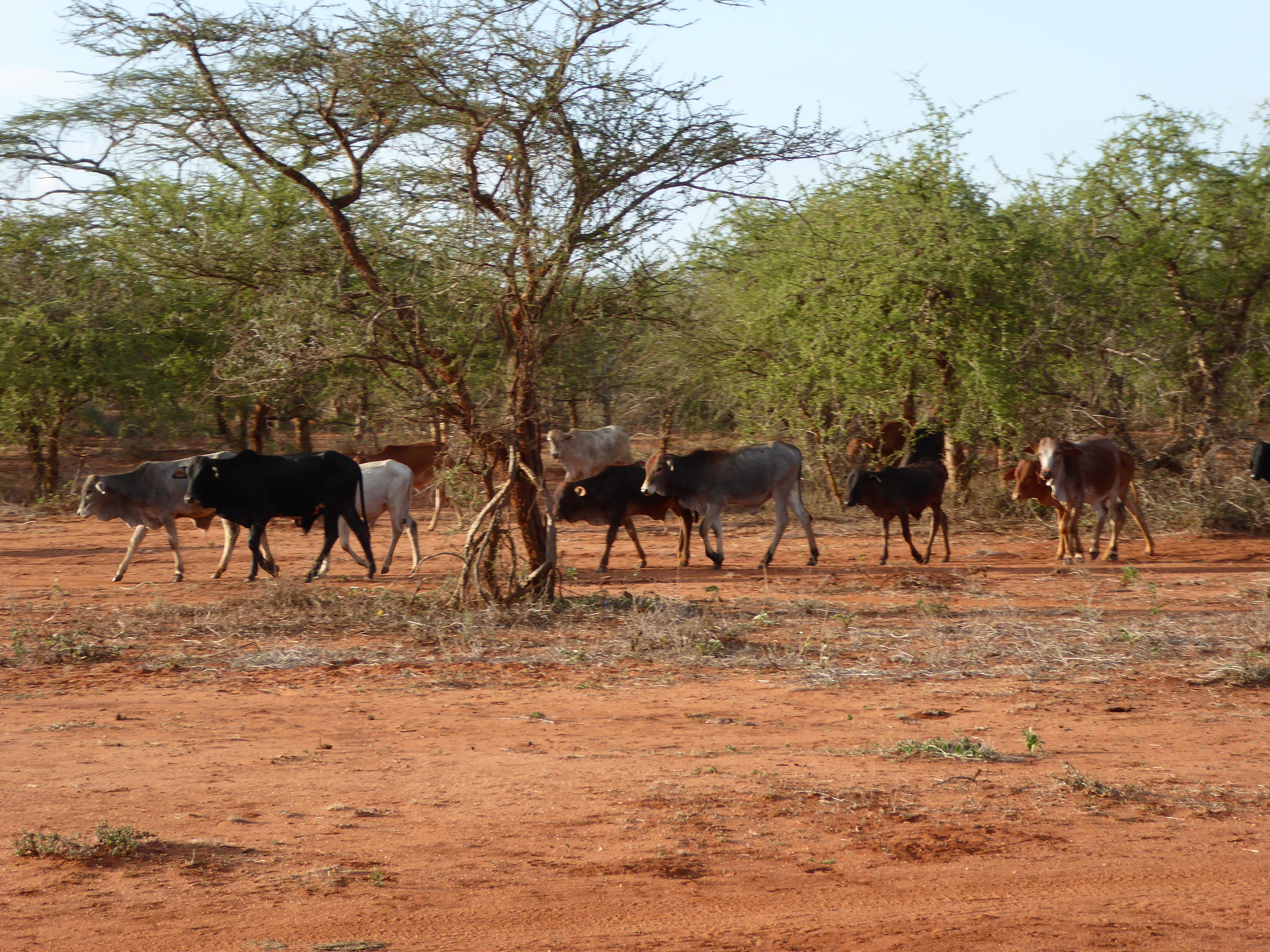 Cattle on a Maasai conservancy in Kenya. Image by Regina Hart via Flickr (CC BY 2.0).
But today’s conditions are no more frozen in time than are pastoralists’ lives and livelihoods. Reading back through the results of aerial surveys by the Kenyan government, large-bodied wild herbivores (other than elephants) have declined by 70% since the late 1970s; cattle have also declined, though by just 13%. Sheep and goats have increased by 269%.
To maintaining a healthy balance of their ecosystems, the conservancies of the Maasai Mara will need to account for new data and demands and fashion new approaches to managing their rangeland.
Daniel Sopia, who heads the Mara Wildlife Conservancy Association, which includes the seven that Mogensen surveyed, says rotational grazing systems in place in most conservancies create a circuit where wild herbivores typically follow the cattle — and, says Sopia, seek the safety from predators afforded by the shorter grass left behind.
Counter to the research findings, he says herders in the associations’ conservancies do observe lions in the landscape following antelope or other ungulates, even on the same day that they’ve driven cattle through an area.
“We have not heard conservancies complain about the lack of lions due to grazing or cattle presence,” Sopia tells Mongabay. “Yes, where cattle numbers are too many and don’t rotate too often, [this] might cause herbivores to move due food shortage. Hence lions move to follow prey or start preying on cattle. The fact that lions continue to avoid the area long after grazing is not something we have observed as community.”
Nakedi Maputla, a senior conservation scientist at the Africa Wildlife Foundation, who was not involved in the study, says managing access to grazing in conservancies is a sensitive issue.
“This has human rights implications that warrant careful consideration and serious attention. It may also lead to landowners’ resentment towards wildlife and the authorities responsible for wildlife conservation; that is, unless landowners are central to the decision-making process,” he told Mongabay.
Mogensen’s analysis of data detailing the presence and absence of lions from portions of Mara conservancies is an important contribution to the decisions and management of these rangelands in the future.
“Conservancies therefore represent a complex matrix of overlapping land uses, conservation goals, and socio-economic needs,” Mogensen writes, “posing significant challenges for sustaining large carnivores and managing human-wildlife interactions.”
Dann Okoth in Nairobi contributed to this report.
Banner image: Lions in Kenya. Image courtesy of Kasaine Sankan/Mara Predator Conservation Program.
Can cattle and wildlife co-exist in the Maasai Mara? A controversial study says yes
Citation:
Mogensen, N., Packer, C., Svenning, J. C., Sankan, K., & Buitenwerf, R. (2026). Human-driven landscapes of fear for Africa’s largest terrestrial predator in human-used conservation landscapes. Biological Conservation, 313, 111599. doi:10.1016/j.biocon.2025.111599
Feedback: Use this form to send a message to the author of this post. If you want to post a public comment, you can do that at the bottom of the page.
