
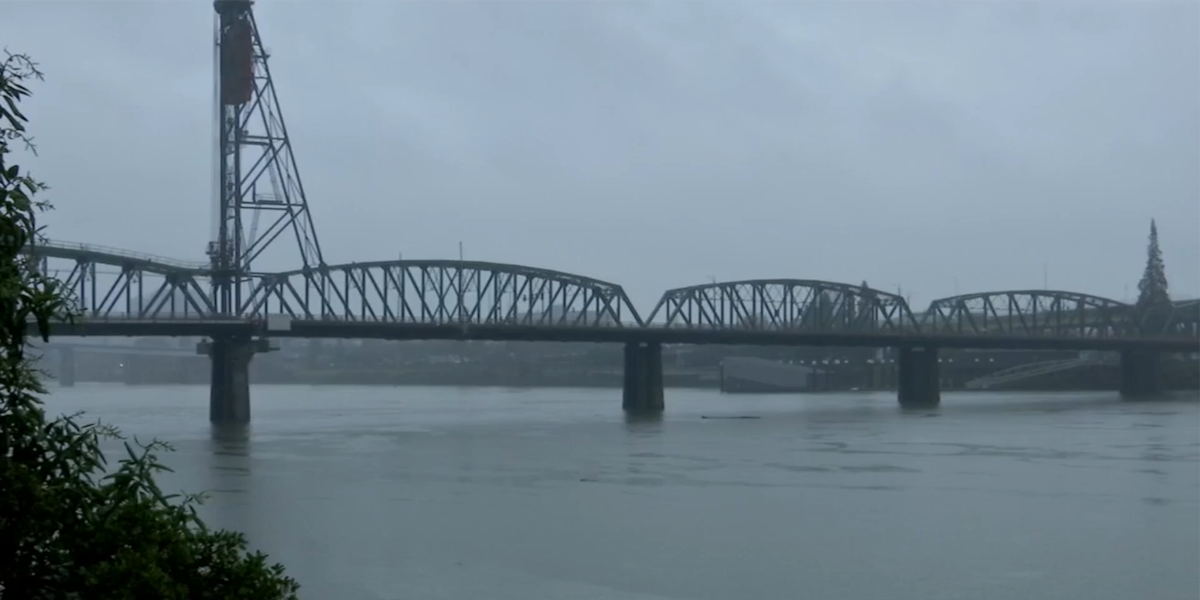
PORTLAND Ore. (KPTV) – Portland’s Big Pipe system reached 100% capacity Thursday morning, causing a mixture of sewage and stormwater to overflow into the Willamette River as an atmospheric river brought heavy rain to the Pacific Northwest.
The Portland Bureau of Environmental Services issued a combined sewer overflow (CSO) advisory for the Willamette River early Thursday.
The overflow began around 6:26 a.m. and is impacting areas downstream of the Ross Island Bridge.
As rain poured from Wednesday into Thursday morning, the pipe system’s capacity surged from nearly 5% to 100%.
“At one point we had about an inch of rain in six hours, and when that happens the system overloads and does what it’s designed to do: release some of that excess into the Willamette River,” said Andy Kiemen, a communications representative for the Portland Bureau of Environmental Services.
City officials say a typical combined sewer overflow is about 80% stormwater and 20% sewage.
The Bureau of Environmental Services is urging people to avoid swimming, kayaking or having any contact with the water until 48 hours after the overflow stops.
“We’re primarily concerned about the increase in bacteria levels. That’s why we’re advising people to stay away from the Willamette River at this time,” Kiemen said.
The $1.4 billion Big Pipe Project, completed in 2011, built a total of 13 miles of massive underground tunnels capable of holding more than 100 million gallons of sewage and stormwater.
According to the city, the project has reduced overflows into the Willamette River by about 94%.
“Prior to the Big Pipe Project, there would be combined sewage overflows an average of 50 times a year. Any time it rained more than a tenth of an inch — which in Portland happens a lot — we would be spewing billions of gallons into the Willamette River,” Kiemen said.
Willie Levenson, Ringleader of the Human Access Project, a Portland nonprofit working to make the Willamette River more swimmable and accessible, said the city’s progress helps put events like this in perspective.
“As much as it’s hard to have a CSO right now, we certainly need the rain in the mountains. We have a very low snowpack, so it’s kind of a mixed blessing,” Levenson said.
You can track sewer overflow activity using the city’s Big Pipe Tracker.
Copyright 2026 KPTV-KPDX. All rights reserved.