
Image credit: Bruce Damonte
WORKac has completed Riverhouse, a compact sustainable residence in rural Rhode Island designed by the practice’s co-founders Amale Andraos and Dan Wood for their own family.
Located within a state-protected corridor along the Pawcatuck River, the home replaces a deteriorating summer retreat that had previously hosted informal architecture gatherings.
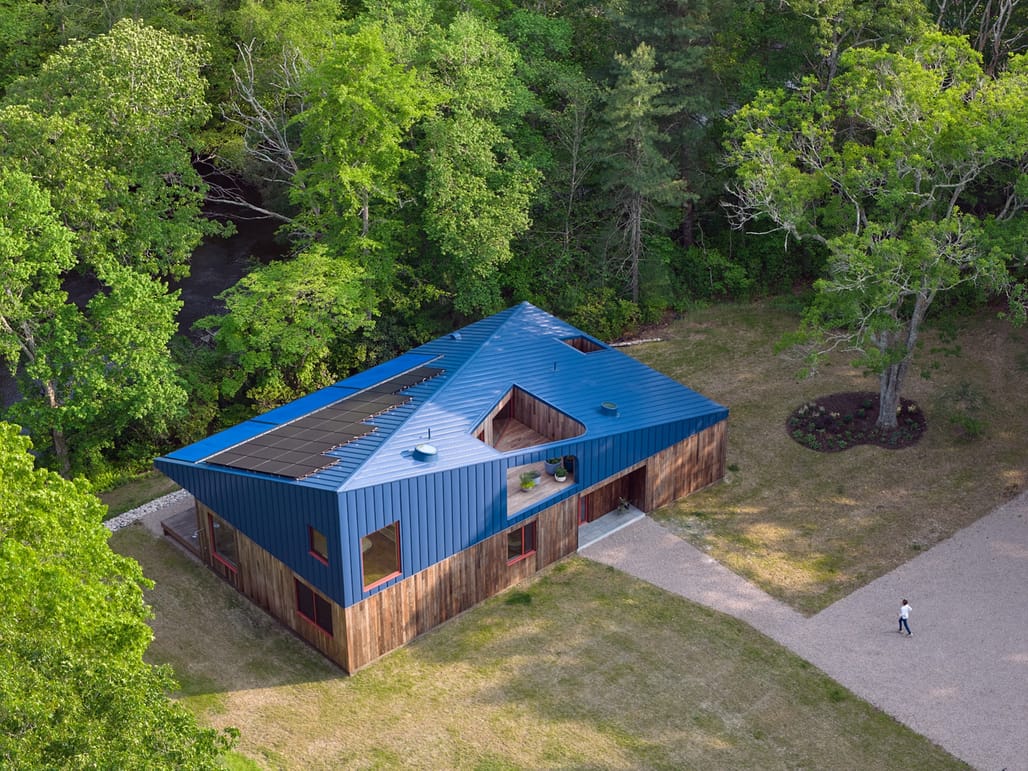
Image credit: Bruce Damonte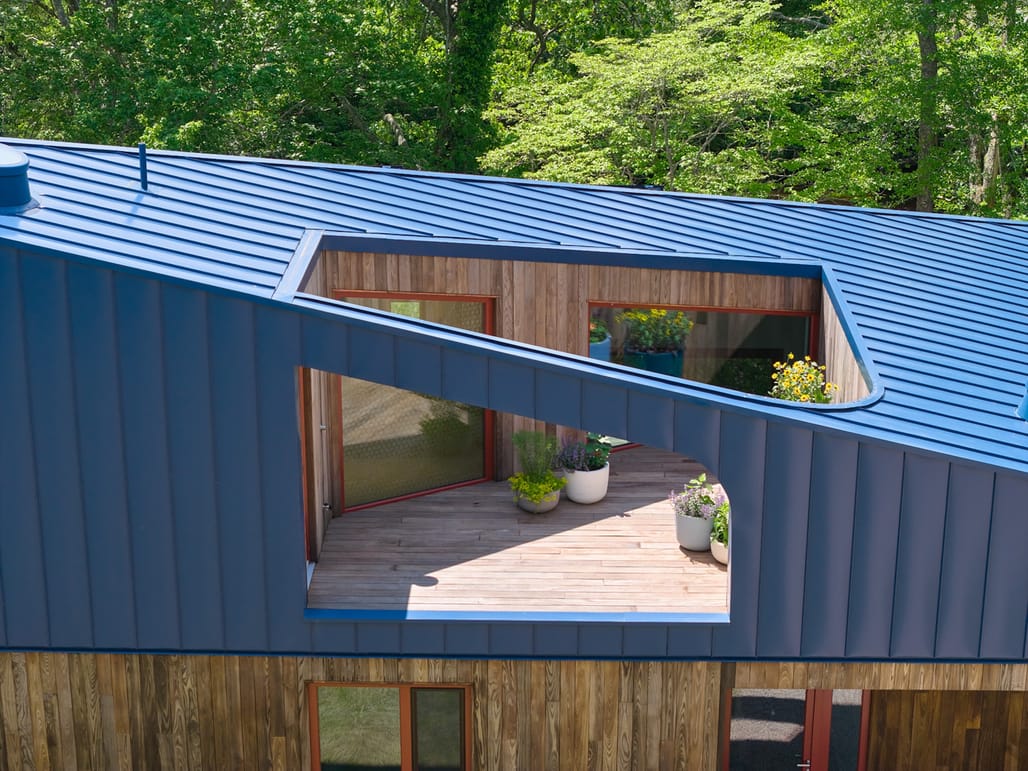 Image credit: Bruce Damonte
The design of the house emerged from changing patterns of living during the Covid-19 pandemic, when many families reconsidered the relationship between domestic space, work, and proximity to nature. For Andraos and Wood, the project also serves as a personal exploration of contemporary domestic design, combining environmental performance with flexible spatial organization.
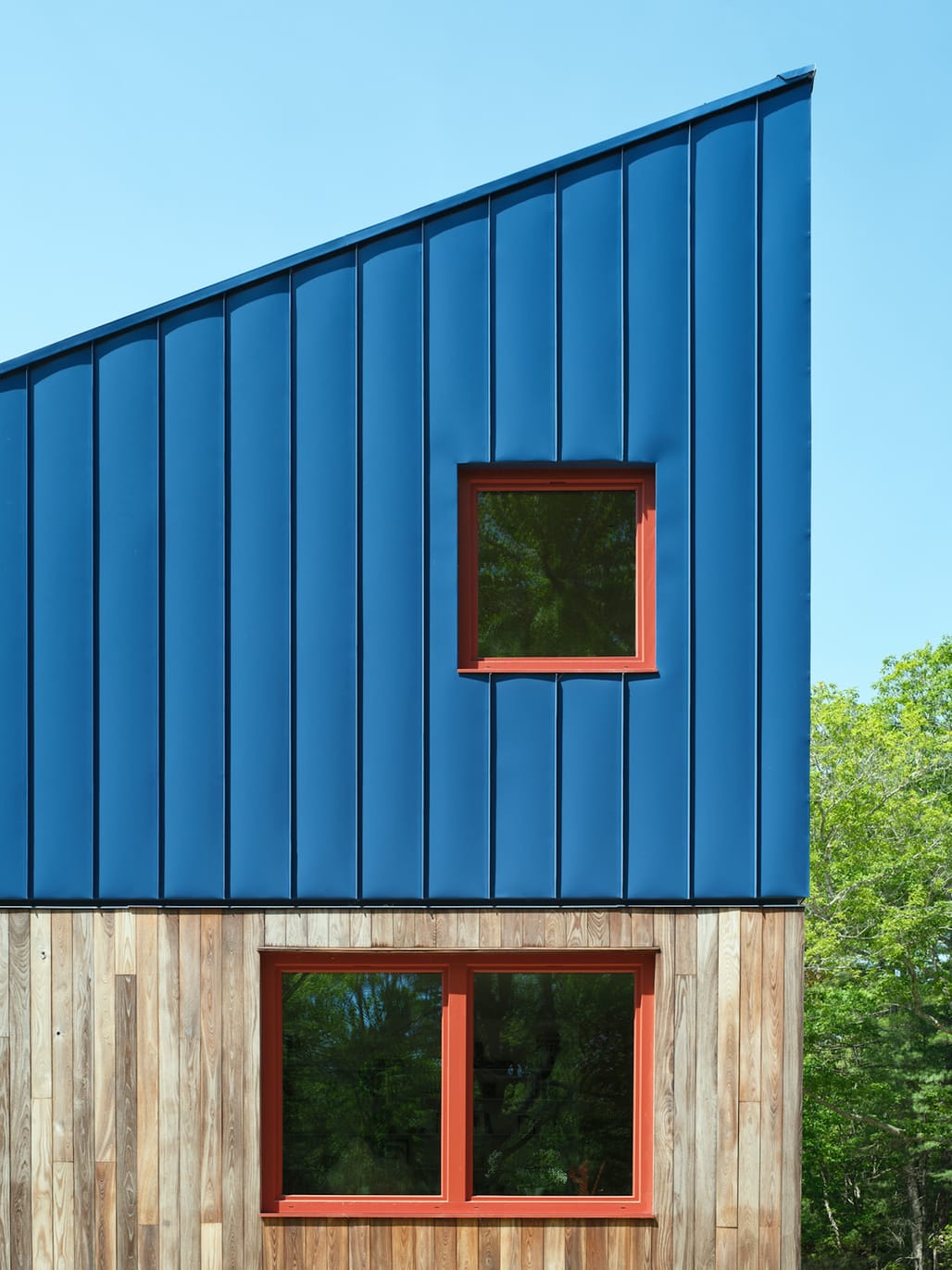
Image credit: Bruce Damonte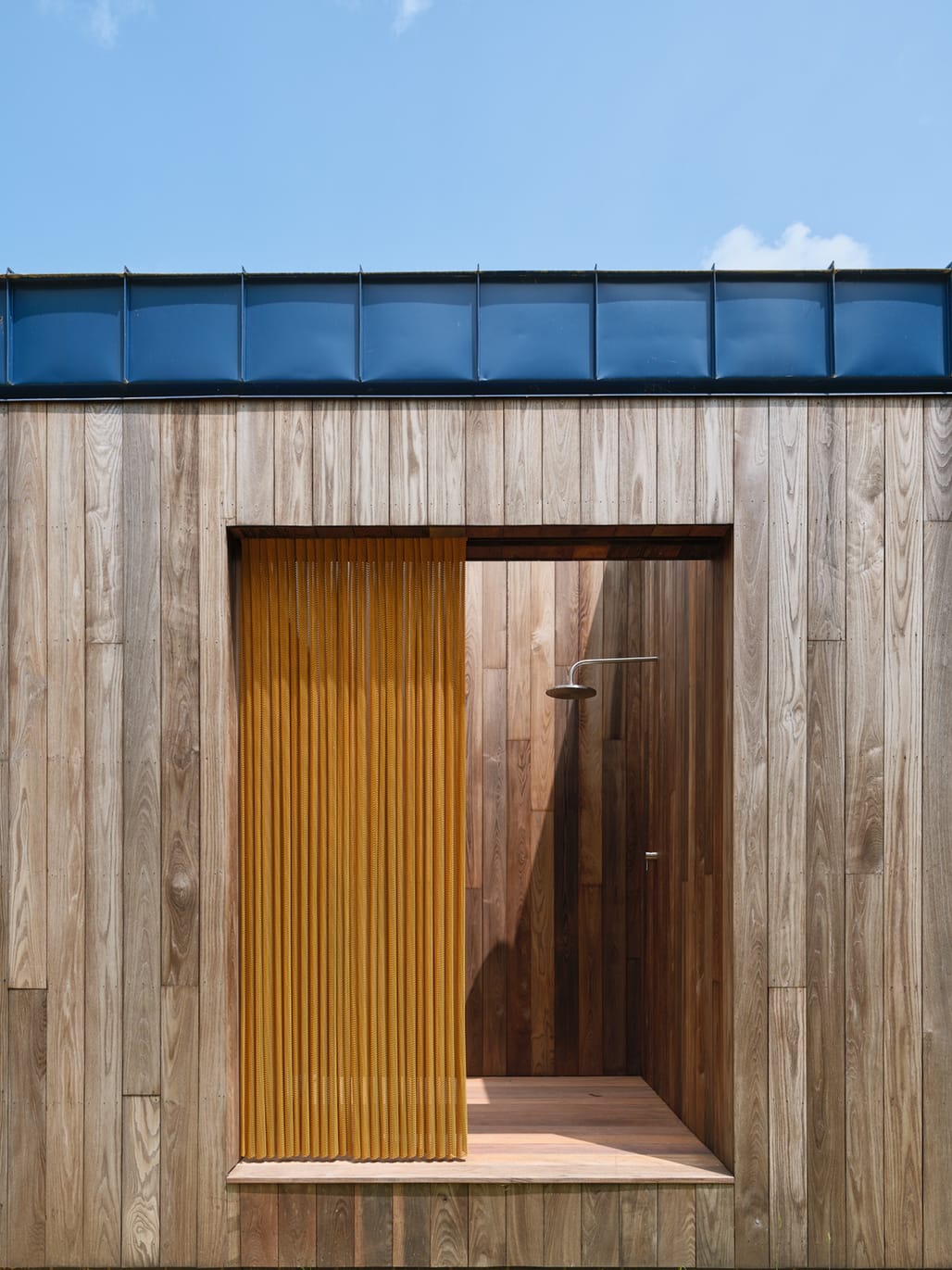 Image credit: Bruce Damonte
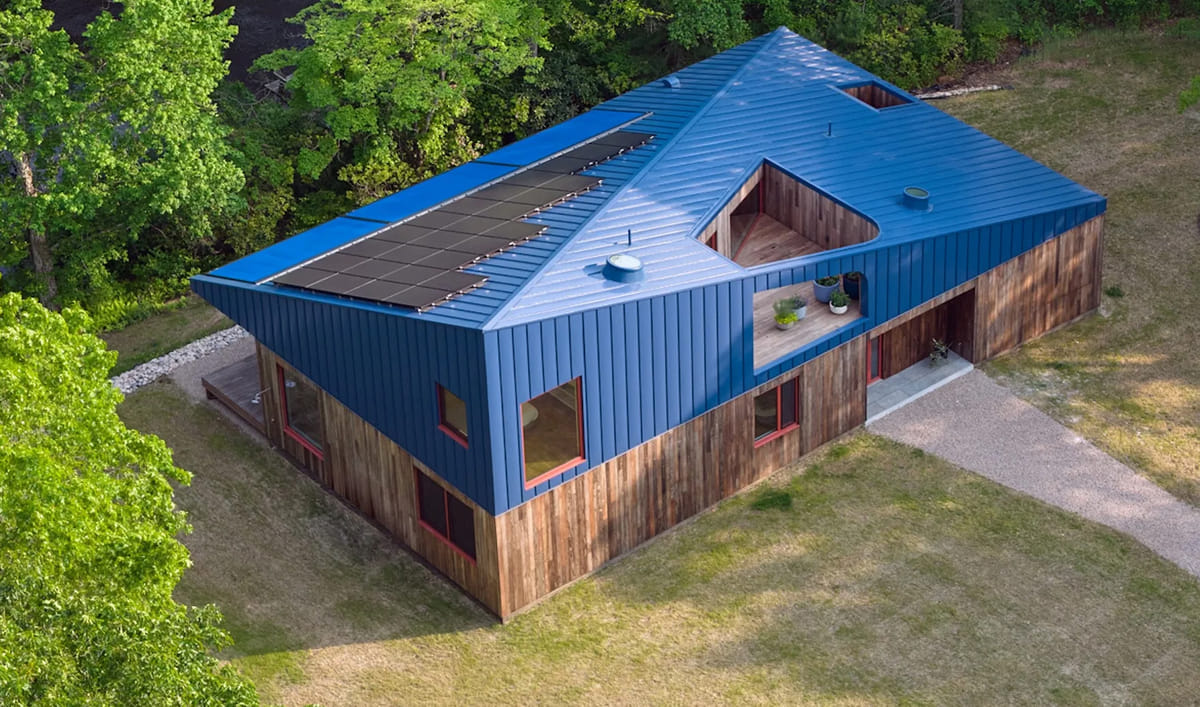
The scheme sits lightly on its site and occupies the footprint of the former structure. The compact rectangular volume is elevated to meet floodplain regulations and is designed to meet Passive House energy standards.
Key features include triple-glazed windows, heavily insulated 14-inch walls, rooftop photovoltaic panels with battery storage, and an all-electric energy system. The house relies on cross-ventilation and daylighting strategies to reduce energy demand throughout the year.
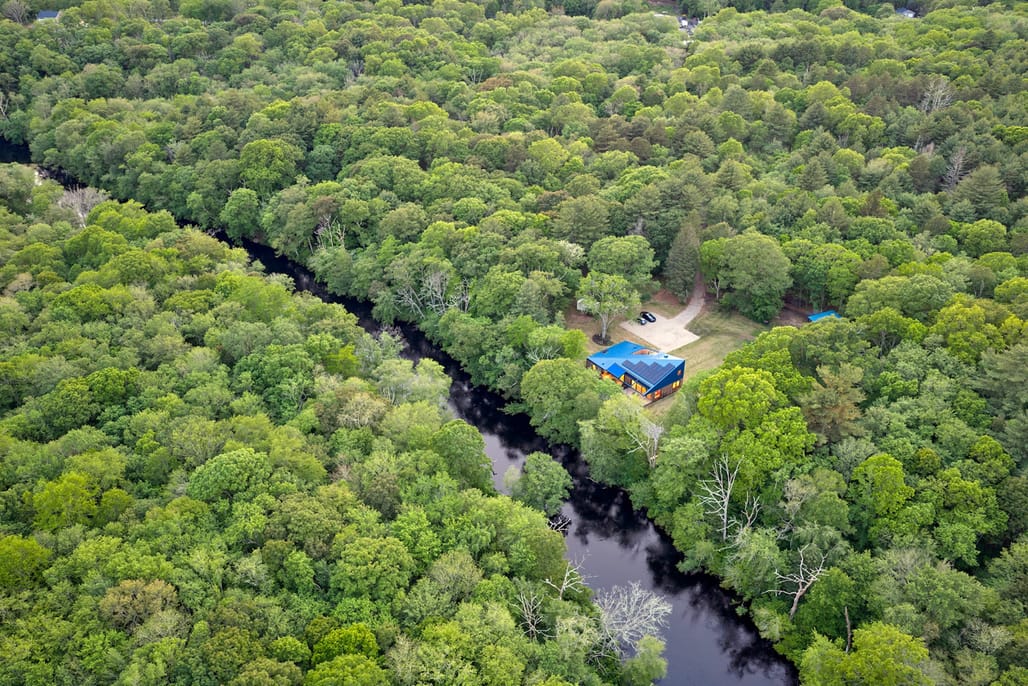
Image credit: Bruce Damonte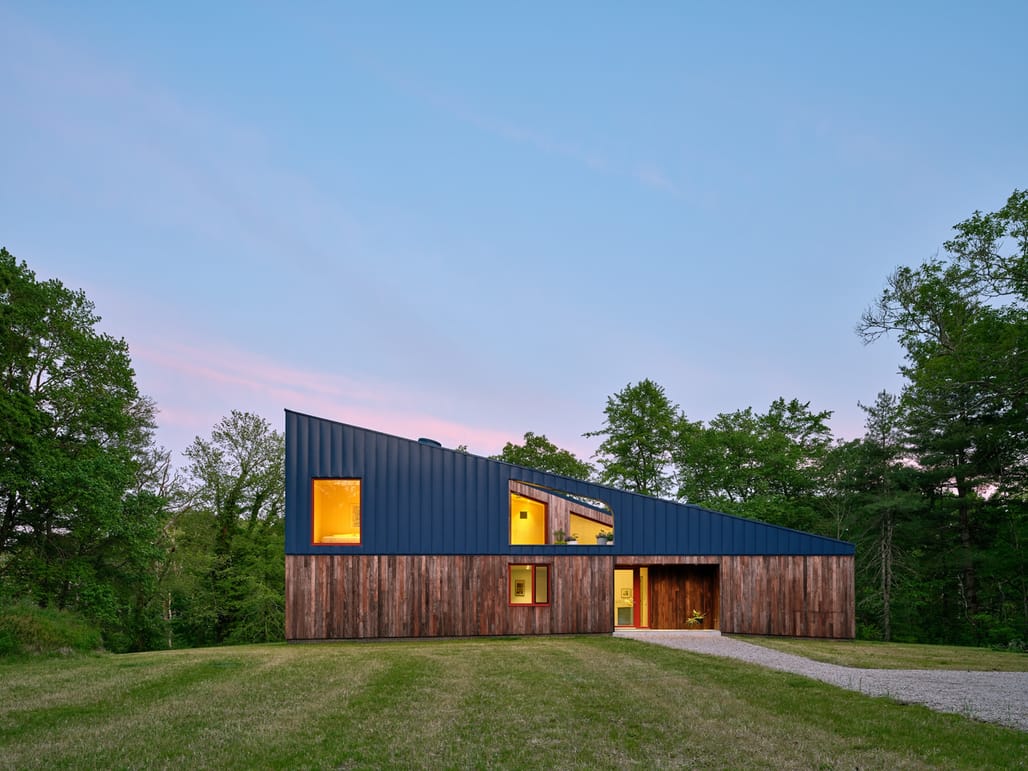 Image credit: Bruce Damonte
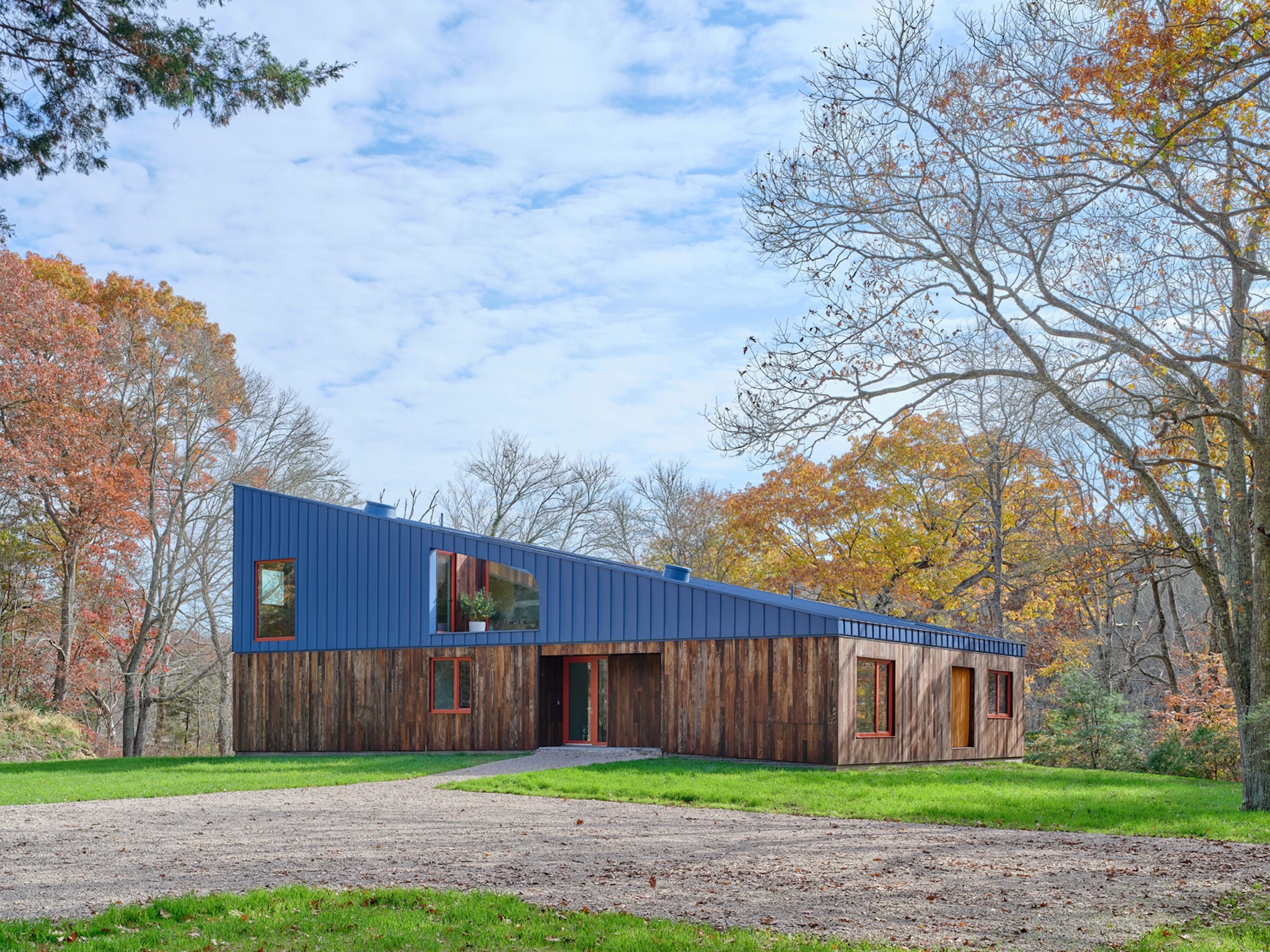
The building’s distinctive form is defined by a blue aluminum roof that folds down over portions of the facade, creating a diagonal ridgeline across the volume. The geometry generates varied interior heights, including a double-height living area and a mezzanine bedroom. Outdoor elements such as courtyards, a roof garden, and an elevated deck overlooking the river extend the living space into the surrounding landscape.
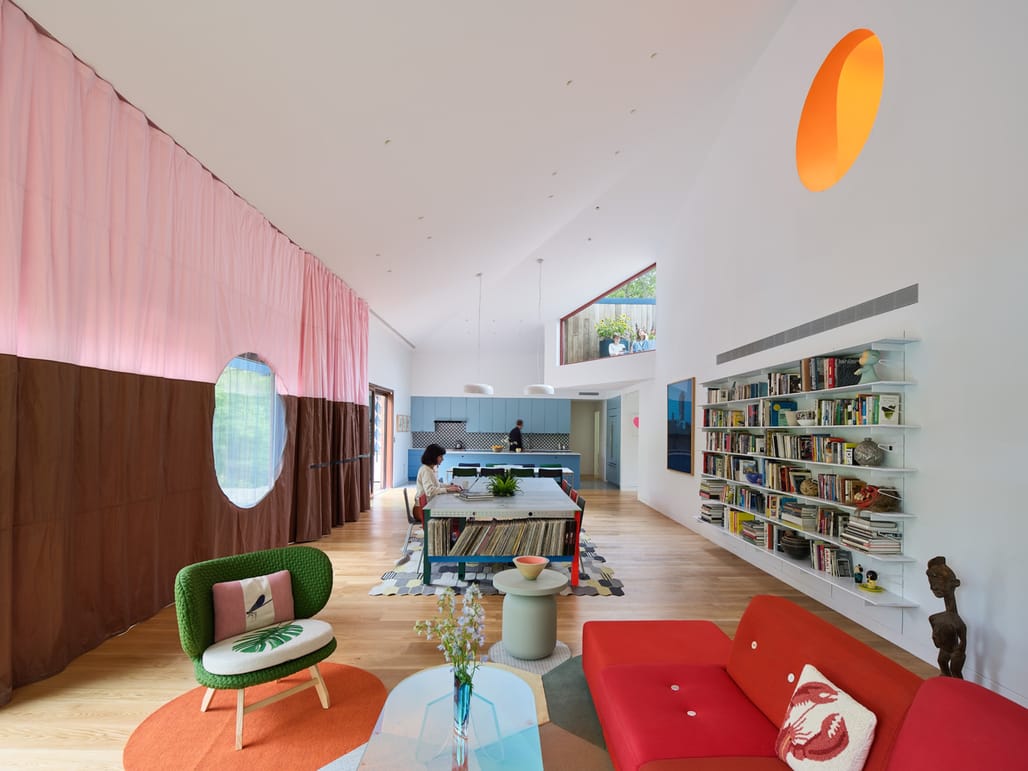
Image credit: Bruce Damonte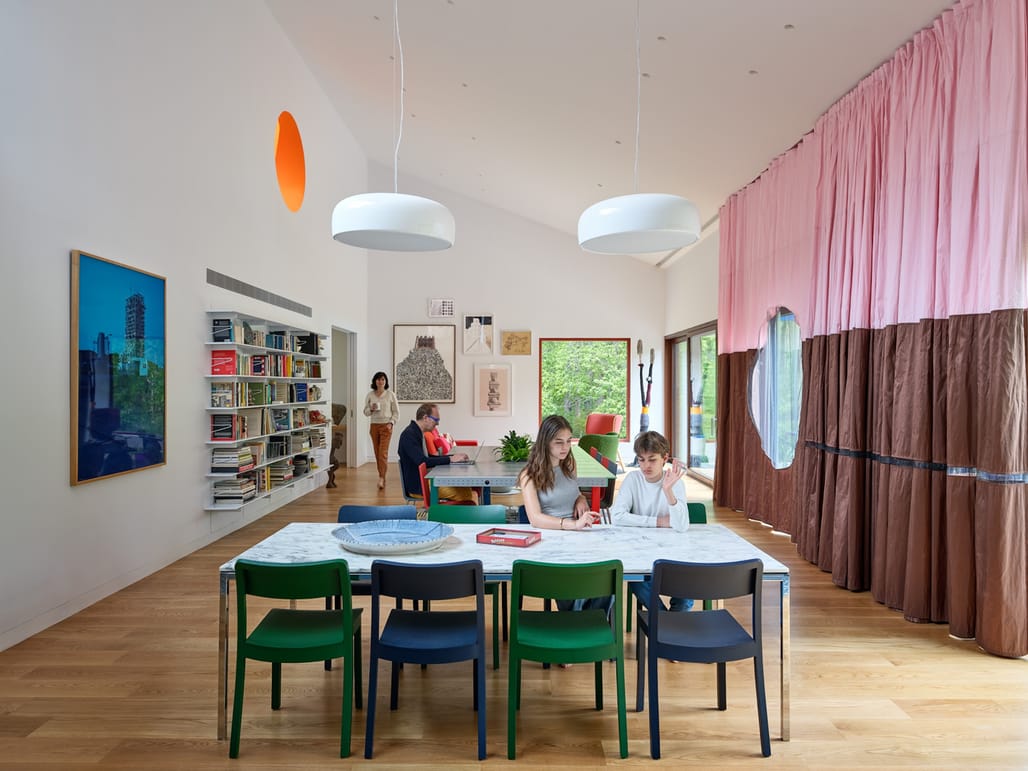 Image credit: Bruce Damonte
Materials were selected for both performance and tactile qualities. Exterior cladding uses reclaimed and thermally modified ash wood, while interiors incorporate unfinished plywood surfaces and handmade tiles produced in Lebanon. Colorful window frames provide accents against the neutral palette.
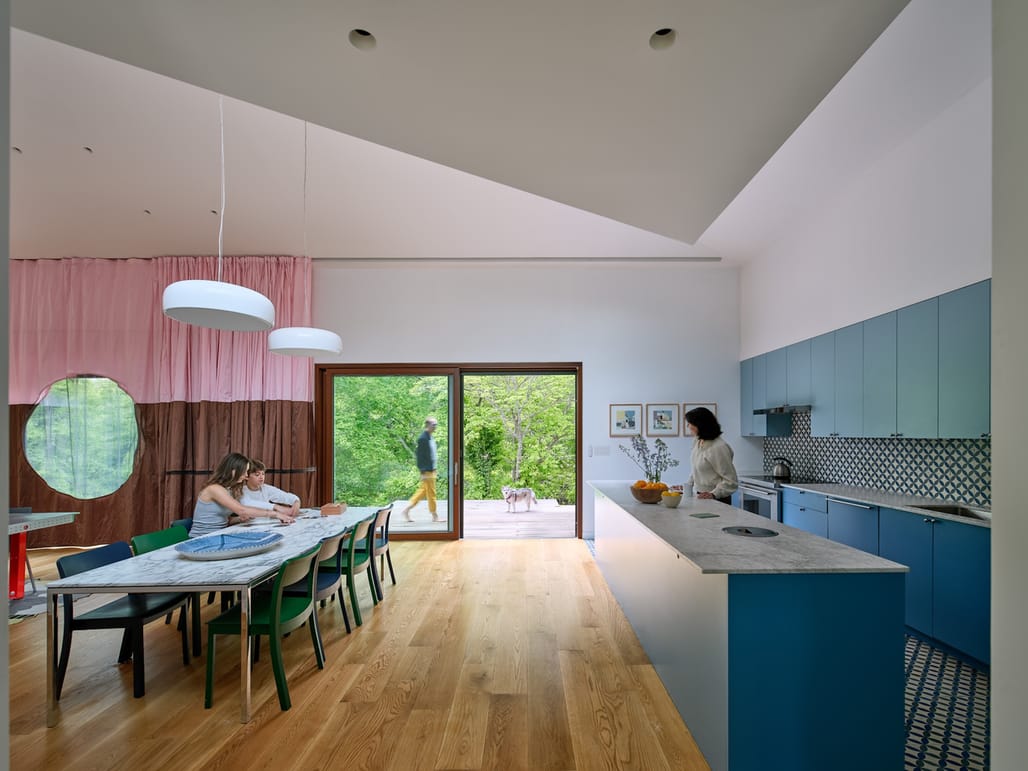
Image credit: Bruce Damonte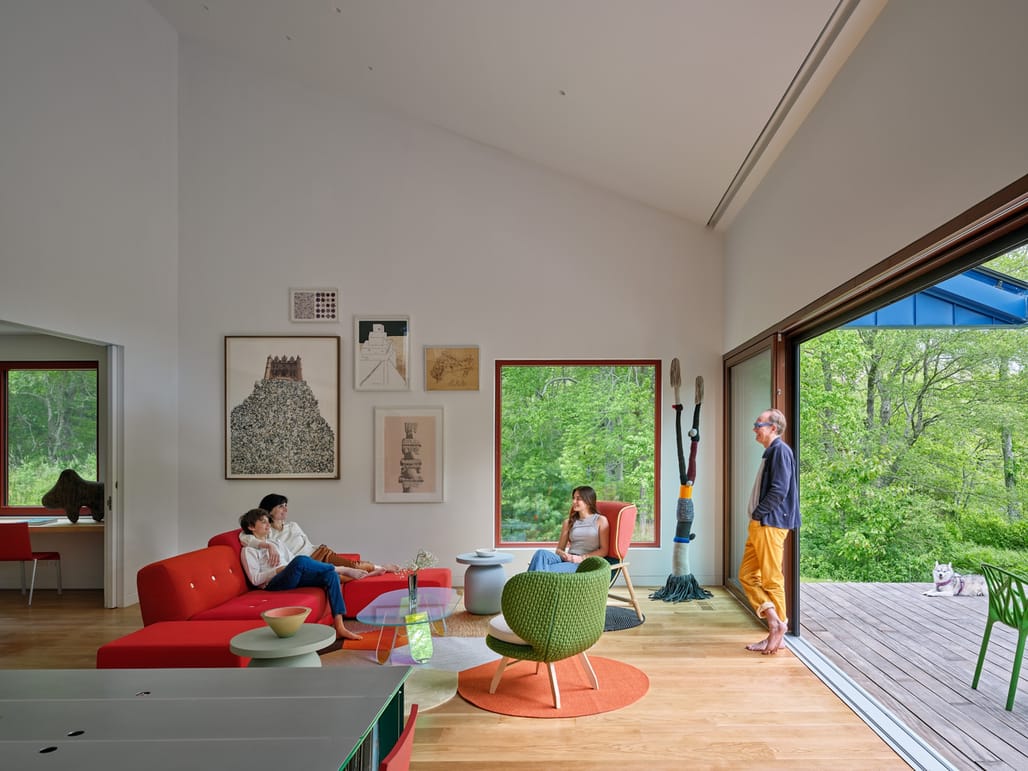 Image credit: Bruce Damonte
The project involved several collaborators, including contributions from MOS Architects, designer Petra Blaisse, and artist Austėja Walter. A second phase of the project is underway, which will add a pool, pavilion, and garden designed to host future architectural gatherings on the site.
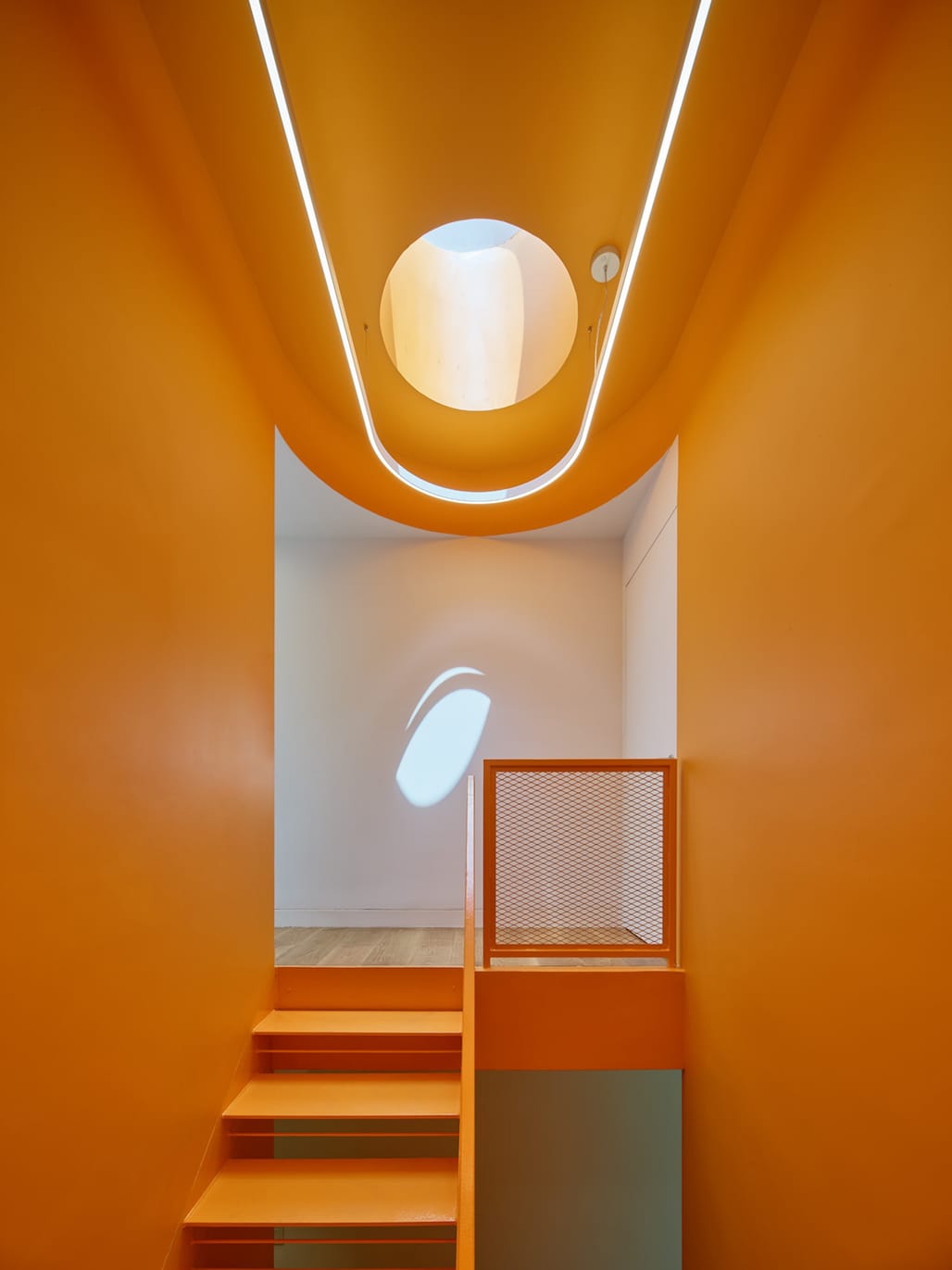
Image credit: Bruce Damonte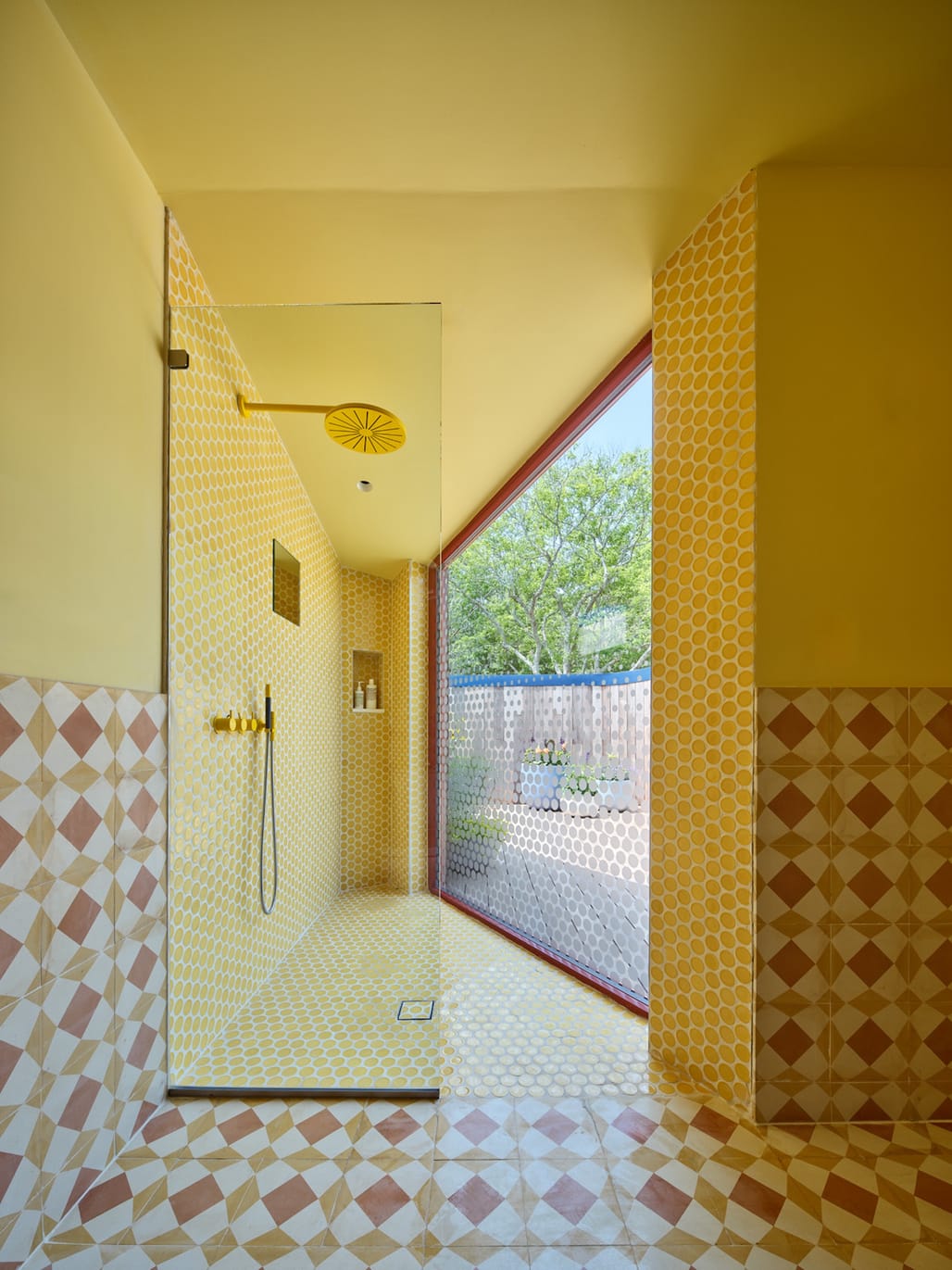 Image credit: Bruce Damonte
Similar articles on Archinect that may interest you…